
Ugh, the spinning wheel of doom. You know the one. That little circle that mocks you while you’re trying to load a video, send an email, or, you know, just *exist* on the internet? Yep, we’ve all been there. It’s the digital equivalent of waiting in line at the DMV – pure, unadulterated frustration. And when your Wi-Fi decides to take a vacation, it can feel like your entire life is put on hold. Suddenly, everything moves at a snail’s pace. Binge-watching your favorite show? Forget about it. Working from home? Good luck with that. Trying to video chat with your family? Prepare for pixelated faces and dropped connections. Trust me, I get it. I’ve spent countless hours staring at that buffering icon, ready to throw my laptop out the window. But after years of troubleshooting, I’ve learned a few things. And I’m here to share them so you can hopefully reclaim your sanity (and your internet speed).
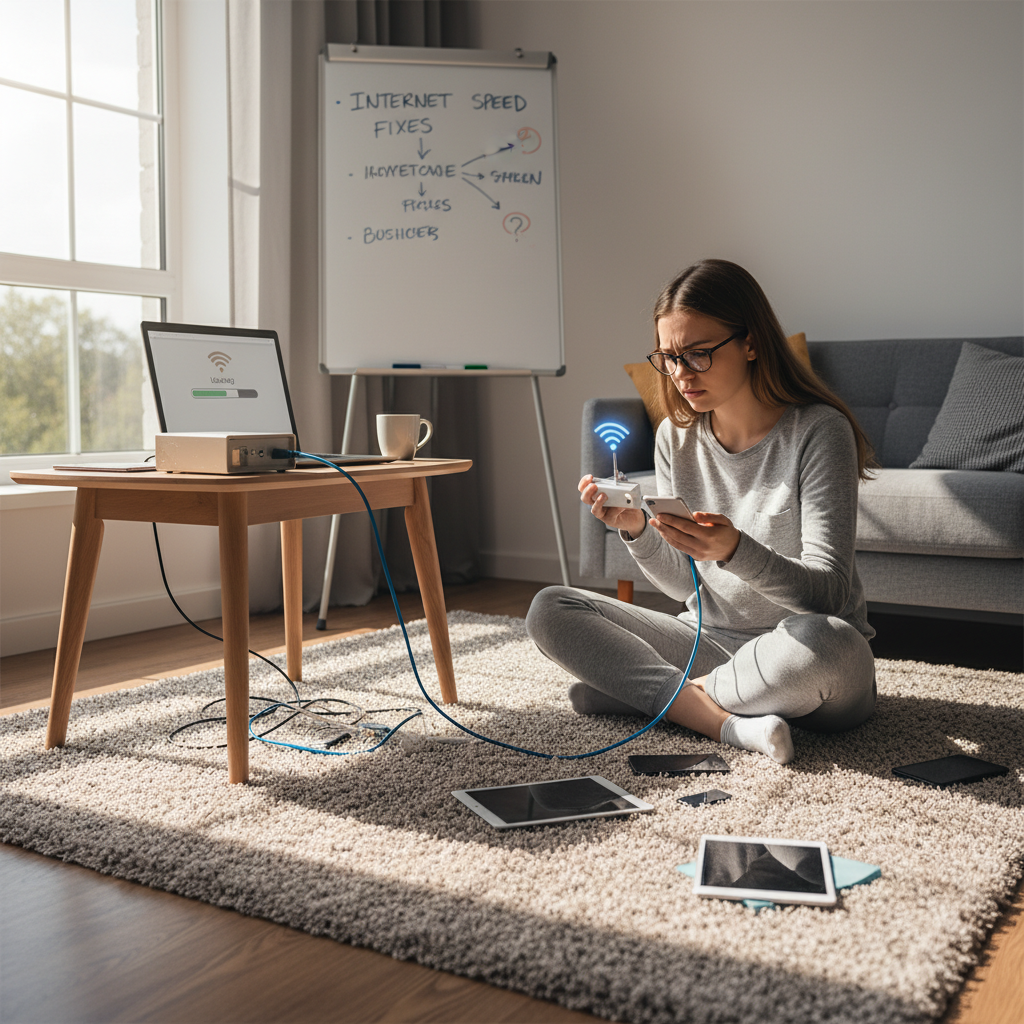
The Annoyance Factor: Why Is My Wi-Fi Being a Jerk?
First off, let’s acknowledge the elephant in the room: slow Wi-Fi is infuriating. It’s like having a car with a sputtering engine. You just want it to *work*! And the worst part is, sometimes you have absolutely no idea *why* it’s acting up. Is it your internet provider? Is it your router? Is it gremlins? (Okay, probably not gremlins.) The truth is, there are a bunch of reasons your Wi-Fi might be dragging its feet. And understanding these reasons is the first step to fixing the problem.
Common Culprits: What’s Slowing You Down?
Let’s dive into some of the usual suspects when it comes to slow Wi-Fi. We’ll keep it simple and avoid the tech jargon. No one wants a lecture on IP addresses when all they want is to watch cat videos.
1. Your Internet Plan (The “Speed Limit”)
This is often the first thing people overlook. Think of your internet plan like a speed limit. If you have a slower plan, you’re not going to be able to zoom around the internet like someone with a faster one. If you’re paying for a basic plan and trying to stream 4K movies and have multiple devices connected, you’re likely to experience slowdowns. It’s simple math: the more data you’re trying to push through a pipe, the slower things will move.
2. Your Router (The “Traffic Controller”)
Your router is like the traffic controller for your home network. It directs all the internet traffic to your devices. If your router is old, outdated, or not powerful enough for your needs, it can become a bottleneck. Imagine a tiny, congested intersection trying to handle rush hour traffic. That’s your old router trying to manage multiple devices streaming, gaming, and browsing simultaneously. Also, routers need to be rebooted. Just like you need a nap sometimes, so does your router. It can get overloaded with data and slow down over time.
3. Interference (The “Neighborhood Noise”)
Wi-Fi signals are radio waves, and they can be affected by interference from other devices. Think of it like trying to have a conversation at a loud party. Microwaves, cordless phones, Bluetooth devices, even your neighbor’s Wi-Fi router can all interfere with your signal. The more “noise” in the air, the harder it is for your router to communicate effectively with your devices. Walls, especially thick concrete ones, can also weaken your Wi-Fi signal.
4. Too Many Connected Devices (The “Overcrowded Party”)
Each device connected to your Wi-Fi network consumes bandwidth. If you have a house full of people all streaming videos, playing games, and browsing the web simultaneously, you’re going to experience slowdowns. It’s like having too many people at a party all trying to eat at the same buffet table. There’s only so much food to go around!
5. Router Placement (The “Location, Location, Location”)
Where you put your router matters. If it’s tucked away in a closet or behind a bunch of metal, its signal will be weaker. The best place for your router is in a central location in your home, out in the open, and away from potential sources of interference like microwaves and other electronics.
What *Not* to Do: Common Mistakes & Misinformation
Okay, so you’ve identified the problem. Now, let’s talk about what *not* to do. The internet is full of “quick fixes” that either don’t work or can actually make things worse. Here are some common mistakes to avoid:
- Don’t blindly trust speed test results: While speed tests can give you a general idea of your internet speed, they’re not always accurate. They can be affected by various factors, and a single test result doesn’t tell the whole story. Try testing your speed at different times of the day, and use multiple websites or apps to get a more reliable picture.
- Don’t assume your internet provider is always the problem: Sure, sometimes your provider is to blame. But often, the issue is with your own equipment or network setup. Before you start yelling at customer service, try troubleshooting the problem yourself.
- Don’t use generic “Wi-Fi booster” apps: Many apps claim to boost your Wi-Fi signal, but most of them are useless. They might promise to optimize your settings, but in reality, they often do very little and could even compromise your security.
- Don’t ignore your router’s firmware updates: Your router’s firmware is the software that controls it. Just like your phone or computer, your router needs updates to fix bugs, improve performance, and enhance security. Make sure you regularly update your router’s firmware through its settings page.
The Real Fixes: Practical Steps to Speed Up Your Wi-Fi
Alright, enough with the problems, let’s get to the solutions. Here are some practical, real-world fixes you can try right now:
1. Restart Everything (The “Ctrl+Alt+Delete” of Wi-Fi)
This is the first and simplest step. Turn off your modem and your router. Wait a full 30 seconds (yes, really!), and then turn the modem back on. Wait for it to fully boot up (usually a couple of minutes). Then, turn your router back on. This simple reset can often resolve temporary glitches and improve performance. Think of it as a digital reboot for your home network.
2. Check Your Internet Speed
Use a reliable speed test website or app (like Speedtest by Ookla) to check your internet speed. Compare the results to what you’re paying for in your internet plan. If you’re consistently getting speeds significantly lower than what you’re paying for, it’s time to contact your internet provider.
3. Optimize Router Placement
As mentioned earlier, where you put your router is crucial. Move it to a central location in your home, out in the open, and away from walls, metal objects, and other sources of interference. Experiment with different locations to find the spot that provides the best coverage throughout your house.
4. Change Your Wi-Fi Channel
Your router broadcasts on a specific Wi-Fi channel. If your channel is crowded (meaning other routers in your area are using the same channel), your Wi-Fi speed can suffer. Most routers have an “auto” setting for channel selection. If you’re experiencing interference, try switching to a different channel manually through your router’s settings. You can find free apps that will analyze the Wi-Fi channels in your area and recommend the least congested one.
5. Upgrade Your Router
If your router is old or outdated, it might be time for an upgrade. Look for a router that supports the latest Wi-Fi standards (like Wi-Fi 6 or Wi-Fi 6E) and has good reviews. Consider the size of your home and the number of devices you have connected when choosing a router. A faster router can make a huge difference in your Wi-Fi speeds, especially if you have a lot of devices or stream a lot of video.
6. Limit the Number of Connected Devices
If you’re experiencing slowdowns, try disconnecting some of your devices. If you don’t need to have your smart TV, your laptop, and your tablet all connected to the Wi-Fi simultaneously, disconnect some of them. This can free up bandwidth and improve performance for the devices you’re actively using.
7. Secure Your Wi-Fi Network
Make sure your Wi-Fi network is password-protected and that you’re using a strong password. This prevents unauthorized users from accessing your network and using your bandwidth. Someone “stealing” your Wi-Fi can absolutely make your internet slow.
8. Consider a Wi-Fi Extender or Mesh Network
If you have a large home or experience dead spots, a Wi-Fi extender or mesh network can help. A Wi-Fi extender repeats your router’s signal, extending its range. A mesh network uses multiple devices (nodes) to create a more seamless and consistent Wi-Fi signal throughout your home. A mesh system can be a great option for larger homes to ensure good signal strength everywhere. Just make sure the extender or mesh system is compatible with your router.
When to Call for Backup: Knowing When to Get Professional Help
Sometimes, despite your best efforts, the problem persists. Here’s when it’s time to call in the professionals:
- Consistent Slow Speeds: If you’ve tried all the troubleshooting steps and your internet speed is still consistently slow, it could be a problem with your internet provider’s equipment or service. Contact them to report the issue.
- Complex Network Issues: If you’re dealing with more advanced network problems, such as setting up a guest network or troubleshooting a specific hardware issue, a professional IT technician can help.
- Physical Damage: If your modem or router is physically damaged, you’ll need to replace it. Contact your internet provider or a local electronics store.
Preventative Measures: Keeping Your Wi-Fi Happy in the Long Run
Once you’ve got your Wi-Fi humming along, you’ll want to keep it that way. Here are some tips to prevent future slowdowns:
- Regularly Reboot Your Router: Make it a habit to reboot your router once a month (or even more often if you experience frequent issues). This helps clear out temporary files and keeps your router running smoothly.
- Keep Your Router’s Firmware Updated: Check your router’s settings page regularly for firmware updates and install them promptly.
- Monitor Your Network Usage: Keep an eye on the number of devices connected to your network and the types of activities they’re doing. This can help you identify potential bandwidth hogs.
- Upgrade Your Internet Plan If Necessary: As your needs change (more devices, more streaming, etc.), consider upgrading your internet plan to ensure you have enough bandwidth.
- Stay Aware of Interference: Be mindful of potential sources of interference in your home, and take steps to minimize their impact.
Frequently Asked Questions (FAQ)
Here are some of the most common questions people have about slow Wi-Fi:
Q: Why is my Wi-Fi fast sometimes and slow other times?
A: This could be due to several factors, including network congestion, interference from other devices, or a fluctuating internet connection. The time of day can also play a role, as more people are using the internet during peak hours.
Q: Is it my router or my internet provider?
A: It can be tricky to tell, but try troubleshooting your router first. Reboot it, check its placement, and update its firmware. If the problem persists, contact your internet provider to check for any service outages or issues on their end.
Q: How can I tell if someone is using my Wi-Fi?
A: Most routers have a settings page where you can see a list of connected devices. If you see devices you don’t recognize, it’s possible someone is using your Wi-Fi. Change your Wi-Fi password to secure your network.
Q: Does the distance from the router affect Wi-Fi speed?
A: Yes, the farther you are from your router, the weaker the Wi-Fi signal will be, and the slower your speeds will likely be. The ideal place for your router is a central, open location in your home, not tucked away in a closet.
Q: Should I use a 2.4 GHz or 5 GHz Wi-Fi network?
A: 5 GHz offers faster speeds but has a shorter range. 2.4 GHz has a longer range but is generally slower. Choose the network that best suits your needs, considering the distance from the router and the type of devices you are using. Newer routers often broadcast both.
Q: Can I fix slow Wi-Fi myself, or do I need a technician?
A: Many common Wi-Fi problems can be fixed at home with the steps outlined above. If the problem persists or involves complex network issues, it’s best to consult an IT technician.
Q: Will a Wi-Fi extender actually improve my Wi-Fi speed?
A: A Wi-Fi extender can improve the range of your Wi-Fi signal, but it doesn’t necessarily improve your internet speed. If your internet speed is already slow, a Wi-Fi extender won’t magically make it faster. However, if you have dead zones in your house, a Wi-Fi extender or a mesh network can certainly help to distribute the signal and make the connection more reliable, and therefore feel faster overall. You might also consider exploring how a smart thermostat affects your internet usage, as they also use up some of the bandwidth.
I hope this guide has helped you to speed up your Wi-Fi. Dealing with slow internet is no fun, but now you should have some practical tips to solve the problem (or at least know where to begin!). Now go forth and enjoy a fast, reliable internet experience. You deserve it!