
Picture this: It’s a hot summer afternoon. You’ve been working in the garden, and you’re craving something cold. You head inside, open the refrigerator, and grab a chilled bottle of water. That moment of refreshing coolness is something we often take for granted. But have you ever stopped to wonder how a refrigerator actually *works*? How does this box in your kitchen keep food cold, day in and day out? Let’s dive in.
The Big Picture: Heat Moves, Cold Doesn’t Exist
At a basic level, this works because a refrigerator doesn’t *create* cold. Instead, it removes heat. Think of it like this: you can’t “have” darkness; you can only *remove* light. Similarly, a refrigerator doesn’t generate cold; it *removes* heat from the inside, transferring it to the outside.
The Key Players: Compressor, Condenser, and More
To understand how a fridge does this, we need to look at its main components:
- Compressor: This is the heart of the system. It’s a pump that compresses a special gas called a refrigerant. This compression increases the refrigerant’s pressure and, crucially, its temperature. Think of it like squeezing a bicycle pump – it gets warm because you’re compressing the air.
- Condenser Coils: These are usually located on the back or bottom of your fridge. The hot, high-pressure refrigerant flows through these coils, where it releases its heat into the surrounding air. You might feel warmth near these coils – that’s the heat being released.
- Expansion Valve (or Capillary Tube): After the condenser, the refrigerant passes through an expansion valve or a narrow tube. This valve rapidly reduces the pressure of the refrigerant.
- Evaporator Coils: Located inside the fridge and freezer compartments, these coils are where the magic happens. The low-pressure refrigerant absorbs heat from inside the fridge, cooling the air. The refrigerant then turns back into a gas and heads back to the compressor to start the cycle again.
- Refrigerant: This is the special fluid that circulates throughout the system, absorbing and releasing heat. It’s the workhorse that makes everything possible.
Step-by-Step: The Cooling Cycle Explained
Here’s how these parts work together, step by step:
- Compression: The compressor squeezes the refrigerant gas, increasing its pressure and temperature.
- Heat Release: The hot, high-pressure refrigerant flows through the condenser coils, releasing heat into the air around the fridge. The refrigerant cools down and condenses into a liquid.
- Expansion: The liquid refrigerant passes through the expansion valve, where its pressure suddenly drops.
- Heat Absorption: The cold, low-pressure refrigerant flows through the evaporator coils, absorbing heat from inside the fridge. This cools the air inside.
- Back to Start: The refrigerant, now a gas, returns to the compressor, and the cycle begins again. This continuous loop removes heat from the inside of the fridge and releases it outside.
Common Misconceptions: Debunking the Myths
There are a few things people often misunderstand about refrigerators:
- Myth: Refrigerators use a lot of electricity only when the door is open.
- Fact: While opening the door does let warm air in (making the fridge work harder), most of the energy is used to keep the fridge at its set temperature all the time.
- Myth: Refrigerant needs to be refilled regularly.
- Fact: Refrigerant is a closed system. Unless there’s a leak (which is rare), you shouldn’t need to add more.
- Myth: The freezer is colder than the fridge.
- Fact: Both compartments are cold, but the freezer is *designed* to be colder for long-term food storage. The typical temperature for a refrigerator is between 37 and 40 degrees Fahrenheit, while the freezer should be at or below 0 degrees Fahrenheit.
Small Changes, Big Impact: How Your Habits Affect Performance
Even small changes in how you use your fridge can make a difference:
- Door Seals: Make sure the rubber seals around the door are clean and in good condition. If they’re damaged, warm air will leak in, and the fridge will work harder. Test your door seals by closing the door on a dollar bill. If the bill slides out easily, the seals need attention.
- Temperature Settings: Don’t set the temperature any colder than necessary. Colder temperatures use more energy.
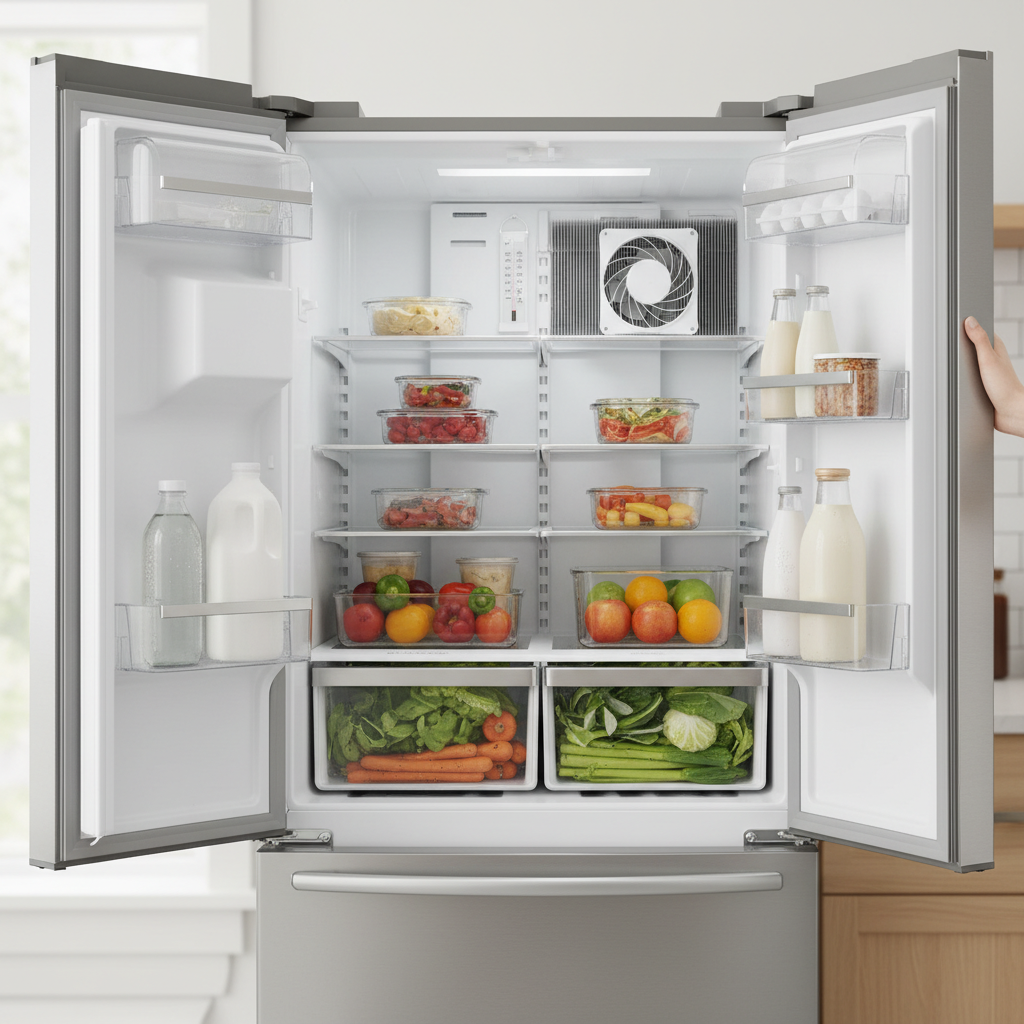
- Food Placement: Don’t block the vents inside the fridge. These vents circulate the cold air.
- Loading: A full fridge is more energy-efficient than an empty one. The food acts as “thermal mass,” helping to maintain a stable temperature. Just be sure not to overcrowd it.
- Location: Keep the fridge away from heat sources like direct sunlight or the oven.
Modern Relevance: Fridges in 2026 and Beyond
Refrigerators have come a long way. In 2026, many models have:
- Smart Features: Touchscreens, internal cameras, and Wi-Fi connectivity are becoming more common. You can even get notifications on your phone if the door is left open!
- Energy Efficiency: Modern refrigerators are significantly more energy-efficient than older models. Look for the ENERGY STAR label when you buy a new one.
- Organization: New designs prioritize organization, with features like adjustable shelves and specialized compartments to reduce food waste.
The Energy System is constantly evolving, with new models offering advanced temperature control and smart features to help you save energy and reduce your carbon footprint.
The Takeaway: Your Fridge’s Simple Secret
So, next time you reach for something cold, remember the simple science behind it. Your refrigerator is a clever machine that removes heat, keeping your food fresh and your drinks chilled. The next time someone asks how a fridge works, you’ll be able to explain the basic principles: compression, heat release, expansion, and heat absorption. It’s a continuous cycle that keeps the cold in and the heat out, all thanks to the magic of a special gas.
FAQ: Your Fridge Questions Answered
Here are some frequently asked questions about how refrigerators work:
- How much electricity does a refrigerator use?
A typical refrigerator uses between 300 and 800 watts of electricity, but this can vary depending on the age, size, and model.
- Why is my refrigerator not cooling?
Possible causes include a faulty compressor, a blocked condenser coil, a broken door seal, or a lack of power. If it’s not cooling, it’s best to call a professional.
- How often should I clean my refrigerator?
A good rule of thumb is to clean the inside of your fridge every month and wipe up spills immediately. Clean the condenser coils at least twice a year.
- What’s the best temperature for my refrigerator?
Aim for between 37 and 40 degrees Fahrenheit (3 to 4 degrees Celsius).
- Why is my food freezing in the refrigerator?
This could be due to the temperature setting being too low, or items being placed too close to the cooling vents. Adjust the temperature and reposition items.
- How do I know if my refrigerator is energy efficient?
Look for the ENERGY STAR label when buying a new refrigerator. It signifies that the appliance meets specific energy efficiency standards.
- How long does a refrigerator last?
With proper maintenance, a refrigerator can last 10-20 years. However, this depends on the model and how well it is maintained.
- Can I put hot food in the refrigerator?
It’s best to let hot food cool to room temperature before putting it in the fridge. This prevents the fridge from having to work extra hard to cool things down.