
Picture this: It’s a busy weeknight. You’re starving, and the leftovers from last night are calling your name. You pop that plate of deliciousness into the microwave, set the timer, and a few minutes later, voila! A hot, satisfying meal. But have you ever stopped to wonder how this kitchen workhorse actually does its job? It’s time to pull back the curtain on the microwave and see what makes it tick.
At a Basic Level: Microwaves and Molecules
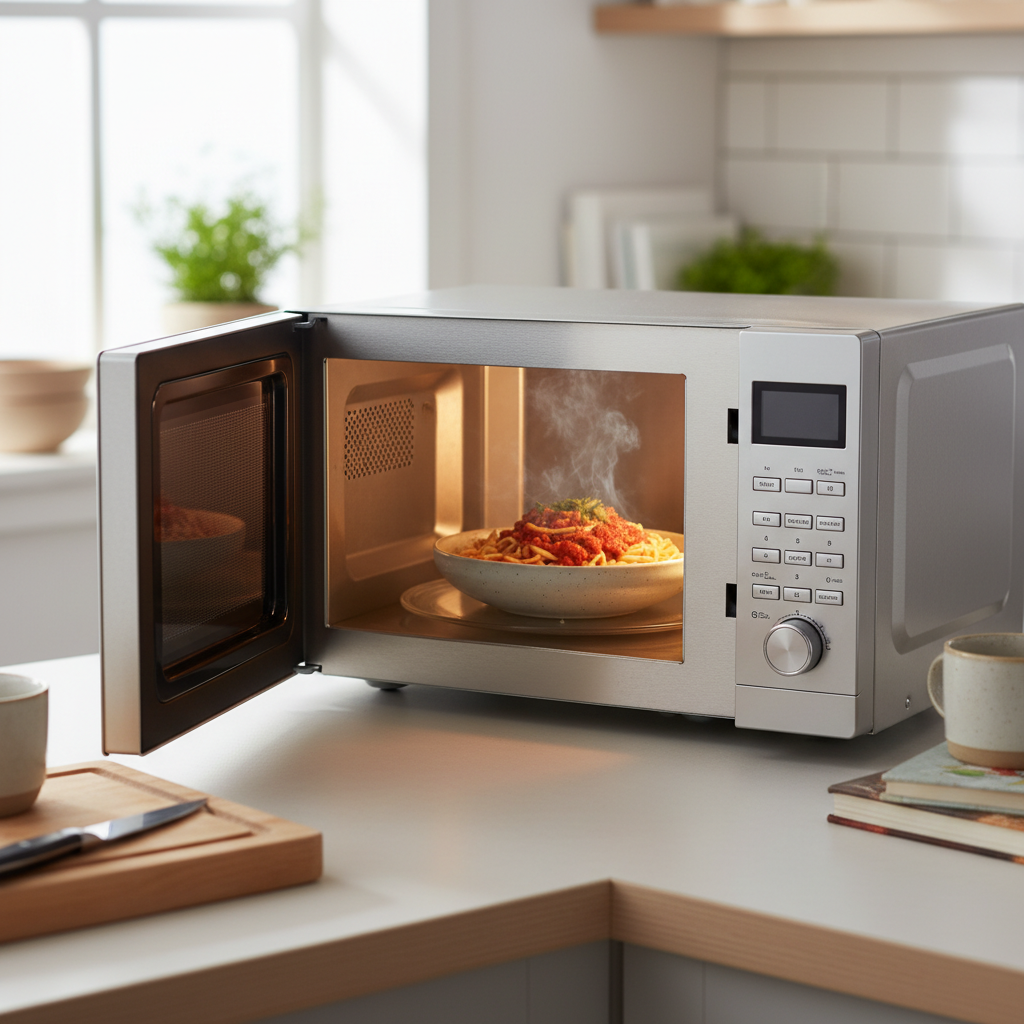
At its core, a microwave oven works by generating electromagnetic waves that interact with the food inside. Think of these waves as a special type of energy that’s invisible to the human eye. They belong to the electromagnetic spectrum, nestled between radio waves and infrared waves.
The magic happens because of how these waves interact with the molecules in your food. Specifically, the microwaves are particularly good at getting water molecules (H₂O) to vibrate. Water molecules have a slightly positive and slightly negative side, like tiny magnets. When the microwaves hit them, they cause these molecules to rapidly rotate and bounce around, creating friction. This friction generates heat, and that’s what cooks (or reheats) your food from the inside out. This process is called dielectric heating.
Breaking It Down: The Key Parts of a Microwave
A microwave oven is a carefully engineered system with several key components working in concert. Let’s take a look at the major players:
- Magnetron: This is the heart of the microwave. It’s a vacuum tube that generates the microwaves themselves. The magnetron takes electrical energy from your wall outlet and converts it into those cooking waves.
- Waveguide: The waveguide is like a tunnel that guides the microwaves from the magnetron into the cooking chamber. It ensures the waves are directed where they need to go.
- Cooking Chamber: This is the main compartment where you place your food. The inside walls are typically made of metal. This metal helps reflect the microwaves, bouncing them around so they cook the food evenly.
- Turntable: Many microwaves have a rotating glass plate. This turntable ensures the food is exposed to the microwaves from all angles, leading to more uniform cooking.
- Control Panel: This is your command center. It allows you to set the cooking time, power level, and any special features the microwave might have.
- Power Supply: The power supply provides the high voltage needed to operate the magnetron.
How They Work Together: A Step-by-Step Guide
Now, let’s put it all together and see how these parts interact to cook your food:
- Power Up: When you press the start button, electricity flows from the wall outlet into the microwave.
- Magnetron Activation: The power supply energizes the magnetron. The magnetron then starts generating microwaves.
- Waveguide Directs: The microwaves travel through the waveguide and into the cooking chamber.
- Waves Bounce: The metal walls of the cooking chamber reflect the microwaves, causing them to bounce around.
- Food Absorption: The microwaves penetrate the food, and the water molecules (and other polar molecules) within the food start to vibrate, generating heat.
- Heat Spreads: As the water molecules heat up, they transfer their energy to the surrounding food, cooking it from the inside out.
- Cooking Complete: When the timer runs out, the microwave shuts off, and your food is ready to eat.
Common Misconceptions: Debunking Microwave Myths
There are a few myths surrounding microwaves that deserve clarification:
- Myth: Microwaves cook food from the inside out. While microwaves *do* heat food internally, the process isn’t perfectly from the inside out. Microwaves penetrate the outer layers of food first. The outer layers then heat the inner portions through conduction.
- Myth: Microwaves make food “radioactive.” This is completely false. Microwaves use non-ionizing radiation, which does not change the structure of the food molecules. The waves stop producing heat when the microwave is turned off.
- Myth: Microwaves destroy all the nutrients in food. While some nutrients can be lost during microwave cooking (as with any cooking method), microwaves can often preserve nutrients better than other methods because of the shorter cooking times and the fact that you often use less water.
Usage Habits and Environmental Factors: What Affects Performance?
Several factors can influence how well your microwave works:
- Wattage: Microwaves come in different wattages (power levels). Higher-wattage microwaves cook faster. The ideal wattage for most microwave recipes is 1,000 watts.
- Food Type: Foods with high water content (like vegetables) cook quickly and evenly in the microwave. Denser foods may require more time and lower power settings.
- Container Material: Always use microwave-safe containers. Metal containers, aluminum foil, and some plastics can cause sparks and damage the microwave.
- Food Placement: For even cooking, arrange food in a circular pattern on the turntable, with thicker parts towards the outside.
- Ventilation: Make sure your microwave has adequate ventilation, and that it’s placed a safe distance from other objects.
Modern Relevance: Microwaves in the 2020s
Microwaves continue to evolve with our fast-paced lives. Here’s how they’re keeping up in the 2020s:
- Smart Microwaves: Many newer microwaves connect to the internet, allowing you to control them remotely, download recipes, and even scan barcodes on food packaging for automatic cooking instructions.
- Convection Microwaves: These models combine microwave technology with a convection oven, offering the ability to bake, roast, and crisp food, expanding their versatility.
- Energy Efficiency: Manufacturers are constantly improving the energy efficiency of microwaves, helping you save on your electricity bill.
- Emphasis on Convenience: The demand for quick and easy meal preparation is stronger than ever. Microwaves fit this need perfectly, allowing people to cook meals and reheat leftovers in minutes.
For more insights on how to care for your devices and make the most of their efficiency, check out The Phone Charging Secret: Simple Habits for a Longer-Lasting Battery (and Peace of Mind), a related article offering tips on optimizing your tech usage.
Mental Model: Explaining Microwaves to Others
Now, armed with this knowledge, here’s how you can explain how a microwave works to a friend or family member:
“A microwave is like a special box that uses invisible waves to cook your food. It has a special part called a magnetron that makes these waves. These waves bounce around inside and get the water molecules in your food to vibrate really fast. This vibration creates friction, and friction creates heat. That heat cooks your food from the inside out, making it hot and ready to eat!”
FAQ: Your Microwave Questions Answered
Here are some common questions people have about microwaves:
- Can I put metal in a microwave? No! Metal reflects microwaves, which can cause sparks, fire, and damage to the microwave.
- Why does my food sometimes cook unevenly? Uneven cooking can happen if the food isn’t arranged properly, the turntable isn’t working, or the microwave’s power level is too high for the food type.
- How do I know if a container is microwave-safe? Look for a label that says “microwave-safe.” Glass, ceramic, and certain plastics are generally safe, but avoid metal and thin plastics.
- Can I heat water in the microwave? Yes, but be careful! Water can superheat and suddenly boil explosively. Avoid overheating liquids.
- How do I adjust cooking times for different wattage microwaves? You can use a microwave wattage converter app, or use this formula: Multiply the cooking time on the food packaging by the wattage it recommends, then divide that result by your microwave’s wattage.
- What are those sparks I sometimes see? Sparks are usually caused by metal touching the microwave walls, or by metal in the food itself (like foil). Immediately stop the microwave if you see sparks.
- How often should I clean my microwave? Clean your microwave regularly to prevent food buildup and ensure it operates safely. Wipe up spills promptly.
- How do I find my microwave’s wattage? The wattage is usually listed on a sticker inside the microwave door, on the back of the unit, or in the owner’s manual.
Microwaves are a fantastic invention, and understanding how they work can make your kitchen life easier and safer. So, next time you’re enjoying that reheated meal, you’ll know the secret behind the magic.
For further exploration of home appliances and their inner workings, visit the home page.