
Ugh, that smell. You know the one. You open your washing machine, expecting the fresh scent of clean laundry, and instead, you’re greeted by something… funky. Musty. Like old gym socks that have been marinating in a dark corner. It’s enough to make you want to hold your breath and run. Trust me, I’ve been there. More than once.
It’s incredibly frustrating. You’re washing clothes to get them clean, not to start a science experiment in your laundry room. You try different detergents, fabric softeners, even those little scent boosters, but the smell just keeps coming back. It’s like a stubborn houseguest that refuses to leave. You start to question your sanity. Are you imagining things? Are your clothes actually clean? Is this the end of your love affair with freshly laundered sheets?
Before you resign yourself to a life of smelly laundry, let’s talk about why this happens and, more importantly, what you can do about it. It’s not as complicated as you might think, and with a little effort, you can kick that musty odor to the curb.
The Culprits Behind the Stink: Why Your Washing Machine Smells
So, what’s causing this olfactory assault? It’s usually a combination of factors, creating a perfect breeding ground for bacteria and mold. Let’s break down the usual suspects:
The Soap Scum Situation
We all want our clothes to be sparkling clean, so it’s tempting to load up on detergent. But here’s the thing: most washing machines (especially high-efficiency models) actually use less water than older machines. That means excess detergent doesn’t get fully rinsed away. Over time, it builds up, mixing with dirt, lint, and hard water minerals to create a slimy residue called “scum.” Think of it as the stuff that coats the inside of your shower, but in your washing machine.
This scum clings to the inside of the drum, the hoses, and even the detergent dispenser. It becomes a feast for bacteria and mold, which thrive in the damp, dark environment of your washing machine. And that, my friend, is where the smell comes from.
The Moisture Monster
Washing machines are designed to get wet, obviously. But it’s the leftover moisture that causes problems. After a wash cycle, water can linger in various nooks and crannies: the rubber gasket around the door (especially on front-load washers), the detergent dispenser, and the bottom of the drum. This trapped moisture creates a humid environment that encourages mold and mildew growth.
Think about it: you close the washing machine door after doing a load of laundry, trapping all that moisture inside. It’s like creating a mini-greenhouse for unwanted organisms. And those organisms? They stink.
The Lint Labyrinth
Lint is the fuzzy stuff that comes off your clothes during washing. While some of it gets caught in the lint trap, a surprising amount can bypass the trap and accumulate in other parts of the washing machine, like the drain pump filter and the hoses. This lint, combined with soap scum and moisture, creates another breeding ground for bacteria and mold.
Plus, lint can clog up the drain, leading to even more standing water and a stronger smell. It’s a vicious cycle.
The “Front-Load Fiasco” (Specific to Front Loaders)
Front-loading washing machines are generally more energy-efficient and gentler on clothes than top-loading machines. However, they have a design flaw that makes them particularly susceptible to odor problems: the rubber gasket around the door. This gasket is designed to create a watertight seal, but it also traps moisture and debris.
I remember when my friend Priya bought a fancy new front-load washer. She was so proud of it, until she started complaining about a persistent musty smell. Turns out, she never bothered to wipe down the gasket after each wash. Over time, it became a breeding ground for black mold. It was pretty gross, and it took a lot of scrubbing to get it clean.
Common Mistakes People Make (And Why They Don’t Work)
When faced with a smelly washing machine, most people try a few common fixes. Some work temporarily, but many are just band-aids that don’t address the root cause of the problem. Here’s what NOT to do:
- Overloading on Detergent: As mentioned earlier, excess detergent is a major contributor to the problem. Adding even more won’t help; it’ll just make the scum situation worse.
- Relying Solely on Scent Boosters: Scent boosters might mask the odor for a while, but they don’t eliminate the source of the smell. It’s like putting perfume on a pile of dirty laundry.
- Ignoring the Problem: Hoping the smell will magically disappear is not a strategy. It will only get worse over time.
- Using the Wrong Type of Detergent: High-efficiency (HE) washing machines require special HE detergent that produces less suds. Using regular detergent in an HE machine can lead to excessive suds and more scum buildup. I learned this the hard way when I accidentally used regular detergent in my HE washer. The suds overflowed, creating a bubbly mess all over my laundry room floor. Not fun.
The Real Fix: A Step-by-Step Guide to Eliminating Washing Machine Odor
Okay, enough talk about the problem. Let’s get down to business. Here’s a practical, step-by-step guide to cleaning your washing machine and eliminating that nasty smell:
Step 1: The Vinegar and Baking Soda Wash
This is your first line of defense. Vinegar and baking soda are natural cleaners and deodorizers that can help break down soap scum and kill bacteria.
- Empty the Washing Machine: Make sure there are no clothes inside.
- Add Vinegar: Pour 2 cups of white vinegar into the detergent dispenser.
- Add Baking Soda: Sprinkle ½ cup of baking soda directly into the drum.
- Run a Hot Water Cycle: Select the hottest water setting and the largest load size. Let the cycle run completely.
I usually do this on a weekend morning when I have time to let the cycle run uninterrupted. The combination of vinegar and baking soda creates a fizzing action that helps loosen the gunk inside the machine.
Step 2: Clean the Detergent Dispenser
The detergent dispenser is a prime spot for scum and mold buildup. Remove the dispenser (most are removable, but check your owner’s manual) and soak it in hot, soapy water. Use an old toothbrush to scrub away any residue.
I was amazed at how much gunk had accumulated in my detergent dispenser. It was like a hidden world of grime. Cleaning it thoroughly made a big difference in the overall smell of my washing machine.
Step 3: Scrub the Rubber Gasket (Front Loaders)
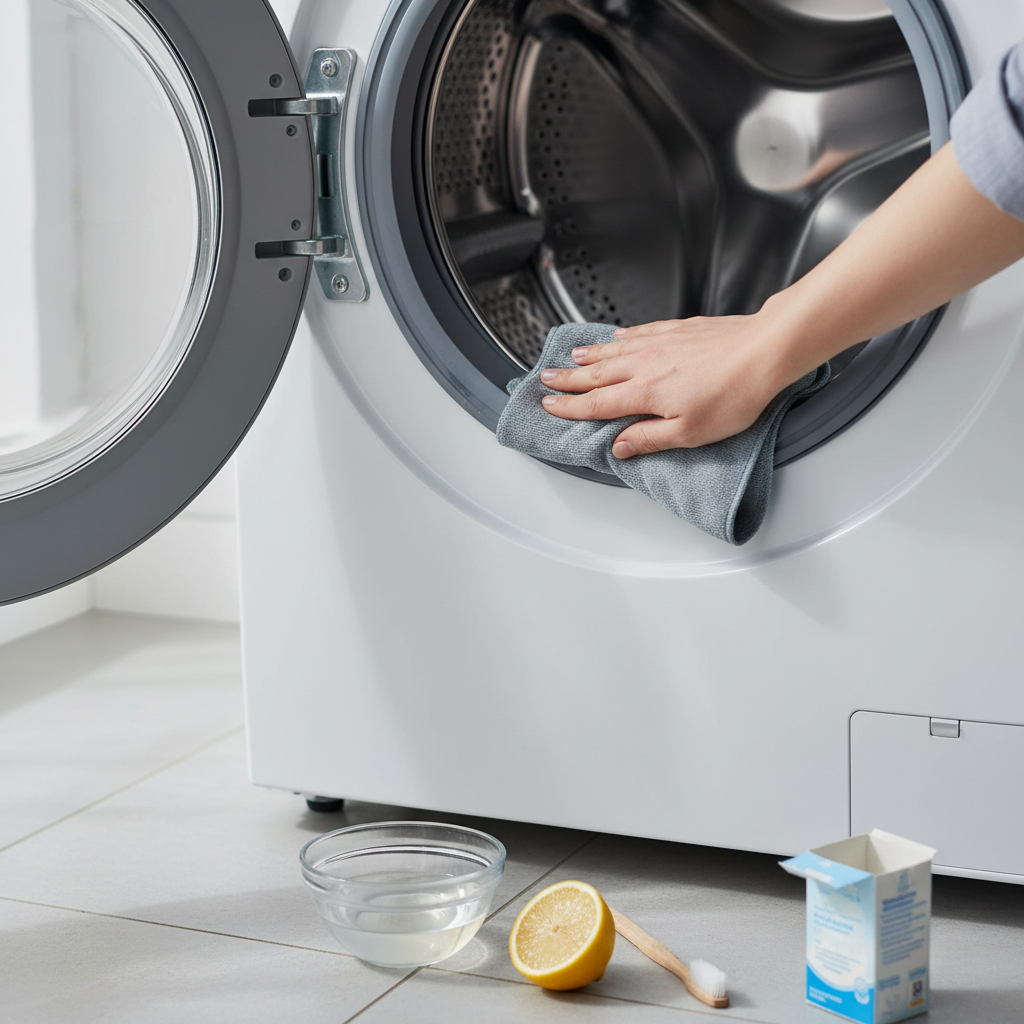
This is where the elbow grease comes in. Mix a solution of equal parts white vinegar and water. Dip a clean cloth or sponge into the solution and thoroughly scrub the rubber gasket around the door. Pay special attention to the folds and crevices, where mold tends to hide.
For stubborn mold stains, you can try using a bleach solution (1 part bleach to 10 parts water). However, be careful when using bleach, and always wear gloves and eye protection. Rinse the gasket thoroughly with clean water after using bleach.
Step 4: Clean the Lint Trap
Locate the lint trap (usually in the agitator for top-load washers or near the bottom of the drum for front-load washers). Remove the trap and clean out any accumulated lint and debris. Rinse the trap with water and replace it.
I try to clean my lint trap after every few loads of laundry. It’s a quick and easy task that can prevent clogs and keep your washing machine running smoothly.
Step 5: Leave the Door Open
After each wash cycle, leave the washing machine door slightly ajar to allow air to circulate and prevent moisture buildup. This is especially important for front-load washers.
I know it might seem counterintuitive to leave the door open, but it really makes a difference. The circulating air helps dry out the inside of the machine and inhibits mold growth.
When to Call a Professional
In most cases, you can eliminate washing machine odor with regular cleaning and maintenance. However, there are times when professional help is needed:
- Persistent Odor: If you’ve tried all the steps above and the smell persists, there might be a deeper problem, such as a clogged drain or a mold infestation in the internal components of the machine.
- Water Leaks: If you notice water leaking from your washing machine, it’s important to have it inspected by a professional to prevent further damage.
- Strange Noises: Unusual noises during the wash cycle could indicate a mechanical problem that needs to be addressed by a qualified technician.
Long-Term Prevention: Keeping the Stink Away
Once you’ve eliminated the odor, you’ll want to keep it from coming back. Here are some tips for long-term prevention:
- Use the Right Amount of Detergent: Follow the manufacturer’s instructions and use only the recommended amount of detergent.
- Use HE Detergent (for HE Machines): Always use high-efficiency (HE) detergent in HE washing machines.
- Run a Cleaning Cycle Regularly: Most modern washing machines have a self-cleaning cycle. Run this cycle at least once a month to keep the machine clean and fresh. If your machine doesn’t have a cleaning cycle, you can use the vinegar and baking soda method described above.
- Wipe Down the Gasket (Front Loaders): After each wash cycle, wipe down the rubber gasket around the door with a clean cloth to remove any moisture and debris.
- Leave the Door Open: As mentioned earlier, leave the washing machine door slightly ajar after each wash cycle to allow air to circulate.
- Clean the Lint Trap Regularly: Clean the lint trap after every few loads of laundry.
- Consider Using Washing Machine Cleaning Tablets: There are several washing machine cleaning tablets available that can help keep your machine clean and fresh. Follow the manufacturer’s instructions for use.
Modern Relevance: Laundry in the 2020s
We live in a time of convenience and efficiency. We expect our appliances to work flawlessly, and we often take them for granted. But even the most advanced washing machines require regular maintenance to keep them running smoothly and smelling fresh.
With our busy lifestyles, it’s easy to fall into the trap of neglecting our washing machines. We might overload them, use too much detergent, or forget to clean the lint trap. But taking a few simple steps to care for our washing machines can prevent odor problems and extend the life of the appliance. It also reduces waste from prematurely replacing appliances.
Plus, in a world increasingly concerned with sustainability, preventing mold and bacteria growth in your washing machine is an eco-friendly practice. You’ll use less water and energy, and you’ll avoid the need for harsh chemicals to eliminate odors.
So, take a few minutes to show your washing machine some love. It’ll thank you with fresh, clean laundry for years to come.
FAQ: Your Smelly Washing Machine Questions Answered
-
Q: Why does my front load washer smell like mildew?
A: Front load washers are prone to mildew due to the rubber gasket that traps moisture. Regularly wipe down the gasket and leave the door ajar to prevent mildew growth.
-
Q: How often should I clean my washing machine?
A: Ideally, you should run a cleaning cycle (or use the vinegar and baking soda method) at least once a month. Clean the lint trap after every few loads of laundry.
-
Q: Can I use bleach to clean my washing machine?
A: Yes, you can use bleach to clean your washing machine, but use it sparingly and always dilute it with water. Never mix bleach with vinegar, as this can create toxic fumes.
-
Q: What’s the best way to get rid of black mold in my washing machine?
A: For black mold, use a bleach solution (1 part bleach to 10 parts water) to scrub the affected areas. Wear gloves and eye protection, and rinse thoroughly with clean water.
-
Q: Does leaving the washing machine door open really help?
A: Yes, leaving the door open allows air to circulate and prevents moisture buildup, which is a key factor in preventing mold and mildew growth.
-
Q: My clothes smell bad even after washing. What’s going on?
A: If your clothes smell bad even after washing, it’s likely due to a buildup of bacteria and mold in your washing machine. Clean your washing machine thoroughly and make sure to use the right amount of detergent.
-
Q: Can I use essential oils to freshen up my washing machine?
A: While some people use essential oils to freshen up their washing machines, it’s important to use them sparingly and dilute them with water. Some essential oils can damage the rubber components of your washing machine.