
Picture this: It’s a Tuesday evening, you’re starving after a long day, and the leftovers from last night’s dinner are calling your name. You pop that container into the microwave, punch in a minute or two, and a minute later, you’re enjoying a hot meal. But have you ever stopped to wonder, how exactly does that box of magic heat up your food so quickly? Let’s dive in and demystify the microwave oven, a common kitchen appliance that uses some pretty cool science.
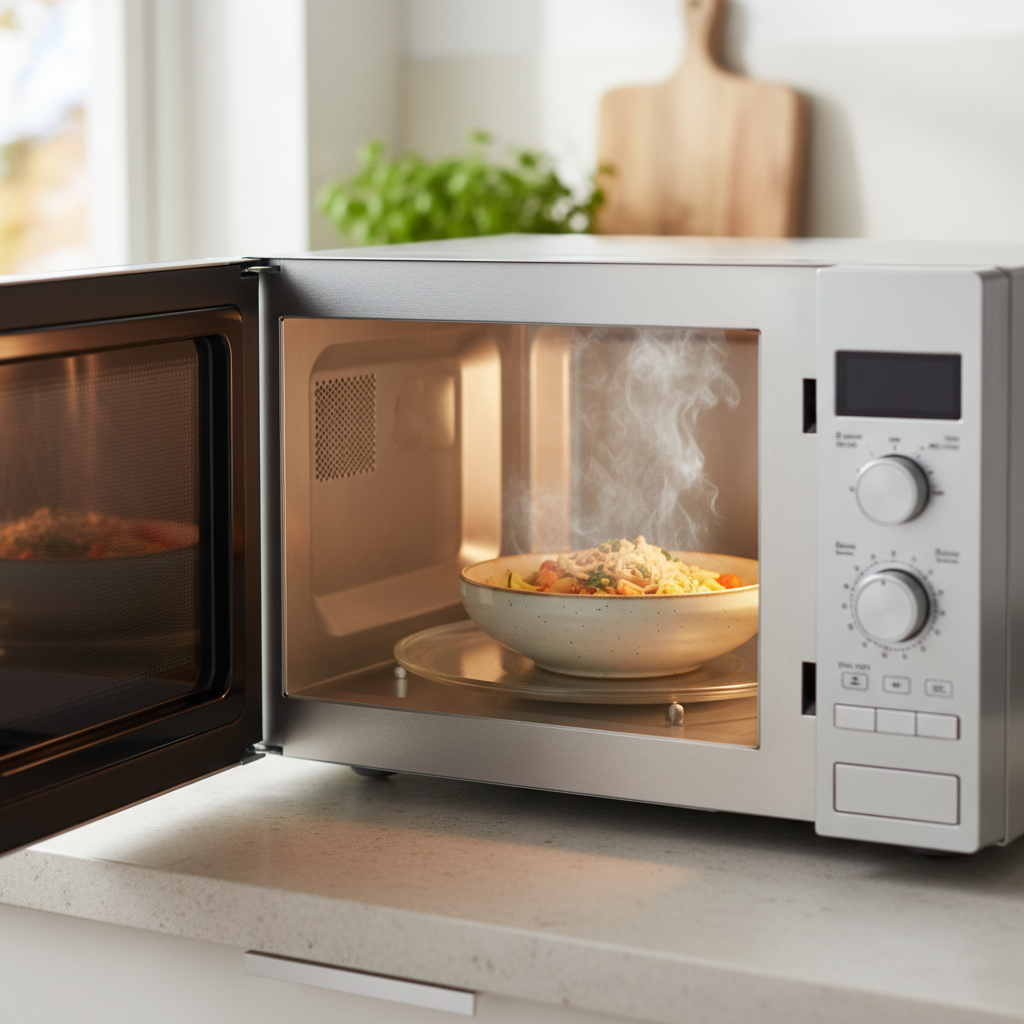
The Big Picture: Invisible Waves Doing the Work
At a basic level, a microwave oven works because it uses electromagnetic waves, which are a type of energy that travels through space, much like light or radio waves. These waves, however, are at a specific frequency that is absorbed very well by water molecules, fats, and sugars. This absorption causes these molecules to vibrate rapidly, and that rapid vibration creates heat. Think of it like rubbing your hands together really fast—the friction creates warmth. That’s essentially what’s happening to the molecules inside your food.
Breaking Down the Parts: What Makes the Magic Happen?
Let’s take a look inside the microwave to understand the key players:
- The Magnetron: This is the heart of the microwave. It’s a special vacuum tube that generates the microwaves. Think of it as the oven’s “wave generator.”
- The Waveguide: This is a metal tube that directs the microwaves from the magnetron into the cooking chamber. It’s like a tunnel that guides the energy.
- The Cooking Chamber: This is the box where you put your food. It’s designed to reflect microwaves, so they bounce around, ensuring that the food is heated evenly.
- The Turntable: This rotating platform ensures that all parts of your food get exposed to the microwaves, preventing hot spots and cold spots.
- The High-Voltage Transformer: This component boosts the voltage from your wall outlet to power the magnetron. It’s like a power-up for the wave generator.
- The Control Panel: This is the interface that lets you set the time and power levels. It’s your command center.
Here’s how these parts work together, step-by-step:
- Power On: When you press the start button, electricity flows from your wall outlet to the microwave.
- Transformer’s Role: The high-voltage transformer steps up the voltage, giving the magnetron the power it needs.
- Wave Generation: The magnetron kicks into action, creating microwaves.
- Wave Guidance: The waveguide directs these microwaves into the cooking chamber.
- Absorption & Heating: Inside the chamber, the microwaves bombard the food, and the water molecules, fats, and sugars in the food absorb the energy.
- Heat Production: The absorbed energy causes these molecules to vibrate rapidly, generating heat from the inside out.
- Rotation: The turntable rotates the food, ensuring that all parts are evenly heated.
Common Misconceptions: Busting the Myths
There are some common misconceptions about how microwaves work:
- Myth: Microwaves cook food from the inside out. In reality, microwaves heat the outer layer of the food first, and the heat then spreads inwards. It’s like how a campfire heats a marshmallow – the outside gets toasted first.
- Myth: Microwaves make food radioactive. This is completely false. Microwaves are a form of non-ionizing radiation, meaning they don’t have enough energy to damage your cells or make food radioactive. Think of it like radio waves; they don’t make your radio radioactive either.
- Myth: Metal objects can always be put in a microwave. While some metal objects are microwave-safe, others can cause sparks and damage the oven. It’s best to avoid metal unless you know it’s specifically designed for microwave use.
Usage Habits & Environment: Small Changes, Big Differences
Your habits and the environment can have an impact on how well your microwave works:
- Food Composition: Foods with high water content, like vegetables, heat up faster because water molecules absorb microwaves very effectively. Drier foods will take longer.
- Container Choice: Always use microwave-safe containers. Metal and some plastics can either reflect microwaves (ineffective heating) or melt and release chemicals.
- Power Level: Using a lower power level for longer periods can often result in more even heating than using high power for a shorter time. It prevents the outside from overcooking before the inside is heated.
- Ventilation: Make sure the vents on your microwave aren’t blocked, allowing proper airflow. Overheating can reduce the lifespan of the microwave.
Environmental Note: As we move into 2026, energy efficiency is a huge factor. Microwaves, like other appliances, have become more energy-efficient over the years. Modern models often have features like “eco mode” to reduce standby power consumption, helping you save on your electricity bill.
The Future of Microwaving: Smart Ovens and Beyond
Looking ahead, microwaves are getting smarter. You’ll find models with:
- Smart Sensors: These ovens can detect the humidity level in the cooking chamber to automatically adjust cooking times and power levels.
- Pre-programmed Settings: Many have settings for specific foods, taking the guesswork out of cooking.
- Integration: Some are connecting with your smartphone, so you can control your microwave from anywhere in the house and even receive cooking updates.
One area of innovation is the use of microwave technology for things beyond just reheating food. Scientists and engineers are exploring the use of microwaves in medical applications, like cancer treatment. Also, there’s ongoing research into more efficient magnetrons and alternative microwave-generating technologies, such as solid-state microwave generators, that could make microwaves even more efficient and reliable.
Explaining It to Someone Else: The Simpler Picture
So, next time you’re using a microwave, you can think of it like this: It’s a special box that sends out tiny radio waves (microwaves). These waves are absorbed by the water, fats, and sugars in your food, causing these molecules to vibrate very quickly, generating heat from the inside out. The turntable ensures that the food heats up evenly. That’s it! No magic, just clever science.
FAQs: Answering Your Microwave Questions
Here are some of the most common questions people have about how microwaves work:
- Why does food get hot in the microwave?
The microwaves cause the water, fat, and sugar molecules in the food to vibrate, creating heat. - Can I put metal in a microwave?
Generally, no. Metal can reflect microwaves, which can damage the oven or cause sparks. Some metal containers are specifically designed for microwave use. - Why does my food sometimes have cold spots?
This can happen if the food isn’t rotating properly or if the microwaves aren’t evenly distributed. Make sure your turntable is working and try rearranging the food. - How does the microwave know how long to cook for?
You tell it! The control panel lets you set the time based on the type of food and your desired result. Some microwaves have pre-programmed settings. - Is it safe to stand in front of a microwave while it’s running?
Yes, it’s generally safe. Microwaves are designed to contain the radiation. However, it’s always a good idea to keep a reasonable distance. - Why do some foods explode in the microwave?
This usually happens because of trapped steam. Piercing foods like potatoes or hot dogs before microwaving helps release steam and prevent explosions. - Do microwaves use a lot of electricity?
They can use a fair amount, but modern microwaves are designed to be relatively energy-efficient. - How can I make my microwave last longer?
Follow the manufacturer’s instructions. Don’t use damaged containers and clean spills quickly. Ensure the vents are not blocked, and avoid running it empty.