
Remember that blissful feeling? It’s a scorching summer day, and you walk into a building, and *whoosh* – instant relief. That’s the magic of an air conditioner at work. But have you ever stopped to wonder how a machine can pull heat right out of the air? It’s not about magic; it’s about physics, clever engineering, and a fascinating process that happens all around us, often without a second thought.
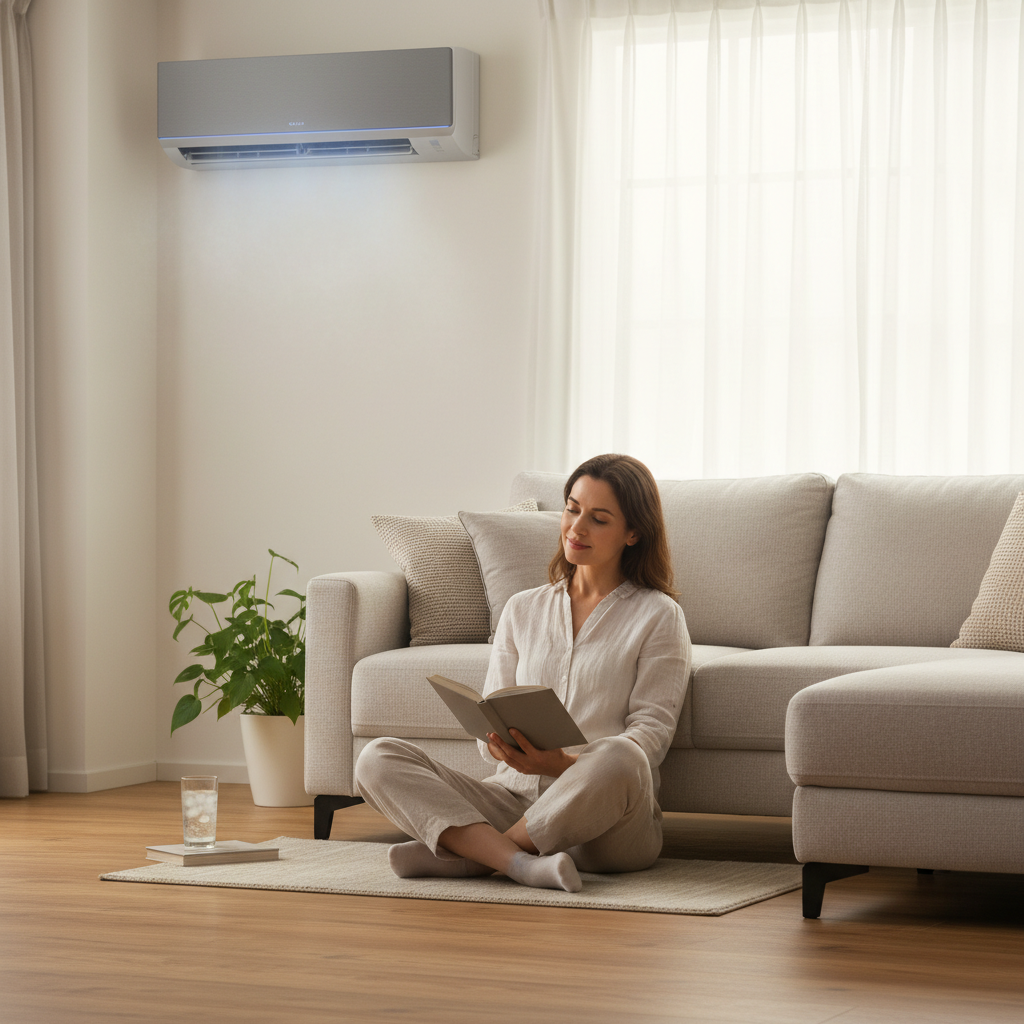
At a basic level, an air conditioner is a heat-moving machine. It doesn’t *create* cold air. Instead, it *removes* heat from your home and dumps it outside. Think of it like a reverse refrigerator – instead of keeping food cold inside a box, it keeps your entire living space cool.
## The Big Picture: Heat Transfer Simplified
The core principle behind air conditioning is heat transfer, a fundamental concept in thermodynamics. Heat naturally flows from warmer areas to cooler areas. Your AC unit simply speeds up this process, using a special fluid called a *refrigerant* to grab heat from inside your home and release it outside.
To understand it better, let’s break down the main components and how they work together, step by step.
## The Key Players: Inside the AC System
Here are the main parts of your AC system, and what they do:
* **Compressor:** The heart of the system. It’s a pump that increases the pressure of the refrigerant, which also raises its temperature.
* **Condenser Coil (Outdoor Unit):** This is where the hot, compressed refrigerant releases its heat to the outside air. You’ll often see this as the noisy unit outside your house.
* **Expansion Valve:** This valve rapidly decreases the pressure of the refrigerant, which causes it to cool down significantly.
* **Evaporator Coil (Indoor Unit):** The cold refrigerant absorbs heat from the air inside your home, cooling it down.
* **Refrigerant:** The special fluid that circulates throughout the system, absorbing and releasing heat.
* **Fans:** These circulate air over the coils to facilitate the heat transfer process.
## Step-by-Step: The AC Cycle
Now, let’s follow the refrigerant’s journey and see how these parts work together:
1. **Heat Absorption (Evaporator Coil):** Warm air from your house is drawn over the cold evaporator coil (usually located inside your home). The liquid refrigerant inside the coil is much colder than the air. As the warm air passes over the coil, the refrigerant *absorbs* the heat. This process causes the refrigerant to change from a liquid to a gas. Think of it like a sponge soaking up water.
2. **Compression (Compressor):** The refrigerant, now in a gaseous state and carrying the heat, is drawn into the compressor. The compressor squeezes the refrigerant, increasing its pressure and temperature. This is similar to how a bicycle pump heats up when you pump air into a tire – compressing a gas generates heat.
3. **Heat Rejection (Condenser Coil):** The hot, high-pressure refrigerant travels to the condenser coil, located outside your home. Here, a fan blows air across the coil, allowing the refrigerant to *release* its heat into the outside environment. As the heat dissipates, the refrigerant changes back into a high-pressure liquid.
4. **Expansion (Expansion Valve):** The liquid refrigerant then passes through the expansion valve. This valve rapidly reduces the refrigerant’s pressure, causing it to cool down significantly.
5. **Repeat (Back to the Evaporator):** The cold, low-pressure refrigerant returns to the evaporator coil inside your house, and the cycle begins again. This continuous loop keeps removing heat from your home, keeping you comfortable.
## Busting Common AC Myths
There are a few misconceptions about how air conditioners work. Understanding these can help you better appreciate the technology:
* **Myth:** ACs “create” cold air.
**Reality:** They *remove* heat, leaving behind cooler air.
* **Myth:** Bigger is always better.
**Reality:** An AC that’s too large can cool your home unevenly and waste energy.
* **Myth:** You can set your thermostat as low as possible to cool your home faster.
**Reality:** The AC will run at full capacity until the desired temperature is reached. Setting it lower won’t speed up the process.
## Small Changes, Big Differences
Several factors can affect how well your AC performs:
* **Dirty Air Filters:** A clogged filter restricts airflow, making the AC work harder and less efficiently. Replace or clean them regularly.
* **Blocked Outdoor Unit:** Make sure the condenser coil outside isn’t blocked by bushes, debris, or other obstructions. This hinders heat release.
* **Insulation:** Good insulation in your home helps prevent heat from entering, reducing the load on your AC.
* **Window Coverings:** Closing curtains and blinds during the hottest part of the day can significantly reduce heat gain from sunlight.
* **Regular Maintenance:** Annual checkups by a qualified HVAC technician can keep your system running smoothly.
## Modern Relevance: Smart Tech and Energy Efficiency
In 2026, air conditioning has become even smarter and more efficient. Many homes now use:
* **Smart Thermostats:** These learn your schedule and preferences, automatically adjusting the temperature to save energy. You can control them remotely via your smartphone.
* **Zoning Systems:** These allow you to control the temperature in different areas of your home, avoiding cooling unused spaces.
* **High-Efficiency AC Units:** Manufacturers constantly develop new models that use less energy and use eco-friendly refrigerants.
## The Mental Model: Explaining AC in Simple Terms
So, how do you explain how an air conditioner works to someone else? Here’s a simple way:
“Imagine your AC as a heat-moving machine. It sucks the heat from inside your house, like a vacuum cleaner for warmth. A special fluid carries that heat outside, where the AC dumps it. Inside, it’s cool and comfy; outside, it’s a bit warmer because of the heat the AC removed.”
Once you understand this, the rest makes sense. You now know that your AC works by removing heat from your home, not by adding cold. It’s a continuous cycle, a process, that keeps you comfortable, even on the hottest days.
## FAQ: Your Burning Questions About Air Conditioning Answered
Here are some common questions people have about air conditioners:
**1. How often should I change my air filter?**
Most manufacturers recommend changing your air filter every 1 to 3 months, depending on the type of filter and how much you use your AC. Check the filter monthly and replace it when it looks dirty.
**2. Why is my AC making strange noises?**
Unusual noises can indicate various problems, from a dirty fan to a malfunctioning compressor. If you hear anything out of the ordinary, it’s best to call a qualified HVAC technician.
**3. Why is my AC not cooling my house as well as it used to?**
Several things could cause this: a dirty filter, a refrigerant leak, or a problem with the compressor. A professional inspection is often needed to diagnose the issue.
**4. How can I make my AC more energy-efficient?**
Regular maintenance, proper insulation, sealing air leaks, using a programmable thermostat, and closing curtains during peak sun hours can all improve energy efficiency.
**5. What’s the difference between an AC and a heat pump?**
A heat pump can both cool and heat your home. It works similarly to an AC in cooling mode but can reverse the refrigerant flow to provide heat.
**6. Why does my AC drip water?**
It’s normal for your AC to produce condensation, which drips out through a drain pipe. However, if the dripping is excessive or the drain is clogged, it could indicate a problem.
**7. How long does an air conditioner usually last?**
With proper maintenance, an air conditioner can last 10-15 years, or even longer.
**8. Can I install an air conditioner myself?**
While you might be able to install a window unit, central AC installation is complex and requires specialized knowledge and tools. It’s best to hire a professional.
Air conditioning is a marvel of modern technology, a testament to our ability to manipulate the world around us. And the next time you feel that cool blast, you’ll know exactly how it happens.