
Picture this: You flick a switch, and bam, the lights are on. Or you plug in your phone, and it starts charging. We do these things every single day, without a second thought. But have you ever paused to wonder what’s actually happening behind the walls? How does electricity, this invisible force, travel from the power company all the way to your bedside lamp? Today, we’re going to pull back the curtain on your home’s electrical wiring – the unsung hero of modern living.
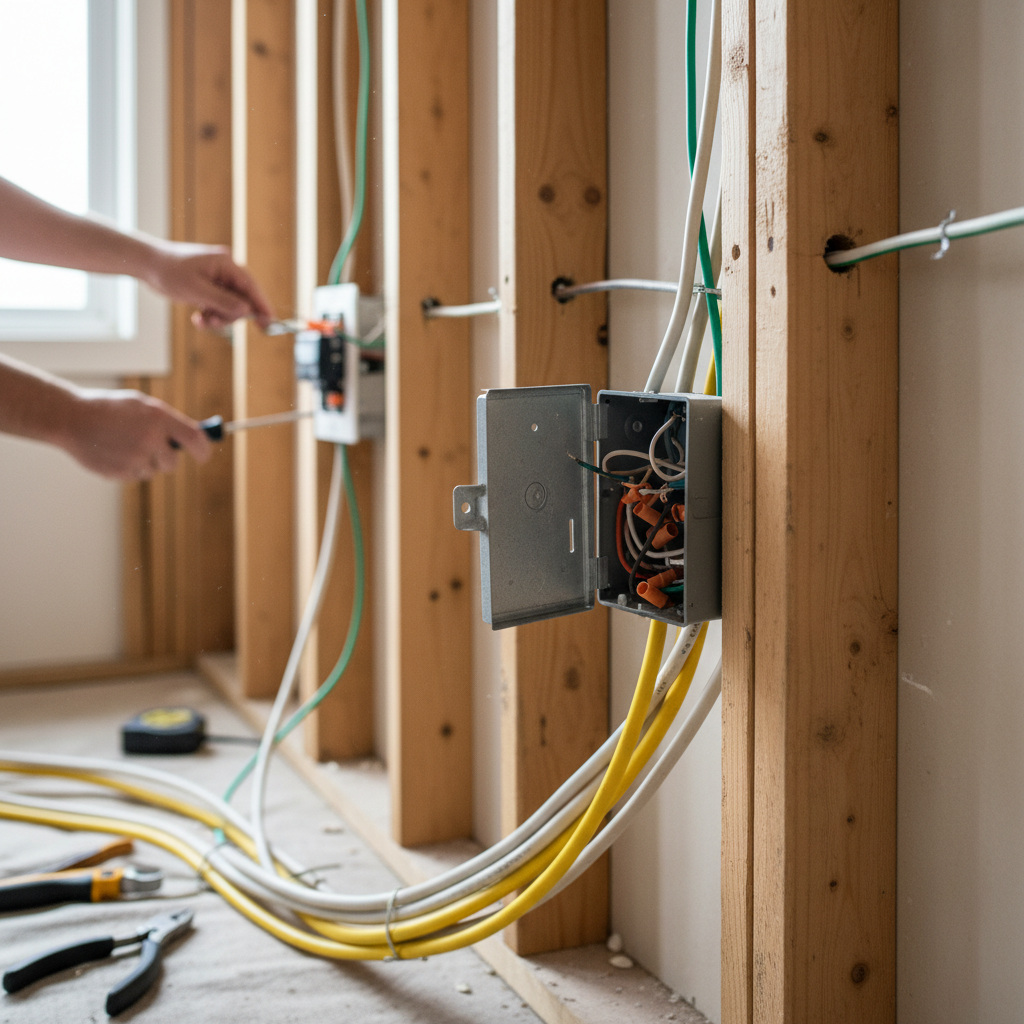
The Big Picture: Electricity’s Journey
At its core, understanding your home’s wiring is about understanding the flow of electricity. Think of it like a river. The power company (your local utility) is the source of the river, and your appliances are the boats that need the water to move. The wiring in your walls is the riverbed, the pathway that electricity takes.
This flow, or current, is measured in amps (amperes). The “pressure” pushing the electricity is measured in volts. And the amount of electrical “work” happening is measured in watts. Your home’s electrical system is designed to safely deliver the right amount of amps and volts to your various appliances so they can perform their functions. From the outlet you plug a lamp into to the circuits that run the whole house, there are specific electrical components and wiring practices at play that all work together.
The Key Players: Wires, Circuits, and Breakers
Let’s break down the main components of your home’s electrical system:
- Wires: These are the “rivers” themselves, usually made of copper or aluminum. Copper is the more efficient conductor, but aluminum is sometimes used due to its lower cost. These wires are insulated with plastic or other materials to prevent shocks and short circuits.
- Circuits: A circuit is a complete pathway for electricity to flow. It starts at the electrical panel (also called a breaker box), runs through wires to your outlets and appliances, and then returns to the panel. Each circuit is designed to handle a specific amount of electrical current.
- Circuit Breakers: These are safety devices housed in your electrical panel. They act like “gates” that automatically shut off the flow of electricity if a circuit is overloaded (too many appliances plugged in) or if a short circuit occurs (a dangerous path for electricity).
The journey starts at the power lines coming into your house. These lines connect to your electrical panel, the central hub of your home’s electrical system. From the panel, wires run to different parts of your house, creating various circuits that power different rooms or appliances. Your home’s electrical panel is essentially a distribution center, splitting the incoming power into smaller, manageable circuits to power different areas of your home safely. Each circuit is protected by a circuit breaker, which acts as a safety switch.
Following the Wires: A Step-by-Step Tour
Now, let’s trace the path of electricity from the power company to your favorite gadget, for instance, a hair dryer:
- Power In: The electricity flows into your house through thick wires connected to the power grid.
- The Meter: The electricity passes through your meter, which measures how much electricity you’re using (and what you pay for).
- The Panel: The electricity enters your electrical panel, where it’s distributed to various circuits.
- The Circuit: The electricity flows through a specific circuit, a dedicated pathway for that hair dryer.
- The Outlet: The electricity reaches the outlet where you plug in the hair dryer.
- The Appliance: The hair dryer uses the electricity to heat up a coil and generate hot air.
- Back to the Panel: After doing its work, the electricity returns to the panel, completing the circuit.
When you plug in the hair dryer, electricity flows from the outlet, through the hair dryer’s heating element, and back to the electrical panel, completing the circuit. If you have too many appliances plugged in at once, or if there’s a problem with the wiring, the circuit breaker will “trip,” shutting off the power to prevent damage or fire.
Decoding the Wires: Color Codes and Gauges
You might have noticed that electrical wires come in different colors. These colors aren’t just for show; they have specific meanings and purposes:
- Black or Red: These wires are typically “hot” wires, carrying the electrical current to your appliances.
- White: This is the “neutral” wire, which completes the circuit by carrying the current back to the panel.
- Green or Bare Copper: These are the “ground” wires, which provide a safety pathway in case of a fault (like a short circuit).
Wire gauges (thickness) also matter. Thicker wires can carry more current safely. The gauge is represented by a number; the lower the number, the thicker the wire. For example, a 12-gauge wire is thicker than a 14-gauge wire, and thus can handle more current. This is why you need different wiring for different needs. For instance, a small lamp can use a thinner wire, while a heavy-duty appliance like an electric stove needs a thicker wire to handle its higher power demand.
Common Misconceptions: Myths and Truths
Let’s clear up some common misunderstandings about home electrical wiring:
- Myth: Flipping a breaker means the power is completely off. Truth: While the circuit is off, there may still be live wires in the panel. Always treat electrical work with caution, and consider calling a qualified electrician.
- Myth: You can use any wire for any purpose. Truth: Wire gauge and type must match the circuit’s needs. Using the wrong wire can lead to overheating and fire.
- Myth: Electricity always takes the path of least resistance. Truth: This is a simplification. Electricity flows through all available paths, but more current will flow through the path of least resistance.
How Habits and Environment Affect Performance
Your usage habits and the environment around your electrical system can have a significant impact:
- Overloading Circuits: Plugging too many appliances into one circuit can overload it, causing the breaker to trip or, worse, creating a fire hazard.
- Loose Connections: Loose connections in outlets, switches, or the electrical panel can create resistance, generate heat, and potentially cause a fire.
- Moisture: Water and electricity are a dangerous mix. Moisture can corrode wires and create short circuits.
- Old Wiring: Older wiring, especially if it’s not up to code, can be a safety hazard. It may not be able to handle the demands of modern appliances.
Modern Relevance: Wiring for the 2020s
The electrical demands of our homes have changed drastically in recent years. We have more gadgets, smart home devices, and energy-intensive appliances than ever before. This calls for updated wiring practices and more robust electrical systems:
- Smart Home Integration: Many smart home devices communicate wirelessly, but they still need power. Consider having enough outlets and circuits to support your smart home setup.
- Electric Vehicle (EV) Charging: If you own an electric vehicle, you’ll need a dedicated 240-volt circuit and charging station installed.
- Energy Efficiency: Upgrading to LED lighting and energy-efficient appliances can reduce your electricity consumption.
- Increased Load: Homes need to keep up with the rising power demands of modern life.
Final Thoughts: Your Home’s Electrical System in Perspective
Understanding your home’s electrical wiring might seem complex, but it boils down to a few key concepts: the flow of electricity, the circuits that carry it, and the safety devices that protect you. By understanding these basics, you can make informed decisions about your home’s electrical needs, identify potential hazards, and appreciate the invisible power that keeps our modern world running.
Once you have this mental model, you can understand how all the different appliances in your house are connected, and how seemingly small changes like upgrading a breaker can make a big difference in how your home runs. It also enables you to perform basic troubleshooting, such as understanding why a circuit has tripped or why a particular outlet isn’t working.
Remember, when in doubt, call a licensed electrician. They have the expertise and tools to safely handle electrical work.
Frequently Asked Questions (FAQs)
- Why does my breaker keep tripping? This is usually a sign that a circuit is overloaded, meaning too many appliances are drawing too much power. Try unplugging some devices or using a different circuit. If it happens frequently, consult with an electrician.
- What’s the difference between amps and volts? Volts measure electrical “pressure,” while amps measure the flow of electricity (current). Think of volts as the water pressure in a hose, and amps as the amount of water flowing through the hose.
- Is it safe to work on electrical wiring yourself? Basic tasks like changing a lightbulb or outlet cover are usually okay. However, any work involving the electrical panel or complex wiring should be done by a qualified electrician.
- What is the purpose of a ground wire? The ground wire provides a safe path for electricity to flow in case of a fault. It helps prevent electric shock.
- How often should I have my electrical system inspected? It’s a good idea to have your electrical system inspected every 5–10 years, or if you’re buying a new home.
- What are GFCI outlets? Ground Fault Circuit Interrupter (GFCI) outlets are designed to protect against electric shock, particularly in areas near water (bathrooms, kitchens, outdoor areas). They detect imbalances in the electrical current and quickly shut off power.
- My lights flicker sometimes. Should I be worried? Flickering lights can be a sign of a loose connection, an overloaded circuit, or a problem with the wiring. If it happens frequently, it’s best to have an electrician check it out.
- Can I add more outlets to a circuit? It depends on the existing load on the circuit. An electrician can assess your needs and determine if it’s safe to add more outlets.
If you have any further questions about how your home’s electrical wiring works, or want to learn more about another topic in the home, be sure to check out our homepage.