
Ugh, there’s nothing worse than a scorching summer day, you’re looking forward to escaping the heat in your home, and… your air conditioner decides to play tricks on you. Instead of a refreshing blast of cool air, you get a sad puff of warm, humid air. Sound familiar? Trust me, I’ve been there. Countless times. It’s frustrating, it’s confusing, and honestly, it feels like the universe is conspiring against your comfort. But don’t sweat it (pun intended!), because we’re going to break down why this happens and what you can do about it.
The Moment of Truth (and Warm Air)
Let’s paint a picture. It’s a sweltering afternoon, the sun is beating down, and you’ve finally decided to give in and crank up the AC. You hit the button, hear the familiar hum, and…wait for it…warm air. It’s like your AC is actively trying to make things worse. Or maybe it starts cool, but then after a bit, it just gives up and starts blowing warm air.
This is where the panic can set in. Is it broken? Do you need a new one? Are you going to be stuck sweating for the rest of the summer? Take a deep breath. Before you start imagining worst-case scenarios and emptying your wallet, let’s look at the usual suspects.
Why Is My AC Blowing Warm Air? The Usual Suspects
Okay, so your AC is on the fritz. What’s actually going on? There are several common culprits that can cause this frustrating problem. We’ll go through them one by one. And don’t worry, we’ll keep the tech talk to a minimum.
1. Dirty Air Filters: The Most Common Culprit
This is usually the first thing to check, and often the easiest fix. Your air conditioner has filters to catch dust, pet dander, and other gunk floating around in your air. Over time, these filters get clogged. A clogged filter restricts airflow, making your AC work harder (and less efficiently) to cool your home. The harder it works, the less effective it becomes, and warm air starts blowing out. Think of it like trying to breathe through a blocked nose – not fun, and definitely not helpful.
What people get wrong: They forget to check (or even know about) the filters. Or, they might think the filter is fine because it *looks* clean. Trust me, even a slightly dirty filter can cause problems. Also, people often use the wrong kind of filter, which can also affect performance.
The real fix: Locate your air filters (usually in the return air vents or in the unit itself). Check them. If they look dirty, replace them. Most filters are easy to pop out and replace. You can find replacement filters at any hardware store or online. Aim to change them every 1-3 months, depending on how much you use your AC and how dusty your home is. Pro tip: Write the date of replacement on the filter with a marker, so you remember when you changed it last.
2. Frozen Evaporator Coil: The Icy Culprit
This is less common than a dirty filter, but it’s still a frequent problem. The evaporator coil is the part of your AC that absorbs heat from your home. If this coil freezes over, the AC can’t cool the air properly, and again, you get warm air blowing out.
What causes the freeze? Usually, it’s due to poor airflow (back to those filters!), low refrigerant levels (which means a leak somewhere), or even the temperature being too low outside (some units aren’t designed to run when it’s super cold). When there’s not enough warm air flowing over the coil, the moisture on the coil freezes.
What people get wrong: They assume it’s a major problem and panic. They also might try to run the AC even when it’s frozen, making the problem worse.
The real fix: First, turn off the AC and let the coil thaw completely. This can take several hours. While you’re waiting, check your filters (see above!). If the coil keeps freezing, you might have a refrigerant leak, which will require professional help. If you have an older AC unit, you may have an older refrigerant, which needs to be handled by a certified technician. It’s a bit complicated, so it’s best to call in a pro to assess the situation.
3. Refrigerant Leaks: The Silent Killer of Cool
Your AC uses refrigerant (often called Freon, though that’s an older term) to cool your home. It’s a closed-loop system, so the refrigerant should never run out. But, if there’s a leak, the refrigerant levels drop, and your AC won’t be able to cool properly. This is like a car with a flat tire – it can’t go anywhere.
What people get wrong: They assume they can “recharge” the refrigerant themselves. This is a big no-no! Refrigerant is a hazardous substance, and you need a certified technician to handle it. Also, just adding refrigerant without fixing the leak is a temporary fix at best.
The real fix: You’ll need a professional to find and fix the leak, then recharge the refrigerant. This is usually not a DIY job. You’ll need a professional to assess the situation and fix it. There can be specific environmental regulations around refrigerant, which is another reason it’s a job for a qualified HVAC technician.
4. Condenser Problems (The Outdoor Unit): The Outside Story
The condenser is the outdoor unit of your AC. It releases the heat that your AC removes from inside your house. If the condenser isn’t working correctly, your AC won’t cool properly. There are a few things that can go wrong here.
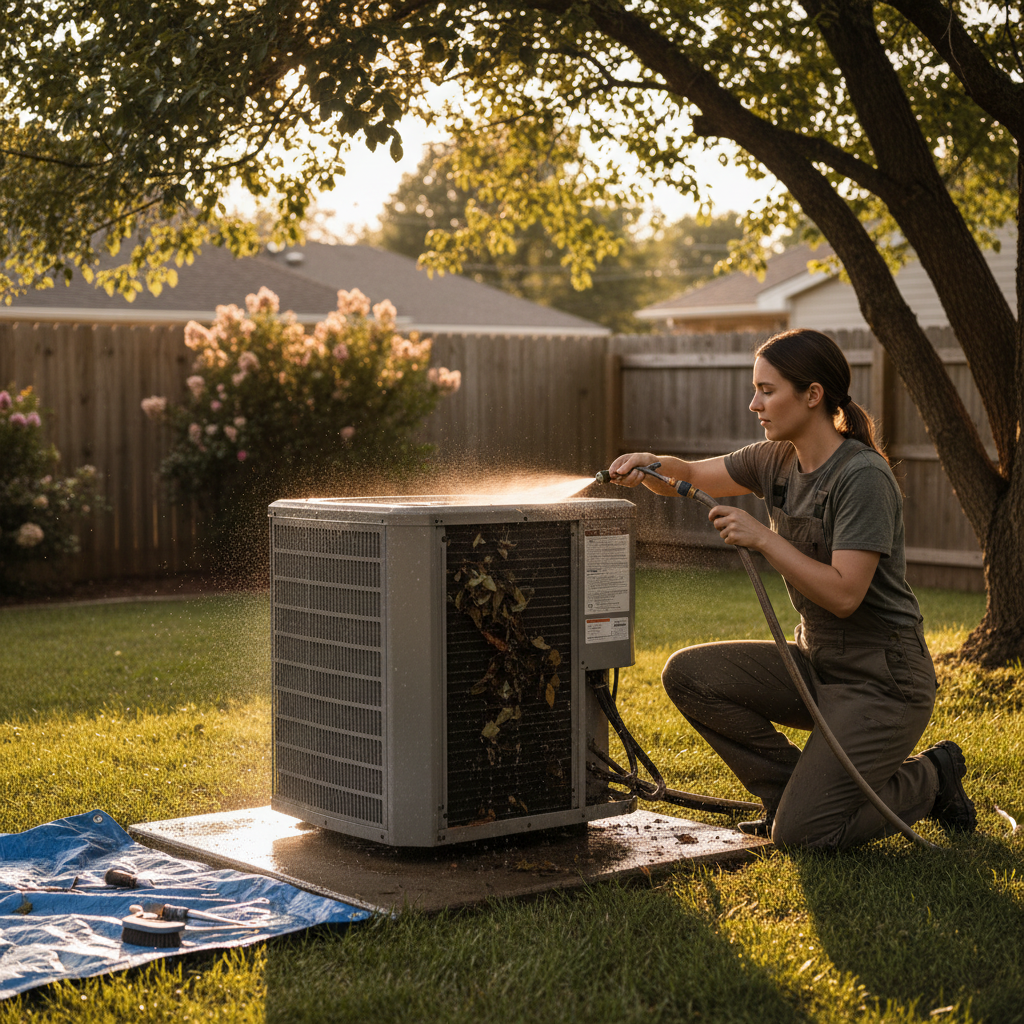
Dirty condenser coils: Just like the evaporator coil, the condenser coils can get dirty. Grass, leaves, dirt, and other debris can block airflow, making the condenser less efficient.
Fan motor issues: The fan in the condenser unit helps to blow heat away. If the fan isn’t working, the condenser can’t do its job.
What people get wrong: They ignore the outdoor unit completely. It’s out of sight, out of mind. They also might try to clean the coils without turning off the power, which is a safety hazard.
The real fix:
- Clean the condenser coils regularly. Turn off the power to the unit first! Use a garden hose with a gentle spray nozzle to rinse the coils.
- If the fan isn’t working, or if you suspect another electrical issue, call a professional.
5. Electrical Issues: The Unexpected Culprit
Sometimes, the problem isn’t the AC unit itself, but something related to the power supply. A tripped circuit breaker, a blown fuse, or faulty wiring can all prevent your AC from working correctly.
What people get wrong: They don’t check the circuit breaker or fuse box. They also might try to DIY electrical repairs, which is dangerous.
The real fix: Check your circuit breaker and fuse box. If a breaker has tripped, reset it. If a fuse has blown, replace it with the correct type. If the problem persists, or if you’re not comfortable working with electricity, call an electrician. Remember, safety first!
6. Thermostat Trouble: The Control Center
Your thermostat tells your AC when to turn on and off. If the thermostat is malfunctioning, it might not be sending the right signals to the AC unit.
What people get wrong: They don’t check the thermostat settings. They might also assume the thermostat is the problem without investigating other potential issues.
The real fix: Check the thermostat settings to make sure it’s set to “cool” and that the temperature is set below the current room temperature. If the thermostat seems unresponsive, try replacing the batteries (if it’s a battery-powered thermostat). If that doesn’t work, you might need to replace the thermostat, or call a professional to diagnose the problem.
When to Call in the Pros
Look, I’m all for DIY fixes, but sometimes, you need to call in the cavalry. If you’ve tried the simple fixes (filter, breaker, settings) and your AC is still blowing warm air, it’s probably time to call a qualified HVAC technician. Specifically, if:
- You suspect a refrigerant leak.
- Your AC is making strange noises.
- You smell a burning odor.
- You’re not comfortable working with electricity.
- The unit is old and/or consistently malfunctioning.
A professional will be able to diagnose the problem accurately and make the necessary repairs. Trying to fix complex issues yourself can be dangerous and could potentially cause further damage to your AC unit.
Long-Term Prevention: Keeping Things Cool
Once you’ve got your AC up and running again, you’ll want to avoid a repeat performance. Here are some tips to keep your AC running smoothly:
- Change your air filters regularly. This is the most important thing! Set a reminder on your phone if you have to.
- Get your AC serviced annually. A professional tune-up can catch small problems before they become big ones.
- Clean the condenser coils. At least once a year, give the outdoor unit a good cleaning.
- Keep the area around the condenser clear. Trim any plants or bushes that might be blocking airflow.
- Consider a smart thermostat. These can help you optimize your AC usage and save money on your energy bill.
- Check your insulation. Good insulation helps your AC work more efficiently by preventing heat from entering your home.
Following these tips will not only keep your home cool and comfortable, but also help to extend the life of your AC unit.
Frequently Asked Questions (FAQ)
Let’s address some common questions people have when their AC isn’t cooperating:
Q: My AC is blowing warm air, but the fan is running. What does this mean?
A: This usually indicates a problem with the cooling system itself, such as a dirty filter, frozen evaporator coil, or refrigerant leak.
Q: How often should I change my AC filter?
A: Generally, every 1-3 months. But it depends on the usage and the environment. Homes with pets or a lot of dust will likely need to change the filter more often.
Q: My AC is making a rattling noise. What could that be?
A: It could be a variety of things, from a loose part to a problem with the fan motor. It’s best to turn off the AC and call a technician to diagnose the issue.
Q: My AC is blowing cold air, but it’s not cooling the room. Why?
A: This could be an airflow issue. Check the air vents to make sure they’re not blocked. Also, make sure the thermostat is set to the correct temperature.
Q: Can I fix a refrigerant leak myself?
A: No. Refrigerant is a hazardous substance, and you need a certified technician to handle it.
Q: Is it okay to run my AC if the outdoor unit is covered in ice?
A: No! Turn off the AC and let the ice thaw completely. If it keeps freezing, there’s likely a problem that needs to be addressed.
Q: How can I save money on my AC bill?
A: Change your filters regularly, get your AC serviced annually, use a programmable or smart thermostat, and ensure your home is properly insulated.
Q: My AC is old. Should I replace it?
A: If your AC is old and constantly breaking down, it might be more cost-effective to replace it. Newer AC units are often more energy-efficient and can save you money in the long run. If your unit is very old, it may also use refrigerants that are now illegal due to environmental concerns, making repair more complex.
There you have it. You’re now armed with the knowledge to troubleshoot your AC woes and, hopefully, avoid those frustrating blasts of warm air. Stay cool out there!
If you’d like to read more on how to be energy efficient, see this article: How Things Work Insight: Feb 10, 2026.
For more home tips, visit our Homepage.