
Ugh, there’s nothing worse than that sinking feeling when you crank up the AC on a scorching day, expecting sweet, icy relief…and instead, you get a blast of lukewarm air. It’s like the universe is conspiring against your comfort. I’ve been there. Countless times. Living in a place where summer temperatures feel like you’re living inside an oven, a malfunctioning AC unit can quickly turn your home into a sweltering nightmare. But before you call for emergency AC repair and start mentally preparing for a huge bill, let’s take a deep breath. Most of the time, the fix is simpler than you think.
The Initial Panic: When Cool Becomes “Meh”
It usually starts innocently enough. You’re lounging on the couch, maybe catching up on some shows, and you notice the temperature creeping up. You glance at the thermostat, thinking maybe you accidentally bumped it. You lower it a few degrees, and wait. And wait. And…still nothing but warm air. That moment of realization? Pure frustration. Your carefully planned afternoon of relaxation just went sideways. And, let’s be honest, in the current day and age, with the increasing cost of utilities, you immediately start to worry about the financial implications as well. Is this going to be a quick fix, or are we talking about a major repair that will blow a hole in your budget?
Why Is My AC Suddenly Not Cooling? The Usual Suspects
Okay, so your AC is blowing warm air. Before you start picturing the worst-case scenario (a complete system failure!), let’s walk through the most common culprits. Nine times out of ten, it’s something manageable. Here’s a breakdown of the usual suspects:
- Dirty Air Filter: This is the number one, most common, and easiest-to-fix problem. Your air filter traps dust, pet hair, and all sorts of gunk that clogs it up over time. A clogged filter restricts airflow, which makes your AC work harder and less efficiently. Think of it like trying to breathe through a thick scarf. The air can’t circulate properly, and the cooling process is severely hampered.
- Blocked Condenser Unit: The condenser unit is the outdoor part of your AC system. It’s responsible for releasing the heat that your AC removes from your home. If leaves, grass clippings, or other debris get in the way, it can’t do its job properly. This is like trying to cool down a hot engine with a radiator covered in a blanket. The heat can’t escape.
- Refrigerant Leaks: Your AC uses a special refrigerant (often called Freon, though it’s not always Freon these days) to cool the air. If there’s a leak, the refrigerant levels drop, and the AC can’t cool effectively. This is a more serious issue, and usually requires professional help.
- Frozen Evaporator Coil: This can happen if the airflow is restricted (due to a dirty filter), or if the refrigerant levels are low. Ice forms on the evaporator coil, preventing it from absorbing heat from your home. Think of it like an ice-cream maker that freezes up.
- Electrical Issues: Sometimes, the problem is something electrical, like a tripped circuit breaker, a blown fuse, or a malfunctioning capacitor. These are usually straightforward to check.
- Thermostat Problems: Your thermostat controls your AC. If it’s faulty, it might not be sending the correct signals to your system. Sometimes, it’s just a matter of replacing the batteries.
The Mistakes People Make (And How to Avoid Them)
When your AC blows warm air, the immediate instinct is to panic and start Googling frantically. And that’s where the trouble often begins. Here’s what people often do wrong, and how to do it right:
- Ignoring the Obvious: The air filter. Seriously, check it first. So many AC problems are caused by a simple clogged filter. It’s the low-hanging fruit of AC troubleshooting. Yet, many people ignore it, assuming it can’t possibly be *that* simple.
- Jumping to Conclusions: Don’t immediately assume the worst. A refrigerant leak is a serious issue, but it’s not the *only* reason your AC might be blowing warm air. Take a systematic approach to troubleshooting, starting with the simplest fixes.
- DIYing Electrical Repairs (Without Knowing What You’re Doing): Electricity can be dangerous. If you’re not comfortable working with electrical components, don’t. Call a qualified electrician. Safety first.
- Not Cleaning the Condenser Unit: This is a simple maintenance task that can prevent a lot of problems, yet it often gets overlooked. You should clean the condenser unit at least twice a year.
- Ignoring Strange Noises: If your AC is making unusual noises, like grinding, hissing, or bubbling, it’s trying to tell you something. Don’t ignore it. It could be a sign of a more serious problem.
- Thinking “Bigger is Better” with Thermostat Settings: Cranking the thermostat way down won’t make your AC cool the house faster; it will only make it run longer and potentially freeze up.
Step-by-Step Fixes: Your Home AC Rescue Guide
Alright, time for action. Here’s a step-by-step guide to troubleshooting your AC, starting with the easy stuff:
- Check the Thermostat: Make sure it’s set to “cool” and that the temperature is set low enough to trigger the AC to turn on. Also, check the batteries. Replace them if necessary.
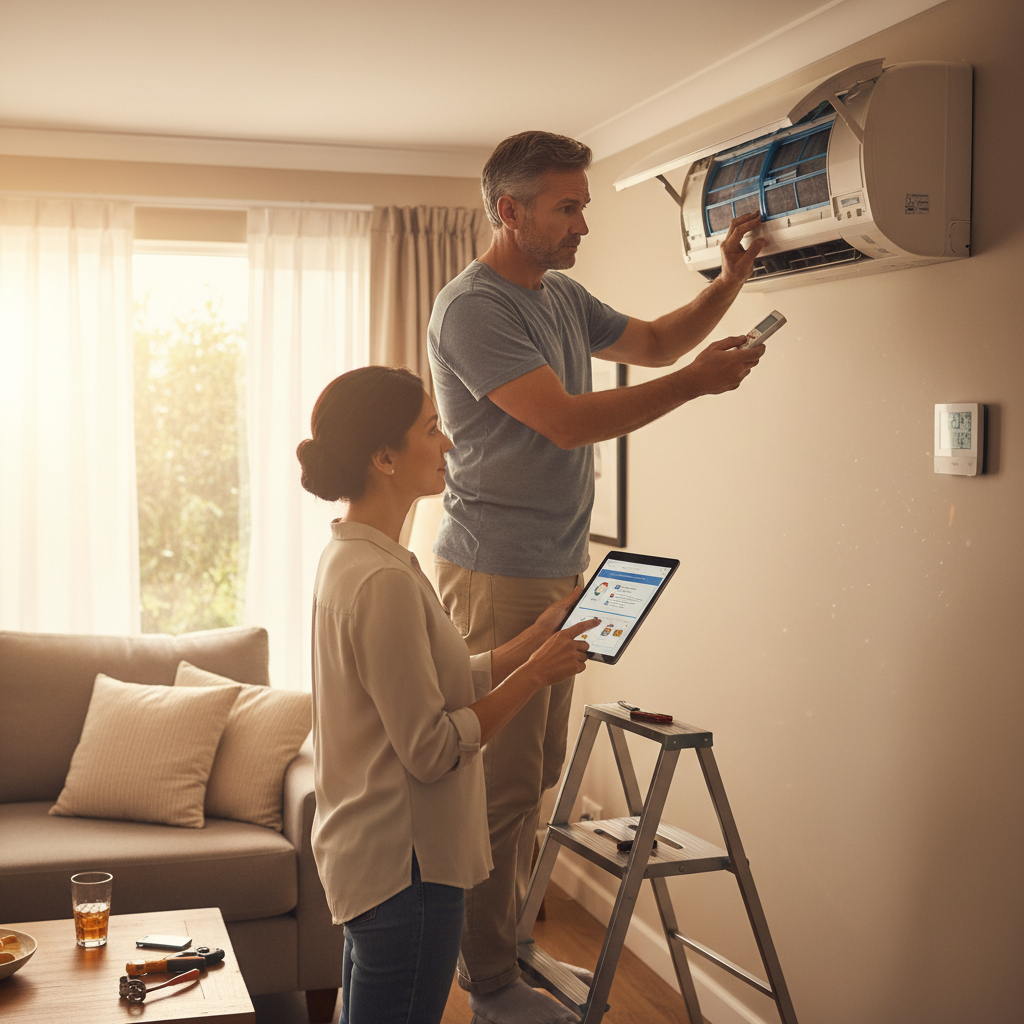
- Inspect the Air Filter: Pull out the air filter and hold it up to the light. If you can’t see light through it, it’s clogged. Replace it with a new one. It’s a simple thing, but it’s often the solution.
- Clean the Condenser Unit: Go outside and look at the outdoor unit. Make sure it’s free of debris. Use a garden hose to gently spray the fins, removing any leaves, grass, or other obstructions. Be careful not to bend the fins.
- Check the Circuit Breakers: Go to your electrical panel and make sure the circuit breaker for your AC hasn’t tripped. If it has, reset it. If it trips again, there might be a more serious electrical issue.
- Look for Ice on the Evaporator Coil: Open up the air handler (usually located in your attic, basement, or a closet) and look for ice on the evaporator coil. If there’s ice, turn off the AC and let it thaw completely before trying to run it again. This could indicate a blocked air filter or a refrigerant issue.
- Listen for Strange Noises: Does the AC make any unusual sounds when it turns on? Grinding, hissing, or bubbling can indicate a problem that requires professional attention.
- If All Else Fails, Call a Pro: If you’ve tried all of the above and your AC is still blowing warm air, it’s time to call a qualified HVAC technician. Don’t try to fix refrigerant leaks or other complex issues yourself.
When to Call a Pro vs. DIY: A Reality Check
Knowing when to call a professional is key. You don’t want to waste time and money trying to fix something that’s beyond your skill level. Here’s a quick guide:
- DIY (Do It Yourself):
- Replacing the air filter
- Cleaning the condenser unit
- Checking and resetting circuit breakers
- Replacing thermostat batteries
- Call a Pro:
- Refrigerant leaks (You need special equipment to diagnose and repair these)
- Compressor problems (This is a major component of your AC)
- Electrical issues beyond resetting a breaker
- Any situation where you’re uncomfortable working with electricity or HVAC components
Remember, it’s always better to be safe than sorry. If you’re not sure, it’s always best to call a professional.
Long-Term Prevention: Keeping Your Cool for Years to Come
Once you’ve gotten your AC back up and running, you’ll want to take steps to prevent this from happening again. Here are some simple, long-term prevention tips:
- Change Your Air Filter Regularly: This is the most important thing you can do. Change your filter at least every 1-3 months, depending on the type of filter and how much you use your AC. (Pro tip: set a reminder on your phone or calendar.)
- Schedule Regular Maintenance: Have your AC system professionally serviced at least once a year, preferably before the start of the cooling season. A technician can identify potential problems before they become major issues.
- Clean the Condenser Unit Twice a Year: Make it a habit. A clean condenser unit operates more efficiently.
- Check for Refrigerant Leaks: A technician can check for leaks during your annual maintenance visit.
- Keep the Area Around the Condenser Unit Clear: Trim back any bushes or plants that might obstruct airflow. Make sure there’s at least a couple of feet of space around the unit.
- Use a Programmable Thermostat: This can help you save energy by automatically adjusting the temperature when you’re not home.
- Consider Zoning: If you have a large home, consider using a zoned system. This allows you to cool only the areas you’re using.
Taking care of your AC isn’t just about comfort; it’s about energy efficiency and extending the life of your system. With these simple tips, you can keep your home cool and avoid those frustrating moments when your AC blows warm air.
Real-Life Scenario: My Own “Warm Air” Fiasco
I remember one summer a few years back, the AC in my old house started acting up. It wasn’t blowing completely warm air, but it wasn’t cooling the house properly, either. I was baffled. I called a technician who, after a quick look, pointed at the air filter, completely clogged with dust and pet hair (thanks, Mr. Fluffy!). “Change this,” he said, “and see what happens.” I was skeptical; surely, it couldn’t be *that* simple. But I changed the filter, and, lo and behold, the house started cooling down again within an hour. The technician chuckled. “It’s always the filter,” he said. And he was right. It was a valuable lesson learned: start with the obvious. And change that darn filter!
And now, a related article to consider: The Fridge Factor: Keeping Your Food Fresh, Your Bills Low, and Your Cool. It’s all about how to keep things in your home running smoothly.
Frequently Asked Questions
Here are some common questions people ask when their AC isn’t working properly:
- Why is my AC blowing warm air even though the thermostat is set correctly?
The most common reasons are a clogged air filter, a blocked condenser unit, or a refrigerant leak. Also, make sure the circuit breaker hasn’t tripped, or the batteries on your thermostat are still good.
- How often should I change my air filter?
It depends on the type of filter and how much you use your AC, but generally, every 1-3 months. If you have pets or live in a dusty environment, you might need to change it more often.
- What are the signs of a refrigerant leak?
Warm air blowing from the vents, ice forming on the evaporator coil, and hissing or bubbling noises from the AC unit can be signs of a refrigerant leak. You might also notice higher energy bills.
- Can I fix a refrigerant leak myself?
No. Refrigerant leaks require a trained HVAC technician to diagnose and repair. They need special equipment and the proper training to handle refrigerant safely.
- My AC is making a loud grinding noise. What does that mean?
A grinding noise could indicate a problem with the compressor or another internal component. Turn off your AC immediately and call a qualified technician to diagnose the issue.
- Why is my AC freezing up?
A frozen AC unit is often caused by a clogged air filter, restricted airflow, or low refrigerant levels. Turn off the AC and let it thaw completely before trying to run it again. If it keeps happening, call a pro.
- How can I improve my AC’s efficiency?
Change your air filter regularly, keep the condenser unit clean, have your system serviced annually, and make sure your home is properly insulated. Also, consider using a programmable thermostat.
Now, go forth and conquer the warm air! You’ve got this.