
It’s a sweltering afternoon, the kind where the air feels thick and sticky, clinging to your skin like a damp cloth. You step inside your home, seeking refuge, and with a satisfying hum, cool air washes over you. It’s a simple act, this instant relief, but have you ever stopped to wonder about the silent, complex ballet happening behind the scenes to make that coolness appear? Most of us just take our air conditioners for granted, a magical box that banishes the heat. But like most everyday marvels, there’s no actual magic involved, just some clever science and engineering. Let’s pull back the curtain and explore how this essential home appliance works, step by step, in a way that makes sense.
At its core, an air conditioner isn’t *creating* cold; it’s *moving* heat. Think of it like a heat transporter. It takes the heat from inside your home and dumps it outside, leaving your indoor space feeling cooler and more comfortable. This process relies on a fundamental scientific principle: when a liquid evaporates, it absorbs heat from its surroundings. Conversely, when a gas condenses into a liquid, it releases heat. Your AC unit is a master of orchestrating these phase changes of a special fluid called a refrigerant.
## The Four Key Players in Your Cooling Symphony
To understand how your AC moves heat, we need to meet the main components that make this happen. These parts work in a continuous cycle, a closed loop where the refrigerant flows, changing its state and temperature, carrying heat with it.
### 1. The Evaporator: The Inside Hero
This is the part of your AC system that lives *inside* your home, usually a large indoor unit or a series of vents. When warm, humid air from your rooms is drawn into the AC system, it passes over the evaporator coils. These coils are chilled, and inside them flows the cold refrigerant. As the warm air from your house meets these cold coils, two things happen:
* **Heat Transfer:** The heat from the air transfers to the refrigerant. This is like the air giving its warmth to the cold coils.
* **Dehumidification:** As the warm, moist air cools down, the water vapor in it condenses into liquid water. This is why you often see a drainpipe outside your house with a slow drip – that’s the moisture being removed from your indoor air. This condensation process is crucial; it’s not just about temperature, but also about making the air feel more comfortable by reducing humidity.
The refrigerant, having absorbed the heat from your home’s air, is now a warm, low-pressure gas. It’s ready for its next step.
### 2. The Compressor: The Heart of the Operation
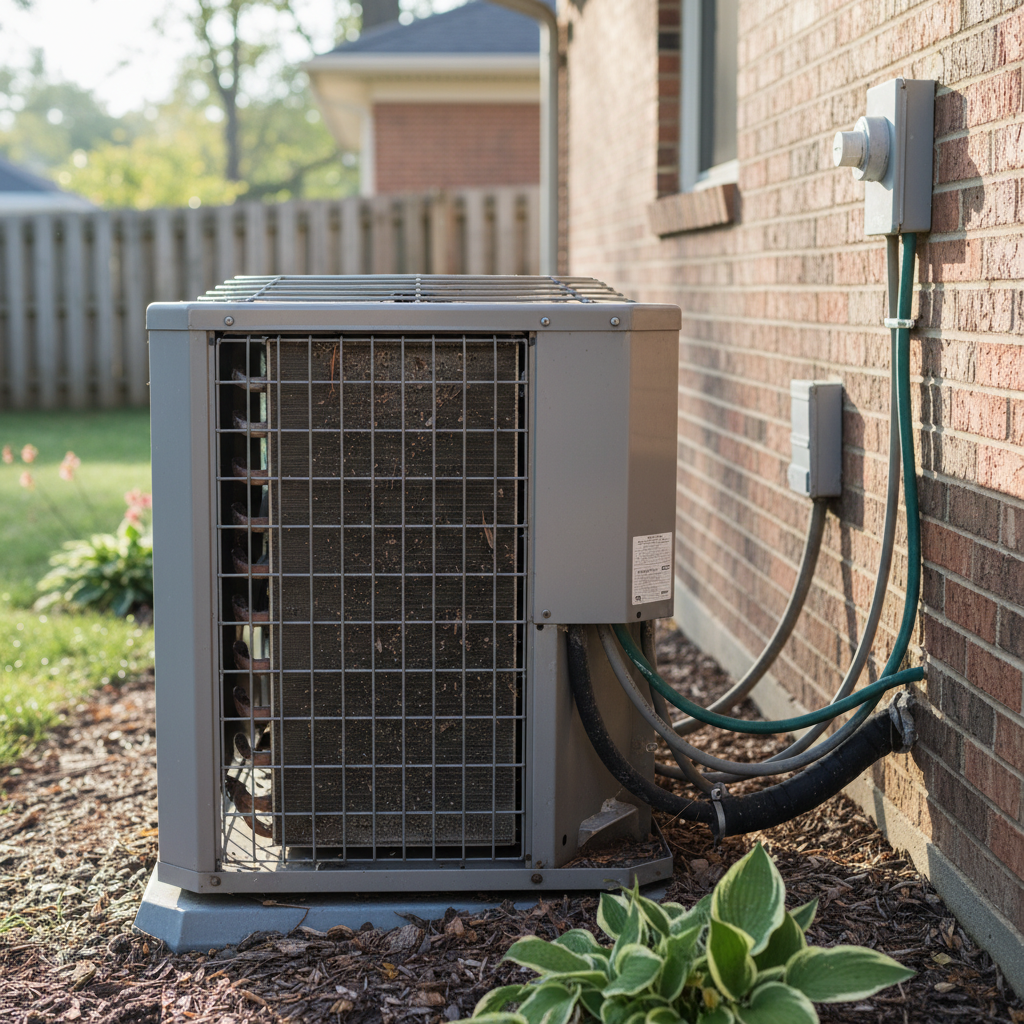
The compressor is usually found in the outdoor unit of your air conditioner, often hidden away in a metal box. You might hear its familiar hum or buzz when the AC is running. The compressor’s job is vital: it takes the low-pressure, warm refrigerant gas from the evaporator and squeezes it. This squeezing action compresses the gas, significantly increasing its pressure and, consequently, its temperature. It becomes a hot, high-pressure gas.
Think of the compressor like a bicycle pump. When you pump air, the pump gets warm, right? Similarly, compressing the refrigerant gas makes it very hot. This hot gas is then pushed towards the next component.
### 3. The Condenser: The Outside Heat Dump
This is another major part of the outdoor unit. The hot, high-pressure refrigerant gas from the compressor flows into the condenser coils. These coils are designed to release heat. A fan in the outdoor unit blows ambient outside air over these coils.
Because the refrigerant inside the coils is much hotter than the outside air, heat naturally transfers from the refrigerant to the air. As the refrigerant loses heat, it cools down and, crucially, condenses from a hot gas into a warm, high-pressure liquid. This is the reverse of what happened in the evaporator. The heat that was absorbed from your home is now being released into the outdoor environment.
### 4. The Expansion Valve (or Metering Device): The Temperature Regulator
Before the refrigerant makes its way back to the evaporator to start the cycle again, it needs to cool down dramatically. This is where the expansion valve comes in. It’s a small but critical component that acts like a gatekeeper, restricting the flow of the warm, high-pressure liquid refrigerant.
As the liquid refrigerant is forced through this narrow opening, its pressure drops suddenly and dramatically. This rapid decrease in pressure causes the refrigerant to cool down significantly, becoming a very cold, low-pressure liquid (with some gas). It’s now ready to return to the evaporator coils inside your home and absorb more heat, starting the entire cycle anew.
## The Cycle of Coolness: Putting It All Together
Imagine the refrigerant as a tiny, heat-carrying courier.
1. **Inside the House:** The courier (refrigerant) arrives at the evaporator coils, cold and ready. It picks up heat from your home’s air, becoming warmer and turning into a gas. The air it left behind is now cooler and drier.
2. **Heading Outside:** This warm gas travels to the compressor.
3. **Getting Squeezed:** The compressor squeezes the gas, making it even hotter and increasing its pressure.
4. **Dumping the Heat:** The hot, high-pressure gas goes to the condenser coils outside. Here, it releases its absorbed heat to the outside air, cools down, and turns back into a liquid.
5. **Getting Ready:** The liquid refrigerant then goes through the expansion valve, where its pressure and temperature drop dramatically, making it super cold again.
6. **Back Inside:** The now cold, low-pressure liquid refrigerant is ready to return to the evaporator coils inside your house to pick up more heat.
This continuous loop repeats, tirelessly moving heat from your living room to the great outdoors, keeping you comfortable even on the hottest days. It’s a beautiful dance of thermodynamics, phase changes, and precise engineering.
## Common Misconceptions About Air Conditioning
People often think of AC units as “making cold,” but as we’ve seen, they’re actually heat movers. This misunderstanding can lead to a few common myths:
* **”My AC is blowing cold air, so it must be working perfectly.”** While blowing cold air is a good sign, it doesn’t tell the whole story. If the system isn’t effectively removing humidity, the air might feel cool but still clammy and uncomfortable. Also, if there’s a refrigerant leak, it might blow cool but not cold enough to truly combat the heat, and the system will work overtime, inefficiently.
* **”Turning the thermostat down lower makes the room cool faster.”** Actually, the AC will run at its maximum capacity regardless of how low you set the thermostat. Setting it to a very low temperature just means it will run longer to reach that temperature, potentially making it colder than you need and wasting energy. It’s more efficient to set it to a comfortable, slightly higher temperature and let it run as needed.
* **”Air conditioners add moisture to the air.”** This is the opposite of what happens! As we discussed, the cooling process causes condensation, which *removes* moisture from the air, thereby dehumidifying your home.
## Why Small Changes Matter: Usage Habits and Performance
The way you use your air conditioner, and the environment it operates in, can significantly impact its efficiency and lifespan.
* **Thermostat Settings:** As mentioned, setting your thermostat to a reasonable temperature (like 75-78°F or 24-26°C) is far more energy-efficient than trying to achieve Arctic-like temperatures. Each degree you lower it can increase energy consumption by 3-5%. Using a programmable or smart thermostat to automatically adjust temperatures when you’re asleep or away can lead to substantial savings.
* **Sealing Your Home:** Air conditioners work hard to cool the air inside. If your doors and windows aren’t well-sealed, that cool air escapes, and hot outside air seeps in. This forces the AC to work much harder, consuming more energy. Checking for drafts and sealing leaks can make a big difference. Consider looking into home energy audits for more comprehensive solutions.
* **Filter Maintenance:** This is probably the most critical habit for homeowners. The evaporator unit has an air filter that traps dust, pollen, and other debris. When this filter gets clogged, it restricts airflow. This means the AC has to work harder to pull air through, reducing efficiency and potentially causing the evaporator coils to freeze over. Regularly cleaning or replacing your air filter (usually monthly or every few months, depending on the type and your environment) is one of the simplest and most effective ways to maintain performance.
* **Outdoor Unit Location and Obstructions:** The outdoor condenser unit needs good airflow to efficiently release heat. If it’s surrounded by overgrown bushes, lawn furniture, or other obstructions, it can’t dissipate heat effectively. This makes the unit work harder and less efficiently. Ensure the area around the outdoor unit is kept clear.
* **Shading the Outdoor Unit:** While it might seem counterintuitive, providing some shade for the outdoor unit (without blocking airflow) can help it operate more efficiently. The less heat it has to contend with from the sun, the easier its job of releasing heat becomes.
## Modern Relevance: Smarter Cooling for 2025 and Beyond
Today’s air conditioners are far more advanced than their predecessors. The drive for energy efficiency and better indoor air quality has led to significant innovations:
* **Inverter Technology:** Many modern ACs use inverter compressors. Unlike traditional compressors that turn on and off at full power, inverter compressors can adjust their speed. This allows them to maintain a more consistent temperature, use less energy, and operate more quietly. They’re like a car that can smoothly accelerate and decelerate rather than constantly stopping and starting.
* **Smart Thermostats and Connectivity:** The integration of smart home technology means you can control your AC remotely via your smartphone, set complex schedules, and even allow the system to learn your habits. Some systems can communicate with weather forecasts to pre-cool your home efficiently before a heatwave.
* **Improved Refrigerants:** There’s a global push to move away from refrigerants with high global warming potential (GWP). Newer AC units are designed to use more environmentally friendly refrigerants, a trend that will only continue as we move towards greener home technologies.
* **Enhanced Air Filtration and Purification:** Beyond basic dust filters, many newer systems incorporate multi-stage filtration, HEPA filters, and even UV-C light or ionization technologies to further purify indoor air, removing allergens, viruses, and odors. This is particularly relevant in our current era where indoor air quality is a growing concern.
## A Clearer Mental Model: Explaining Your AC to a Friend
So, how would you explain this to someone else? Imagine your home is a warm room, and you want to make it cool.
Your air conditioner is like a special kind of heat-moving machine. It has two main parts: one inside your house and one outside.
Inside, a super-cold liquid flows through coils. When the warm air from your room passes over these coils, the heat jumps from the air onto the liquid, making the liquid warmer and turning it into a gas. This leaves the air in your room cooler and less damp.
This warm gas then travels to the outside unit. Here, a powerful pump (the compressor) squeezes the gas, making it very hot. This hot gas then flows through coils on the outside. A fan blows air over these outside coils, taking the heat away from the gas and releasing it into the outdoor air. As it loses heat, the gas cools down and turns back into a liquid.
This liquid then goes through a tiny nozzle that dramatically reduces its pressure and temperature, making it super cold again. It’s now ready to go back inside your house and pick up more heat.
This cycle repeats over and over: grab heat from inside, move it outside, and repeat. It’s not magic; it’s just clever physics and a continuous loop of changing the refrigerant from cold liquid to warm gas, and then back from hot gas to cold liquid.
## Frequently Asked Questions About Air Conditioners
**Q1: Why does my air conditioner sometimes make strange noises?**
A1: Noises can come from various sources. A humming or buzzing is often normal from the compressor or fans. However, rattling, grinding, or squealing might indicate a loose part, a failing motor, or a blockage in the airflow. If you hear a sudden, loud noise, it’s usually best to have it checked.
**Q2: How often should I get my air conditioner serviced?**
A2: It’s generally recommended to have your AC unit professionally serviced once a year, typically in the spring before the heavy cooling season begins. A technician can check refrigerant levels, clean coils, inspect electrical components, and ensure everything is running efficiently and safely.
**Q3: Can my air conditioner really freeze up? What does that mean?**
A3: Yes, it can! If airflow is restricted (often due to a dirty filter) or if there’s a refrigerant issue, the evaporator coils inside can get so cold that moisture freezes onto them, forming ice. This severely reduces cooling efficiency. If you notice ice on the indoor unit or hear a strange hissing sound, turn the AC off and call a professional.
**Q4: Is it bad for my air conditioner to run all the time?**
A4: If your AC is running constantly and struggling to cool your home, it’s not necessarily “bad” for the unit in terms of immediate damage (unless something is seriously wrong), but it is inefficient. It means the unit is working harder than it should, consuming more electricity, and might be undersized for your home, have refrigerant issues, or be blocked by poor airflow. For optimal performance and lifespan, it should cycle on and off as needed.
**Q5: Does air conditioning use a lot of electricity?**
A5: Yes, air conditioning can be one of the largest energy consumers in a household, especially during hot summer months. However, newer, energy-efficient models (like those with an Energy Star rating) and smart usage habits can significantly reduce electricity consumption. Maintaining your unit is key to keeping its energy use in check.
**Q6: My air conditioner isn’t cooling as well as it used to. What’s the most common reason?**
A6: The most frequent culprit is a clogged air filter. Air needs to flow freely over the evaporator coils for efficient heat transfer. Other common reasons include low refrigerant levels (often due to a leak), dirty outdoor condenser coils, or a thermostat issue. Regular maintenance and filter changes are your best defense.
**Q7: What’s the difference between a window AC unit and a central air system?**
A7: A window AC unit is a self-contained appliance installed in a window or wall, designed to cool a single room. A central air system uses a network of ducts to distribute cool air throughout an entire house from a larger, often split system (indoor and outdoor components). Both use the same basic refrigeration cycle, but on different scales and with different distribution methods.