
Think about your phone. It’s probably the first thing you reach for in the morning and the last thing you see before bed. Now, consider your home. It’s filled with smart devices, Wi-Fi, and gadgets that make life easier. Do you ever stop to think about how these two things are connected? Not just in a “connected home” sense, but in the small, daily ways your tech habits impact your living space?
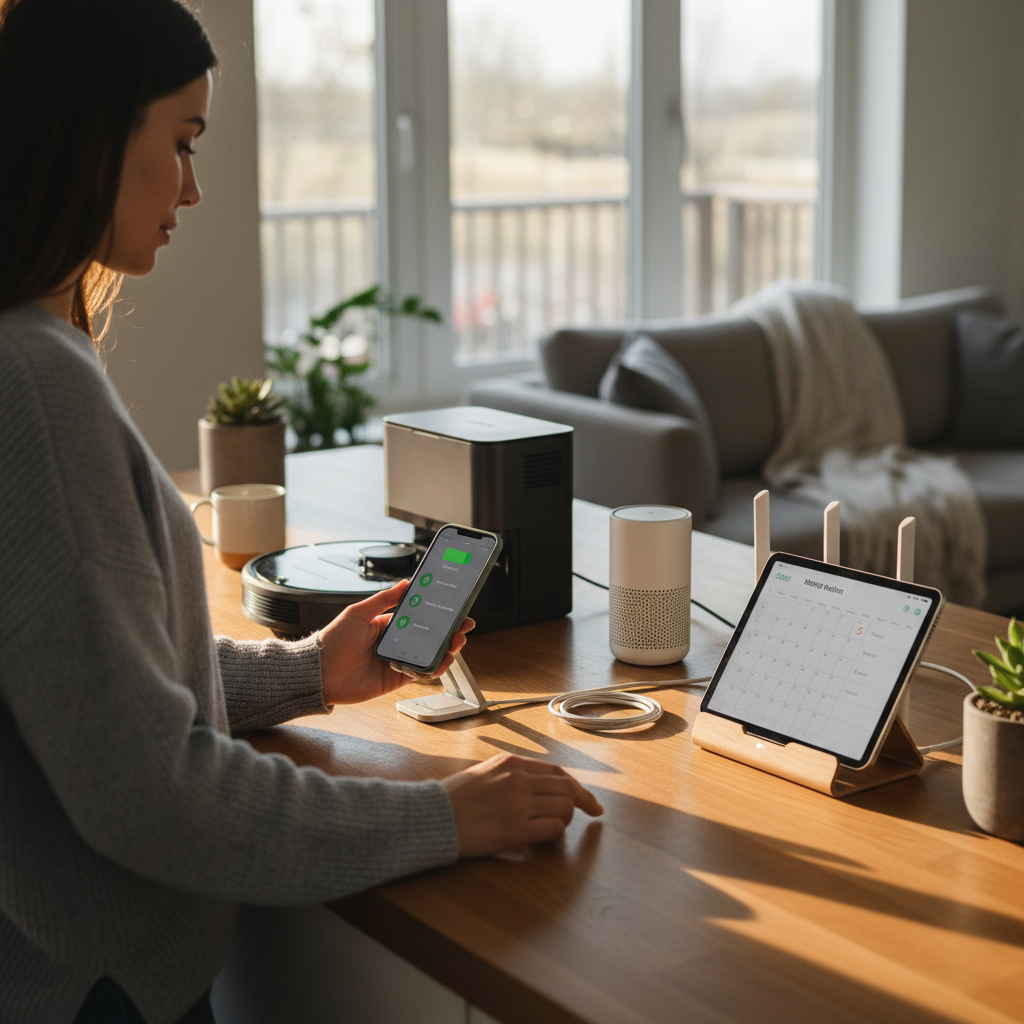
Most of us don’t. We’re busy. We charge our phones, maybe dust off a smart speaker, and that’s it. But these small, overlooked habits can quietly lead to bigger problems, both for your devices and your home life. We’re talking about things like where you charge your phone, how you manage your Wi-Fi, and the seemingly harmless way you interact with your smart home gadgets. These small actions contribute to your device’s lifespan and the overall functionality of your home.
The Charging Corner Conundrum
Let’s start with a common scene: You come home after a long day, and your phone battery is almost dead. You plug it in, and the nearest outlet is usually the one you pick, often near your bed or on a cluttered desk. But consider the following:
- Outlet Overload: Do you have a power strip overflowing with chargers? Power strips are convenient, but overloading them can be a fire hazard. Think about the devices you have plugged in. Are you mixing older, power-hungry appliances with your delicate phone charger?
- Heat and Dust: Is your charging setup exposed to direct sunlight or located near a source of heat? Heat is the enemy of all electronics, including your phone battery. Similarly, dust can build up inside your charger and phone port, leading to connectivity issues.
- The Wrong Charger: Using a cheap, generic charger is a gamble. Your phone needs the right voltage and amperage. An incorrect charger can damage your battery over time.
The Hidden Cost: A poorly chosen charging spot can shorten your phone’s battery life, create a fire hazard, and even damage your phone’s charging port. Replacing a phone battery is a hassle, and a damaged port can be a costly repair. More importantly, you’re potentially creating a dangerous situation in your home.
Wi-Fi Woes: The Invisible Home Network
Wi-Fi is the backbone of the modern home. But how often do you actually think about it? You might grumble when the connection is slow, but how much time do you spend proactively managing your home network? The truth is, your Wi-Fi habits, or lack thereof, can affect much more than just your streaming speed.
Common Mistakes:
- Router Placement: Is your router tucked away in a closet or behind a wall? Router placement is critical for optimal signal strength.
- Weak Passwords: Are you using the default password on your router? A weak password makes your network vulnerable to hacking.
- Outdated Firmware: Do you regularly update your router’s firmware? Outdated firmware can create security vulnerabilities and slow down your connection.
The Impact: A poorly managed Wi-Fi network can lead to slow internet speeds, interrupted video calls, and increased security risks. It can also impact your smart home devices, which rely on a stable connection to function correctly. This impacts everything from your security system to your smart appliances, potentially leaving you exposed and inconvenienced.
Smart Home Simplicity vs. Complexity
Smart home gadgets are designed to make life easier, but are you using them the right way? The convenience of voice commands and automated routines can turn into a headache if you’re not careful. Think about:
- Password Security: Have you secured all your smart home devices with strong, unique passwords?
- App Updates: Do you regularly update the apps that control your smart home devices?
- Device Grouping: Are you creating too many complex scenes and routines?
The Downside: The more devices you have connected, the greater the potential for security breaches. If your smart home devices are compromised, your privacy and security are at risk. An overly complex setup can lead to system glitches and a frustrating user experience.
Small Changes, Big Impact
So, what can you do to make sure your tech habits are working for you, not against you? Here are some simple, practical tips that anyone can apply:
- Charging Station Refresh:
- Choose Wisely: Charge your phone in a cool, well-ventilated area, away from direct sunlight and heat sources.
- Quality Chargers: Use the charger that came with your phone, or invest in a reputable brand that is designed for your device.
- Inspect Regularly: Check your chargers and cables for fraying or damage. Replace them if necessary.
- Wi-Fi Wisdom:
- Central Placement: Position your router in a central location, away from walls and obstructions.
- Strong Passwords: Change your router’s password to a strong, unique one that you won’t use anywhere else.
- Update Regularly: Set a reminder to update your router’s firmware every few months. Many routers have automatic update features.
- Smart Home Smarts:
- Password Protection: Use strong, unique passwords for all your smart home devices and apps.
- App Updates: Enable automatic updates for all your smart home apps.
- Keep it Simple: Start with a few basic routines and gradually add more as you become comfortable. Avoid creating overly complex automations that are difficult to manage.
Most people don’t notice these small details until something goes wrong – a phone that dies too quickly, a Wi-Fi outage at the worst possible moment, or a smart home device that acts up. But once you change these habits, everything feels easier. Your devices last longer, your home feels safer, and your daily life runs more smoothly.
Why These Habits Matter More in 2026
In 2026, our reliance on technology is higher than ever. Smartphones are essential tools for communication, work, and entertainment. Smart homes are becoming the norm, with more and more devices connecting to the internet. As technology becomes more integrated into our lives, the impact of our habits becomes even more significant.
Consider the following:
- Increased Device Dependency: We rely on our devices for almost everything. A dead phone battery or a Wi-Fi outage can disrupt our entire day.
- Growing Security Threats: As smart home devices proliferate, so do the risks of hacking and data breaches.
- Energy Efficiency is Crucial: With rising energy costs, every watt counts. Using energy-efficient chargers and devices can help you save money.
In this tech-saturated world, these small habits are no longer optional. They are essential for protecting your devices, your home, and your peace of mind.
The Long-Term Benefits: Peace of Mind and Savings
Making these small changes might seem like a hassle at first, but the long-term benefits are substantial. You’ll enjoy:
- Extended Device Lifespan: By taking care of your devices, you can extend their lifespan, saving you money on replacements.
- Reduced Repair Costs: Preventing damage to your charging ports, batteries, and other components can save you money on costly repairs.
- Increased Home Security: Securing your Wi-Fi and smart home devices can protect your privacy and reduce the risk of cyberattacks.
- Lower Electricity Bills: Using energy-efficient habits can help you save money on your electricity bills, particularly with the rising costs of energy.
- Enhanced Convenience: A well-managed tech setup will make your life easier, not more complicated.
Once you adopt these habits, you’ll experience a sense of peace of mind. You’ll know that you’re doing your part to protect your devices, your home, and your wallet. You’ll be less stressed about tech-related problems and more focused on enjoying your life.
These practices are not about being perfect; they’re about making conscious choices that align with a smoother, safer, and more efficient lifestyle. Think of it as a small investment in your everyday well-being.
Frequently Asked Questions
Here are some questions people often ask about these tips:
- How often should I update my router’s firmware?
Aim to update your router’s firmware every few months, or whenever a new update is released. Many routers have automatic update features. - Is it safe to charge my phone overnight?
Yes, it is generally safe to charge your phone overnight, as most modern phones have built-in protection to prevent overcharging. However, it’s still wise to avoid charging in extremely hot environments. - How can I tell if my Wi-Fi password has been compromised?
Watch out for signs like slow internet speeds, unfamiliar devices on your network, or unusual activity on your connected devices. If you suspect a breach, change your password immediately and consider resetting your router to factory settings. - Are smart plugs safe to use?
Yes, smart plugs are generally safe to use as long as they are from a reputable brand and used correctly. Avoid overloading them and make sure they are compatible with your appliances. - How do I improve my Wi-Fi signal strength?
Place your router in a central, elevated location, away from obstructions like walls and metal objects. You may also want to invest in a Wi-Fi extender if you have a large home. - What’s the best way to clean my phone’s charging port?
Use a soft, dry brush or compressed air to gently remove dust and debris from the charging port. Avoid using sharp objects, which can damage the port. - Can I use any charger for my phone?
It is best to use the charger that came with your phone, or one specifically designed for your model. Using the wrong charger may damage your battery or charging port. - How can I protect my smart home devices from hackers?
Use strong, unique passwords for all your devices, enable two-factor authentication where available, and keep your devices’ software updated. Regularly review your device settings and be mindful of the permissions you grant to apps.
The core message is simple: By paying attention to the small tech habits in your daily life, you can significantly improve the performance, longevity, and security of your devices and home. It is about a proactive approach, not a reactive one. This not only saves you money and time, but it also gives you peace of mind, knowing you are creating a smoother, more efficient, and safer living environment.