
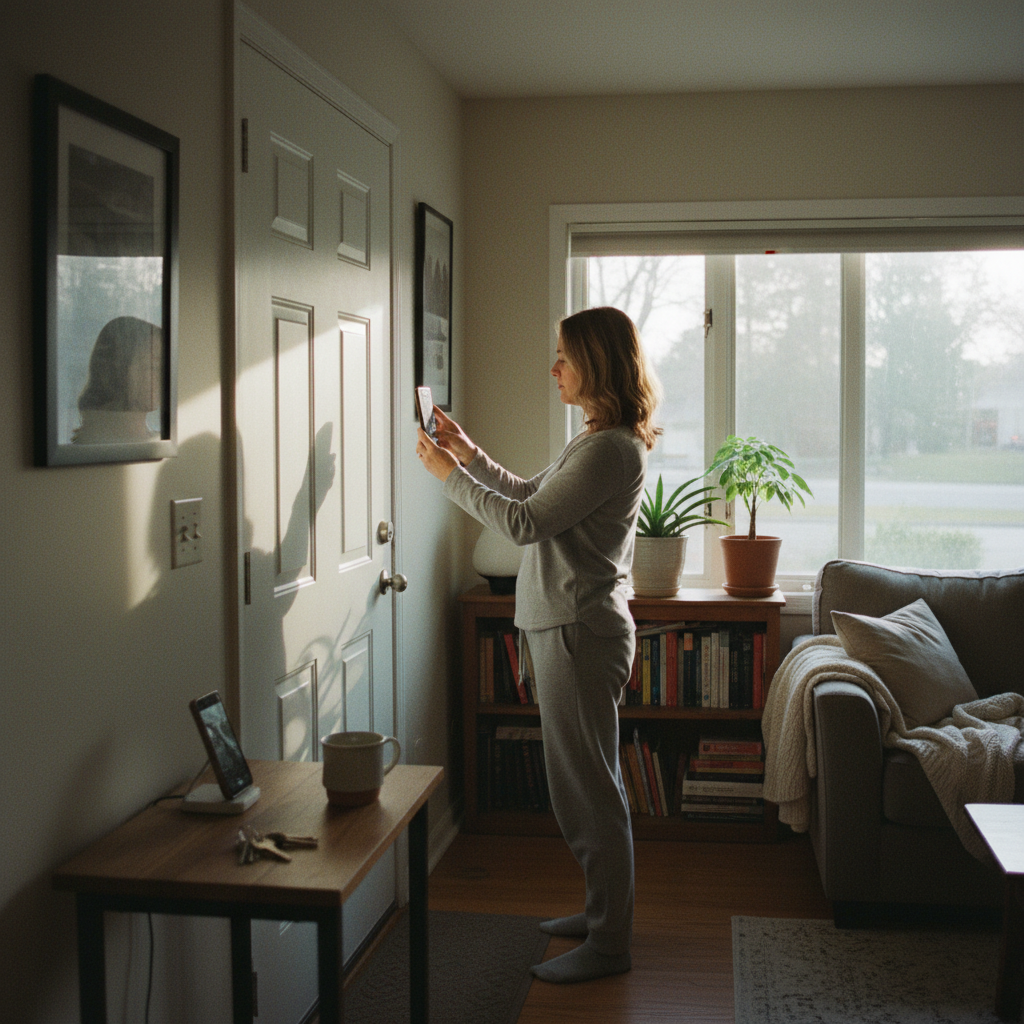
Think about this: You’re rushing out the door. Maybe it’s to work, to the gym, or to meet friends. You grab your keys, your bag, and your phone. You glance at the screen, see no notifications, and shove it in your pocket. Done. Easy, right? Most of us do this without a second thought, multiple times a day. But that simple act – the way we handle our phones in the rush – can have a bigger impact on your home, your safety, and your peace of mind than you realize.
The Hidden Risk in Your Pocket: Phone Charging and Heat
Here’s the thing: that phone, tucked away in your pocket, is a mini-computer constantly drawing power when it’s charging, generating heat. And while modern phones are designed to be relatively safe, they’re not foolproof. Think about it: how often do you leave your phone charging overnight, or all day while you’re out? It’s a convenient habit, but it’s also a potential fire hazard. Leaving a phone charging for extended periods increases the risk of overheating, especially if the charger or the phone itself has any internal issues. Older chargers, in particular, can be problematic. They might not regulate the power flow as efficiently as newer models, leading to excessive heat and potentially damaging the phone’s battery. This is why leaving a phone charging all night, every night, isn’t the best idea, even if it seems harmless.
And it’s not just about the phone itself. Think about where you charge your phone. Is it on a bed, under a pillow, or on a cluttered desk? These locations trap heat, making the situation even riskier. A phone that’s already generating heat can get dangerously hot when surrounded by insulating materials like blankets or papers.
Why We Ignore the Danger: The Convenience Trap
So, why do we ignore the potential risks? It’s all about convenience. Charging our phones overnight is easy. It means our phones are always ready to go when we are. We’re busy, we have a million things on our minds, and taking the time to unplug the phone seems like a minor inconvenience. We also tend to trust the technology. We assume that because our phones are designed to be safe, they *are* safe, no matter what. And to be fair, in most cases, we’re right. But the potential consequences of a charging-related fire are so significant that it’s worth re-evaluating our habits.
This is where things can quietly go wrong. A small problem, a slightly frayed charging cable, or a buildup of dust inside the charging port, can lead to overheating. This is a common situation for many of us. But we don’t realize the potential fire hazard that can result from this. Then, in an instant, a small oversight transforms into a disaster.
Common Mistakes and Myths to Bust
Let’s debunk some common myths and mistakes related to phone charging:
- Myth: Using a non-original charger will damage your phone.
- Reality: Not necessarily. Many third-party chargers are perfectly safe, but make sure they’re certified and from a reputable brand. Cheap, uncertified chargers are where you run into trouble.
- Myth: Overcharging ruins your battery.
- Reality: Modern phones have smart charging systems that stop charging when the battery is full. However, constant charging can still generate heat, which can degrade the battery over time.
- Mistake: Charging your phone on flammable surfaces like beds or under pillows.
- Solution: Always charge your phone on a hard, flat surface in a well-ventilated area.
- Mistake: Ignoring a hot phone.
- Solution: If your phone feels unusually hot while charging, unplug it immediately and let it cool down. If it continues to get hot, it’s time to replace the phone.
Practical Tips for Safer Phone Charging
Now, let’s get practical. Here’s how to make your phone charging habits safer and reduce the risk of potential problems:
- Charge in a safe location: This is the most important tip. Always charge your phone on a hard, flat surface away from flammable materials. Avoid charging on beds, sofas, or under pillows.
- Use a certified charger: Whether you use the original charger or a third-party one, make sure it’s certified and from a reputable brand. Look for certifications like UL or CE.
- Inspect your charging cable: Check your charging cable regularly for any damage, such as frayed wires or cracks. Replace damaged cables immediately.
- Avoid extreme temperatures: Don’t charge your phone in direct sunlight or in extremely hot or cold environments.
- Don’t leave it unattended: Ideally, you should unplug your phone when it’s fully charged. If you charge overnight, consider using a smart plug that cuts off power once the phone is full.
- Unplug when not in use: Even if your phone is not actively charging, unplug the charger from the wall when it’s not in use. This saves a small amount of electricity and reduces the risk of electrical surges.
- Consider a charging station: A dedicated charging station with multiple outlets and surge protection can help keep your charging area organized and safe.
Why This Matters More in Today’s World
In today’s tech-heavy world, our phones are more important than ever. They’re our communication hubs, our entertainment centers, our wallets, and our connection to the world. We rely on them for work, for family, and for our daily routines. A phone charging-related fire can cause more disruption now than it would have a decade ago. It’s not just about the cost of replacing a phone; it’s about the loss of data, the inconvenience, and the potential for a more serious fire that could affect your home and, most importantly, your family.
This matters for all the reasons already mentioned. But there are also financial reasons, since it can potentially damage your home and require expensive repairs. Preventing a fire from happening in the first place is always the best approach. Protecting your devices also makes good financial sense. The cost of a new phone and the loss of data pales in comparison to the cost of replacing your appliances or furniture. And the cost of personal injury and health is, of course, the most important. Peace of mind is priceless.
The Long-Term Benefits: Peace of Mind and Practical Savings
Once you change your phone charging habits, everything feels easier. You’ll gain peace of mind knowing you’ve reduced the risk of a fire. You’ll also likely extend the life of your phone battery and your charger by avoiding excessive heat and wear and tear. It’s a win-win.
By taking these simple steps, you’re not just protecting your phone; you’re protecting your home, your family, and your peace of mind. Small changes to our daily routines can make a significant difference in the long run. These habits are especially important for busy people like you. They help you stay in control. These are the steps to prevent small daily inconveniences from growing into major headaches.
FAQ: Your Burning Questions Answered
Let’s address some of the most common questions about phone charging safety:
- Is it safe to charge my phone overnight? Ideally, it’s best to unplug your phone once it’s fully charged. However, if you charge overnight, make sure you do so on a hard, flat surface and use a certified charger.
- Can I use any charger for my phone? While you can use third-party chargers, it’s important to ensure they are certified and from a reputable brand.
- What should I do if my phone gets hot while charging? Unplug it immediately and let it cool down. If it continues to get hot, consider replacing the phone.
- Does overcharging damage my phone battery? Modern phones have smart charging systems, but excessive heat from constant charging can degrade the battery over time.
- How often should I replace my charging cable? Inspect your cable regularly for damage. Replace it immediately if you see any frayed wires or cracks.
- Is it okay to charge my phone on my bed? No, avoid charging your phone on flammable surfaces like beds, sofas, or under pillows.
- What is the safest place to charge my phone? The safest place to charge your phone is on a hard, flat surface, away from flammable materials and in a well-ventilated area.
These simple steps will help you create a safer home and avoid some of the most common tech-related issues.