
Remember that feeling? Stepping inside after being out in the scorching sun, and instantly feeling that wave of cool wash over you. Ahhh, the sweet relief of the air conditioner. But have you ever stopped to think about what’s actually going on inside that humming box? It’s more than just magic, though it might feel like it sometimes. Let’s dive into how your AC keeps you cool, breaking down the process into easy-to-understand bits.
The Basic Idea: Heat Doesn’t Disappear, It Just Moves
At a basic level, this works because the laws of physics are pretty clear: heat can’t just vanish. Instead, an air conditioner is designed to move heat from inside your home to the outside. Think of it like a really persistent and clever delivery service. It picks up heat packages from inside and drops them off outside. This process relies on a special fluid called a refrigerant, and a few key components working together.
The Main Players: The Core Parts of Your AC
Your AC unit is essentially a closed-loop system, with a few key players constantly working. Let’s meet them:
- The Compressor: This is the heart of the operation, the engine. It squeezes the refrigerant, raising its pressure and temperature. Think of it like a bicycle pump – when you pump air, it gets hot.
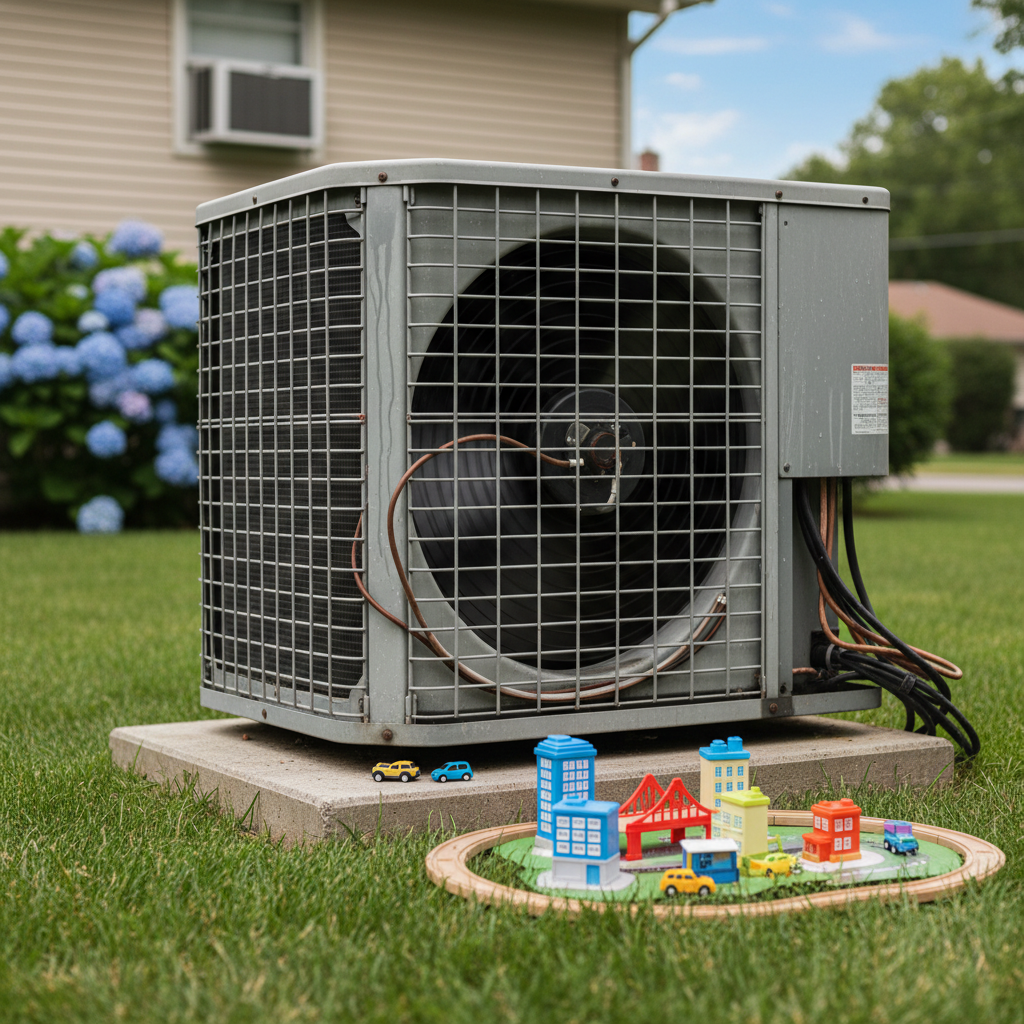
- The Condenser: Often found outside (the big metal box), the condenser’s job is to release the heat the refrigerant has absorbed. As the hot, high-pressure refrigerant flows through the condenser coils, it cools down and changes from a gas to a liquid.
- The Expansion Valve: This valve controls the flow of refrigerant. It allows the high-pressure liquid refrigerant to expand into a low-pressure liquid, which causes it to cool down rapidly.
- The Evaporator: Located inside, usually near your furnace or in a wall unit, the evaporator is where the magic happens. The cold, low-pressure refrigerant absorbs heat from the air inside your home, cooling it down.
- The Fan(s): Fans are essential. One fan blows air over the evaporator to cool the air in your home. Another fan in the outdoor unit helps to dissipate the heat removed from your home.
Step-by-Step: How It All Works Together
Imagine the refrigerant as a little heat-seeking traveler going on a loop:
- The Compressor Gets Busy: The journey begins with the compressor, which compresses the refrigerant, turning it into a hot, high-pressure gas.
- Heat is Released Outside: The hot refrigerant travels to the condenser (outside unit). The condenser cools the refrigerant and changes it from a gas into a high-pressure liquid, releasing heat into the outside air. You can often feel this as the hot air blowing out of your outdoor unit.
- Expansion and Cooling: The high-pressure liquid refrigerant then passes through the expansion valve. Here, the pressure drops dramatically, causing the refrigerant to rapidly cool down.
- Absorbing Heat Inside: The now cold, low-pressure refrigerant flows to the evaporator (inside unit). Here, it absorbs heat from the air inside your home. As it absorbs heat, the refrigerant changes from a liquid back into a gas.
- Back to the Compressor: The cool, low-pressure refrigerant returns to the compressor, and the cycle starts all over again.
Decoding the Sounds: Why Does it Sound Like a Tiny City?
Ever wondered about the symphony of sounds your AC makes? It’s not just random noise; each sound has a reason:
- The Hum: That steady hum mostly comes from the compressor working hard. It’s the sound of the refrigerant being compressed, the heart of the whole system.
- The Fan’s Whisper: The fans, both inside and out, are essential for circulating air. You’ll hear them as a gentle whooshing sound.
- The Clicking: The start-up and shut-down clicks are usually the sound of relays and other electrical components turning on and off, controlling the flow of power to the unit.
- Occasional Banging or Rattling: These can be signs of something amiss, like loose parts, or debris. If you hear anything out of the ordinary, it’s a good idea to have it checked.
Common Misconceptions: Busting AC Myths
There are a few things people often get wrong about their air conditioners:
- Myth: Bigger is Always Better: A larger AC unit might seem like a good idea, but if it’s too big for your space, it can actually be less efficient. It will cycle on and off frequently, which can waste energy and not dehumidify your air properly.
- Myth: Closing Vents Saves Energy: In most central AC systems, closing vents can actually increase pressure in the ductwork, making the system work harder and potentially wasting energy.
- Myth: AC Units “Make” Cold Air: They don’t! They simply remove heat from the air inside your home.
Small Changes, Big Impact: Usage Habits and Performance
Your AC’s performance can be influenced by several factors. Here are some things to keep in mind:
- Regular Maintenance: This is key. Changing filters regularly, cleaning the outdoor unit, and having a professional check your system once a year can make a big difference in efficiency and lifespan.
- Insulation: Good insulation in your home reduces the amount of heat that enters, making your AC’s job easier.
- Shading: Closing curtains and blinds during the hottest part of the day can significantly reduce the heat load on your AC.
- Thermostat Settings: Don’t set your thermostat too low. A small change in temperature can make a big difference in energy consumption.
Modern Relevance: AC in the 21st Century
AC technology is always evolving. Newer units are more energy-efficient, with smart features like Wi-Fi connectivity and programmable thermostats. You can even find systems that use more environmentally friendly refrigerants. These advancements offer better performance and can help you save money on your energy bills. Plus, with the rise of extreme weather events, a reliable AC is more important than ever, keeping you safe and comfortable during heat waves.
Explain it to a Friend: A Simple Recap
Imagine your AC like a team of tiny workers. The compressor is the muscle, the condenser is the outdoor exhaust, the evaporator is the indoor cooler, and the refrigerant is the transport truck that carries heat from inside your house to the outside. This whole system is designed to keep you cool. Understand how these different parts work, and you can understand the basics of how your AC keeps you comfortable.
Once you understand how it works, you might find yourself a little less annoyed by the sounds your AC makes and a little more appreciative of the technology that keeps you cool, especially during those summer heat waves!
Frequently Asked Questions About Air Conditioners
Here are some of the most common questions people have about air conditioners:
1. Why is my AC blowing warm air?
There could be several reasons. Your AC might need a filter change, the refrigerant could be low, or the compressor might have an issue. It’s best to call a professional to diagnose the problem.
2. How often should I get my AC serviced?
It’s a good idea to have a professional check your AC once a year, ideally before the start of the cooling season.
3. Why is my AC freezing up?
This often happens when there’s restricted airflow, like a dirty air filter, or if the refrigerant is low. Turn off the AC and let the ice melt before checking the filter and calling a professional.
4. How can I make my AC more energy efficient?
Change your filters regularly, keep the outdoor unit clean, make sure your home is well-insulated, and consider using a programmable thermostat.
5. Should I turn my AC off when I’m away?
It depends. If you’re only going to be away for a few hours, it might be more energy-efficient to leave it on at a higher temperature. For longer periods, you can turn it off, but be mindful of the potential for humidity and heat buildup.
6. What does SEER mean?
SEER (Seasonal Energy Efficiency Ratio) is a measure of how efficiently an AC unit uses energy. The higher the SEER rating, the more efficient the unit. Newer units have higher SEER ratings.
7. Why does my AC smell bad?
A bad smell can indicate mold or mildew growth in the system. The condensation that forms inside the unit can provide the perfect environment for it to grow. Have your system cleaned by a professional.
8. My fridge isn’t cooling properly, is it related to my AC?
Though they use similar principles, the problems with your air conditioner and your fridge are unrelated. If your fridge isn’t cooling properly, check out this guide.