
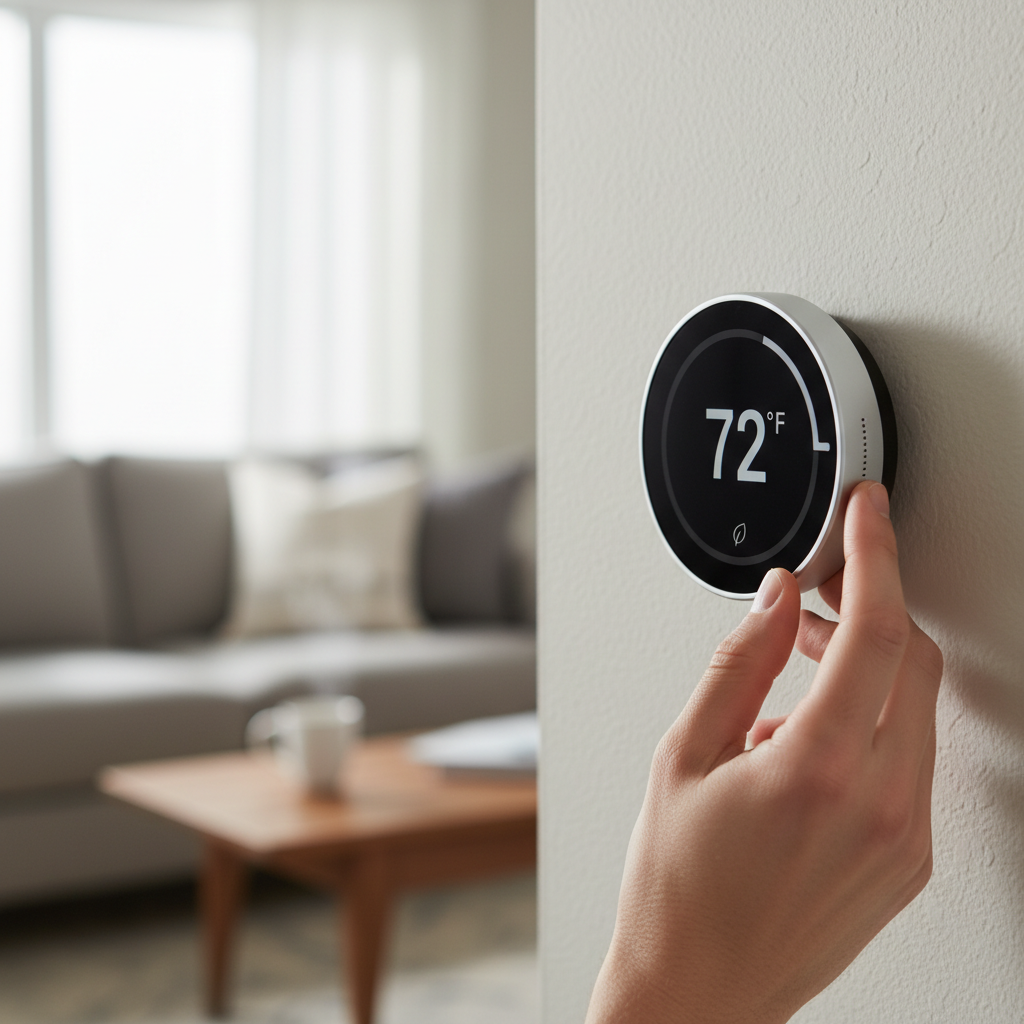
Ever walk into a perfectly heated or cooled home and think, “Ah, just right”? That feeling is thanks to a device that’s become increasingly sophisticated: the smart thermostat. It’s more than just a box on the wall; it’s a hub of comfort, efficiency, and modern convenience. Let’s dive into how these clever gadgets work, breaking down the tech without the tech-speak.
The “Set It and Forget It” Advantage
Remember the old days of fiddling with a dial, constantly adjusting the temperature? Smart thermostats take the hassle out of temperature control. They learn your habits, sense when you’re home or away, and adjust accordingly. Imagine waking up to a warm house in winter or returning to a cool, welcoming space after a long day. That’s the promise of a smart thermostat.
At a basic level, this works because the thermostat *observes*. It watches your behavior, learns your preferences, and makes smart choices to keep your home comfortable while saving energy.
Unpacking the Smart Thermostat: What’s Inside?
Let’s peek under the hood, so to speak. A smart thermostat is made up of a few key components:
* **The Brains (Processing Unit):** This is where all the clever stuff happens. It’s like the central command center, processing information from sensors, running the scheduling, and communicating with your HVAC system.
* **Sensors:** These are the eyes and ears of your thermostat. They measure the temperature in your home, and some even detect humidity and motion. Some models have sensors for multiple rooms.
* **Wi-Fi Connectivity:** This is how your thermostat “talks” to the outside world, allowing you to control it from your smartphone or tablet.
* **The Display:** This is the interface you see, often a touchscreen, where you can set the temperature, view schedules, and see energy usage.
* **The Wiring:** The thermostat connects to your home’s heating, ventilation, and air conditioning (HVAC) system using standard wires.
How It All Comes Together: Step-by-Step Operation
So, how does all this work in practice? Here’s a simplified breakdown:
1. **Sensing the Environment:** The thermostat’s sensors constantly monitor the temperature in your home.
2. **User Input or Automated Scheduling:** You set your desired temperature or create a schedule. Some thermostats learn your habits and adjust automatically.
3. **Communication and Processing:** The thermostat uses Wi-Fi to connect to the cloud, analyze data, and access weather forecasts.
4. **Controlling the HVAC System:** The thermostat sends commands to your HVAC system to turn the heat or AC on or off, ensuring precise temperature control.
5. **Remote Access and Notifications:** You can monitor and control the system via an app on your phone, receiving updates on energy usage and maintenance.
Common Misconceptions: Busting the Myths
There are a few things people often misunderstand about smart thermostats:
* **”They’re hard to set up.”** While some older programmable thermostats were tricky, most smart thermostats are designed for easy installation and use.
* **”They’re only for techies.”** Nope. They’re designed to be user-friendly for everyone.
* **”They don’t really save money.”** Studies show they *do* save energy by optimizing heating and cooling based on your schedule and preferences.
Why Small Changes Matter: How Your Habits Affect Performance
Your usage habits play a big role in how well your smart thermostat performs. For example:
* **Setting a schedule:** This is key! Program your thermostat to adjust the temperature when you’re asleep or away.
* **Using geofencing:** This feature uses your phone’s location to automatically adjust the temperature as you leave or arrive home.
* **Checking energy reports:** Most smart thermostats provide energy usage reports, helping you identify inefficiencies and adjust your settings for optimal savings.
The Modern Touch: Smart Thermostats in 2026
In 2026, smart thermostats are becoming even more integrated into our lives:
* **Voice Control:** Imagine adjusting your home’s temperature with a simple voice command.
* **Smart Home Integration:** They seamlessly work with other smart devices, like lights and security systems, for a fully connected home experience.
* **Advanced Features:** Some models now include air quality monitoring, helping you breathe easier while saving energy.
These advancements make it easier than ever to manage your home’s climate for comfort, energy savings, and peace of mind.
Creating Your Own Mental Model: Explaining Smart Thermostats to Others
Now you can impress your friends and family with your newfound knowledge! Here’s how to explain smart thermostats:
“It’s like a super-smart version of your old thermostat. It connects to Wi-Fi, so you can control it from your phone. It learns your habits and adjusts the temperature automatically, saving energy. It’s all about making your home comfy without wasting power.”
Want to go deeper? Explain the key components: the sensors, the Wi-Fi connection, the brains, and how it all works together to control the HVAC system. You can even mention the potential for saving up to 20% on your energy bill.
And if you’re looking for ways to improve your home’s internet, check out this guide on how to boost your Wi-Fi, it might help improve the connection with your smart thermostat My Wi-Fi is Slow! A No-Nonsense Guide to Faster Internet.
FAQ: Your Burning Questions Answered
Here are some common questions people have about smart thermostats:
Q: Do smart thermostats really save money?
A: Yes! Smart thermostats can help you save money on your energy bills by optimizing your home’s heating and cooling based on your schedule and preferences. Some models offer savings of 10-12% on heating and 15% on cooling, potentially saving you around $140 per year.
Q: Are smart thermostats hard to install?
A: Not usually. Most smart thermostats are designed for easy installation, and many homeowners can install them in about 30 minutes. Clear instructions and online tutorials make the process straightforward.
Q: Do I need a “C wire” to install a smart thermostat?
A: Most smart thermostats require a “C wire” (common wire) for power. If you don’t have one, you might need to install an adapter or seek professional help.
Q: Can a smart thermostat work with any HVAC system?
A: In most cases, yes, as long as you have a compatible HVAC system and wiring. Check the thermostat’s compatibility with your system before purchasing.
Q: How do smart thermostats know the temperature?
A: Smart thermostats use built-in sensors to measure the ambient temperature of your home. These sensors continuously monitor the environment and send real-time data to the thermostat’s algorithms.
Q: Can I control my smart thermostat from anywhere?
A: Yes! Most smart thermostats connect to your home’s Wi-Fi network and allow you to control them remotely through an app on your smartphone or tablet.
Q: Do smart thermostats work with smart home systems?
A: Yes, many smart thermostats integrate seamlessly with other smart home devices and systems, such as voice assistants like Amazon Alexa or Google Assistant.
Q: How do smart thermostats save energy?
A: Smart thermostats save energy by learning your heating and cooling preferences, adjusting the temperature automatically based on your schedule, and allowing remote control. They also provide insights into your energy use and suggest adjustments to optimize settings further.
Ready to take control of your home’s comfort and energy savings? The world of smart thermostats awaits. If you want to dive deeper into home energy savings, visit the Homepage to learn more.