
Let’s set the scene: It’s a scorching summer afternoon. You walk into your home, and *ahhhh*, sweet, cool relief washes over you. Your air conditioner is working its magic, and you don’t even have to think about it. But have you ever wondered how this boxy machine manages to turn the inside of your house into a comfortable haven, even when the sun is trying its best to turn everything into a furnace?
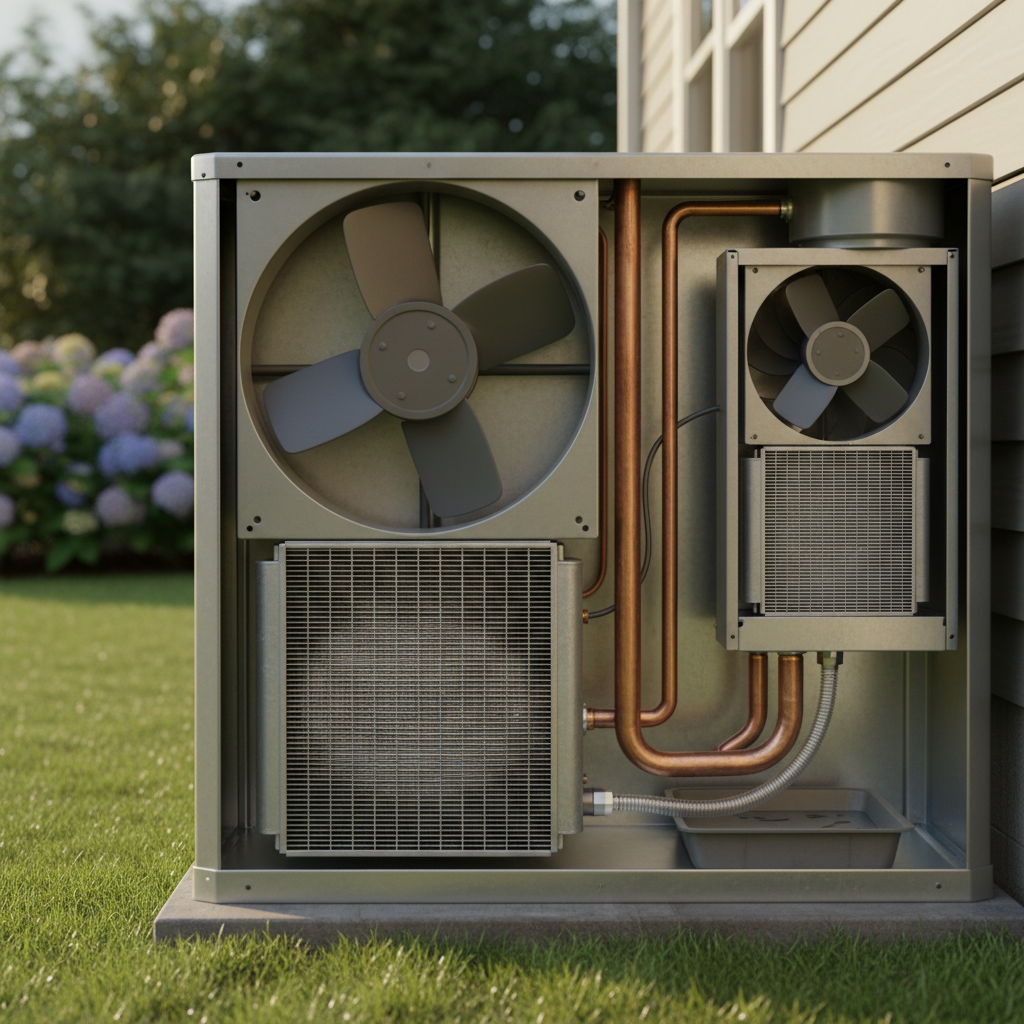
At a basic level, this works because the air conditioner moves heat. It’s like a highly efficient heat transporter, taking heat from inside your home and dumping it outside. Sounds simple, right? Well, the reality is a bit more intricate, but don’t worry – we’ll break it down into easy-to-understand pieces.
The Big Picture: Heat’s Journey
Think of an air conditioner as a system that takes heat from one place (your house) and moves it to another (the outside). It does this using a special fluid called a refrigerant, which has the unique ability to absorb and release heat.
Here’s the part most people never notice: the refrigerant goes through a cycle of changes, from a liquid to a gas and back again. These changes allow it to “grab” heat from inside your home and “dump” it outside. The entire process is a carefully orchestrated dance of physics and engineering.
Breaking it Down: The Key Components
Let’s take a look at the main players in this cooling drama:
- The Evaporator Coil: This is located inside your house, usually in the air handler unit. It’s where the refrigerant absorbs heat from the air in your home.
- The Compressor: This is the heart of the system, typically found in the outdoor unit. It compresses the refrigerant gas, which increases its temperature and pressure.
- The Condenser Coil: Also located in the outdoor unit, this is where the hot refrigerant releases its heat to the outside air.
- The Expansion Valve: This valve controls the flow of refrigerant and helps to lower its pressure and temperature before it enters the evaporator coil.
- The Fans: Fans are crucial for circulating air across the coils, both inside and outside.
Once you understand this, the rest makes sense: each component plays a vital role in the heat transfer process.
Step-by-Step: How the Magic Happens
Now, let’s follow the journey of the refrigerant as it works its way through the system:
- Heat Absorption (Inside the House): The refrigerant, in a cool, low-pressure state, enters the evaporator coil inside your house. The warm air from your home blows over this coil. Because the refrigerant is colder, it absorbs the heat from the air. As it absorbs heat, the refrigerant changes from a liquid to a gas.
- Compression (Outdoor Unit): The refrigerant gas then travels to the compressor. The compressor squeezes the gas, increasing its pressure and temperature. Think of it like squeezing a sponge – the water (heat) gets pushed out.
- Heat Release (Outdoor Unit): The hot, high-pressure refrigerant gas then flows to the condenser coil, which is located outside. A fan blows air over the coil, and the refrigerant releases its heat into the outside air. As it loses heat, the refrigerant changes back into a liquid.
- Expansion (Back Inside): The high-pressure liquid refrigerant then passes through the expansion valve. This valve reduces the pressure and temperature of the refrigerant, preparing it to re-enter the evaporator coil and begin the cycle again.
It’s a continuous loop, a perfect example of thermodynamics at work. The refrigerant constantly cycles, absorbing heat, releasing it, and changing states, all to keep your home cool and comfortable.
Common Misconceptions, Debunked
There are a few myths about air conditioners that are worth clearing up:
- Myth: Air conditioners “make” cold air.
- Reality: They don’t create cold air; they remove *heat*.
- Myth: Air conditioners pull in outside air.
- Reality: Most air conditioners recirculate the air already inside your house.
- Myth: The refrigerant eventually runs out.
- Reality: Refrigerant is a closed-loop system and should never need to be refilled unless there is a leak.
Understanding these points can save you some confusion and help you better appreciate how your AC works.
How Your Habits and the Environment Affect Performance
The efficiency of your air conditioner isn’t just about the machine itself. Your usage habits and the environment play a big role:
- Regular Maintenance: Changing your air filters regularly is key. A dirty filter restricts airflow, making the AC work harder and reducing its efficiency.
- Insulation: Good insulation in your home helps prevent heat from entering, reducing the workload on your AC.
- Thermostat Settings: Setting your thermostat a few degrees higher when you’re away can save energy without sacrificing comfort. In the modern world of smart home technology, you can easily control your thermostat remotely, ensuring optimal energy use.
- Sunlight: Blocking direct sunlight with curtains or blinds can significantly reduce heat gain.
- Outdoor Unit Placement: Make sure your outdoor unit has enough space around it for proper airflow. Keeping it shaded can also help improve its efficiency.
Small changes can make a big difference in how well your AC performs and how much it costs to run.
Modern Relevance: Air Conditioning in the 21st Century
Air conditioning has come a long way. Today, we have smart thermostats that learn your habits, energy-efficient models with higher SEER ratings, and even portable AC units for spot cooling. As technology evolves, we can expect even more innovation in this space.
Consider the rise of heat waves and extreme temperatures due to climate change. Air conditioning isn’t just a luxury anymore; it’s becoming a necessity in many parts of the world. Innovations in air conditioning are crucial for both comfort and public health. This is particularly true in urban areas, where the “urban heat island effect” can make summers unbearable.
Also, think about the rise of remote work and the increasing amount of time people spend at home. Reliable and efficient air conditioning is more important than ever for productivity and well-being.
As we move forward, there will likely be increased focus on sustainable cooling solutions, such as heat pumps that can both heat and cool, and air conditioners that use more environmentally friendly refrigerants.
The Big Picture Again: A Clearer Mental Model
So, the next time you feel that cool blast of air, you’ll have a better understanding of what’s happening. Your air conditioner is a heat-moving machine. It grabs heat from inside, using a special fluid that changes states to absorb and release the heat. It then dumps that heat outside, leaving you with a cool and comfortable space. It’s a closed-loop system that relies on a few key components working together in perfect harmony.
The best part? You can now explain it to a friend! They’ll be impressed, and you’ll feel like a bit of a science whiz.
If you’re interested in other ways to make your home more comfortable, you might want to read our article on troubleshooting your Wi-Fi for a seamless experience in all aspects of your home.
Frequently Asked Questions (FAQ)
Here are some common questions about how air conditioners work:
- Why does my air conditioner drip water?
- That’s condensation! The evaporator coil inside your house gets cold, and when warm, humid air hits it, water condenses on the coil, just like a cold glass of water on a hot day. The water is collected and drained away.
- What does SEER mean?
- SEER stands for Seasonal Energy Efficiency Ratio. It’s a measure of how efficiently your air conditioner cools your home over a typical cooling season. The higher the SEER rating, the more efficient the unit.
- Why does my air conditioner seem to freeze up?
- This usually happens when there’s a problem with airflow (like a clogged filter) or if the refrigerant is low. If it happens frequently, it’s best to call a professional.
- How often should I get my air conditioner serviced?
- It’s a good idea to have your AC serviced by a professional at least once a year, ideally before the start of the cooling season.
- Can I fix my air conditioner myself?
- Some basic maintenance, like changing the filter, can be done by you. However, repairs involving the refrigerant or electrical components should be left to qualified technicians.
- What are the signs that my air conditioner needs replacing?
- If your AC is old, breaks down frequently, uses a lot of energy, or can’t keep your home cool, it may be time for a replacement.
- How can I make my AC more energy-efficient?
- Regular maintenance, good insulation, and setting your thermostat a few degrees higher can all help improve energy efficiency. Smart thermostats and zone cooling systems can also help.