
Imagine this: You’re pulling into your driveway after a long day. It’s freezing outside, and the thought of stepping into a cold house sends a shiver down your spine. But then, you remember: your smart thermostat. With a few taps on your phone, you’ve already cranked up the heat, and by the time you’re inside, your home is a cozy haven. That’s the everyday magic of a smart thermostat. But how does it actually *work*? Let’s dive in.
The Basic Idea: Smart Control for Your Comfort
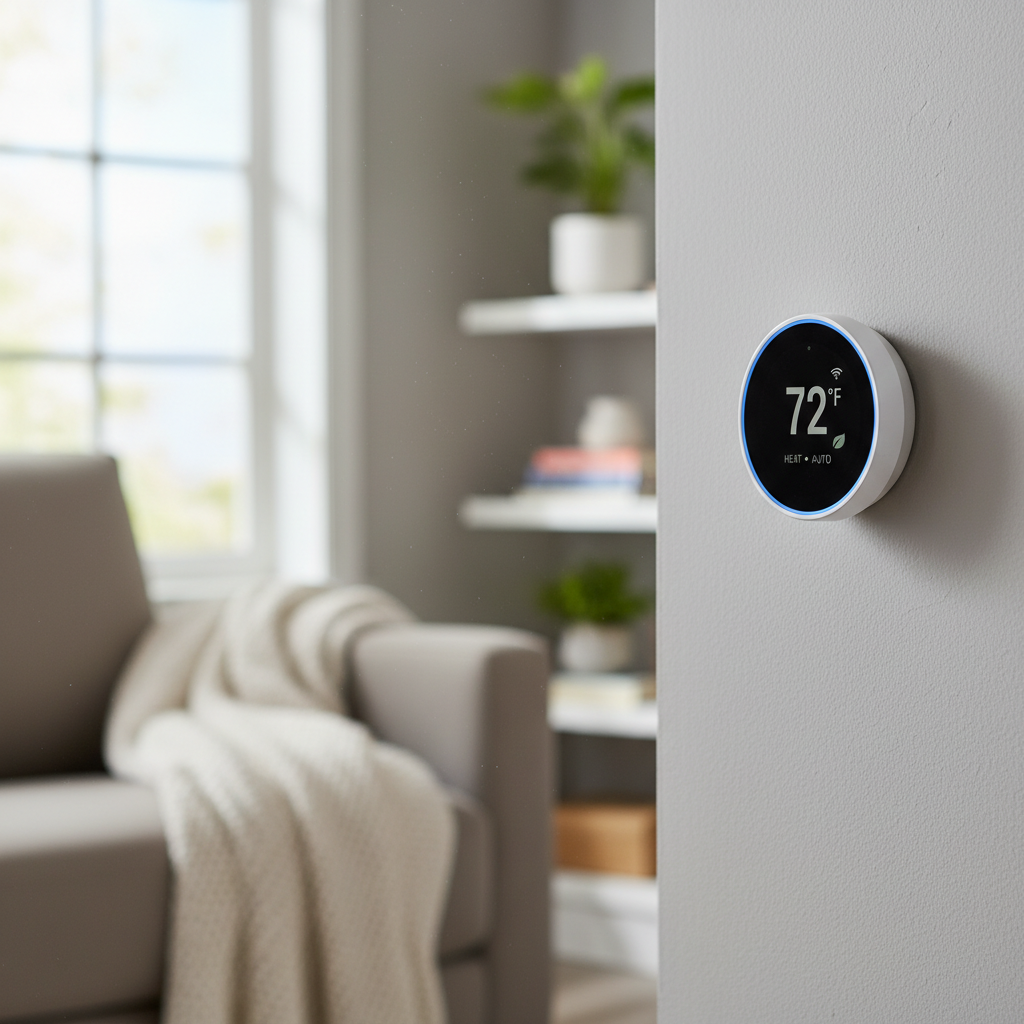
At a basic level, a smart thermostat is a clever upgrade to the old dial-and-switch thermostats we’re all familiar with. Its job is the same: to control your home’s heating, ventilation, and air conditioning (HVAC) system to keep you comfortable. However, a smart thermostat does this with a whole lot more intelligence and flexibility. It’s like the difference between a flip phone and a smartphone.
The core principle is simple: **Measure, Adjust, and Communicate**.
* **Measure:** The thermostat constantly measures the temperature in your home.
* **Adjust:** Based on your settings and its own smarts, it decides whether to turn the heat or AC on or off.
* **Communicate:** It sends signals to your HVAC system to make it do its job.
But the “smart” part comes from a few key upgrades. Think of it as a thermostat that has gone to college and earned a degree in energy efficiency, home automation, and user convenience.
Breaking Down the Brains of the Operation
Let’s break down the components of a smart thermostat:
1. Temperature Sensors: The Eyes and Ears
The first and arguably most crucial part is the temperature sensor. This is how the thermostat “knows” what the current temperature is in your home. Most smart thermostats have built-in sensors, but some also let you add remote sensors in other rooms. This is particularly useful for homes with multiple levels or rooms that tend to be warmer or cooler than others.
The sensors are constantly monitoring and relaying that information back to the thermostat’s “brain.” This continuous feedback loop is the foundation upon which all other smart features operate.
2. The “Brain”: Processing Power and Algorithms
This is where the magic really happens. The “brain” of the smart thermostat is a small computer that runs sophisticated algorithms. These algorithms are what make your thermostat “smart.” They’re programmed to:
* **Learn Your Habits:** Many smart thermostats “learn” your schedule and temperature preferences over time. They notice when you typically wake up, go to bed, and leave for work, and they adjust the temperature accordingly.
* **Automate Adjustments:** Based on your schedule and preferences, the thermostat can automatically adjust the temperature throughout the day. This means you don’t have to manually change the settings.
* **Optimize for Energy Efficiency:** The algorithms are designed to minimize energy consumption by heating or cooling only when necessary.
* **Connect to the Internet:** This is how you can control your thermostat remotely, monitor your energy usage, and get software updates.
3. Connectivity: Wi-Fi and Beyond
Wi-Fi is a key component. It’s the communication link that lets the thermostat connect to your home network and, ultimately, the internet. This connectivity unlocks a host of features:
* **Remote Control:** You can adjust the temperature from anywhere using a smartphone app or web portal.
* **Energy Monitoring:** Many smart thermostats track your energy usage and provide insights into your heating and cooling patterns.
* **Smart Home Integration:** Smart thermostats can integrate with other smart home devices like Amazon Alexa, Google Assistant, or Apple HomeKit. This lets you control the thermostat with voice commands or include it in automated routines. Have a look at rebooting your router if you are having issues with your Wi-Fi connection.
* **Over-the-Air Updates:** Just like your smartphone, smart thermostats receive software updates that add new features and improve performance.
4. HVAC System Interface: Talking to Your Furnace and AC
The smart thermostat doesn’t directly heat or cool your home. Instead, it communicates with your HVAC system (furnace, air conditioner, heat pump) to tell it what to do. This communication happens through the thermostat wiring. The thermostat sends electrical signals through these wires to control the HVAC system’s components, such as the fan, compressor, and burners.
How the Pieces Work Together: Step by Step
Here’s a simplified breakdown of how everything works together:
1. **Sensing the Environment:** The temperature sensors constantly measure the current temperature.
2. **User Input:** You set your desired temperature and schedule through the thermostat interface or app.
3. **Data Processing:** The thermostat’s “brain” analyzes the current temperature, your settings, and any learned patterns.
4. **Decision Making:** Based on this information, the thermostat decides whether to turn the HVAC system on or off, and at what settings.
5. **Signal Transmission:** The thermostat sends electrical signals through the wires to the HVAC system.
6. **HVAC System Action:** The HVAC system responds by turning on the heat or AC, adjusting the fan speed, or otherwise regulating the temperature.
7. **Continuous Monitoring:** The process repeats continuously, ensuring your home stays at the desired temperature.
Common Misconceptions: Debunking the Myths
There are a few common misconceptions about smart thermostats:
* **”They’re too complicated to install.”** While some older homes might need some wiring adjustments, most smart thermostats are designed for easy installation. The manufacturers provide clear instructions and diagrams.
* **”They don’t really save money.”** While the savings can vary, smart thermostats are designed to optimize your energy usage, potentially reducing your heating and cooling bills.
* **”They’re only for tech-savvy people.”** Smart thermostats are designed with user-friendliness in mind. The apps and interfaces are usually intuitive and easy to use.
* **”They’re a security risk.”** Like any connected device, smart thermostats are vulnerable to hacking. But manufacturers are constantly improving security measures to protect your data and privacy.
Small Changes, Big Impact: Usage Habits and Performance
The way you use your smart thermostat can significantly impact its performance:
* **Set a Realistic Schedule:** Don’t set extreme temperature changes. This can cause the HVAC system to work harder and use more energy. Instead, gradually adjust the temperature to your comfort level.
* **Use Geofencing:** If your thermostat has geofencing, use it. This feature automatically adjusts the temperature based on your location. It can save energy by turning off the heat or AC when you’re away and turning it back on before you return.
* **Monitor Your Energy Usage:** Many smart thermostats provide detailed reports on your energy consumption. Use this information to identify areas where you can save energy.
* **Keep it Clean:** Dust and debris can interfere with the sensors. Regularly clean your thermostat to ensure accurate readings.
* **Consider Smart Home Integration:** Take advantage of smart home integration. For example, if you have smart blinds, you can program them to close during the hottest part of the day to reduce solar heat gain and the need for air conditioning.
The Future is Now: Smart Thermostats in the Modern World
Smart thermostats are becoming increasingly sophisticated. Here’s a glimpse of what’s on the horizon:
* **Integration with Renewable Energy:** Some smart thermostats can integrate with solar panels and other renewable energy sources. This lets you optimize your energy usage and potentially save even more money.
* **Predictive Maintenance:** Some smart thermostats can monitor your HVAC system’s performance and alert you to potential problems before they become major issues.
* **Advanced Learning:** AI is continuously improving the ability of smart thermostats to learn your preferences and habits.
* **Grid Optimization:** Smart thermostats can partner with energy providers to automatically adjust your energy usage during peak demand times, saving you money and helping to stabilize the power grid.
The Takeaway: A Smarter Way to Stay Comfortable
Smart thermostats represent a significant leap forward in home comfort and energy efficiency. They provide precise control over your home’s climate, learn your habits, and optimize your energy usage. Once you understand the basic principles, using one is a breeze. It’s really about giving you more control and awareness of your home’s energy consumption.
With a smart thermostat, you’re not just setting a temperature. You’re creating a comfortable, efficient, and connected home environment. If you’re looking for ways to reduce energy costs and have more convenient control, a smart thermostat could be a great upgrade for you. You may also be interested in other ways to improve your home’s energy efficiency; you can find more information on the homepage.
FAQ: Your Burning Questions Answered
Here are some frequently asked questions about smart thermostats:
**Q: Do I need to be tech-savvy to use a smart thermostat?**
A: Not at all! Most smart thermostats are designed with user-friendliness in mind. The apps and interfaces are intuitive and easy to use.
**Q: How much money can I save with a smart thermostat?**
A: Savings vary, but many users report significant reductions in their heating and cooling bills. On average, smart thermostats can save you around 8% on your energy bills.
**Q: Are smart thermostats compatible with all HVAC systems?**
A: Most are, but it’s always best to check the manufacturer’s compatibility list before you buy. If you are unsure, consult a professional to ensure smooth installation.
**Q: How do smart thermostats know when I’m home or away?**
A: Some use geofencing (your phone’s location), while others use motion sensors to detect activity in your home.
**Q: Can smart thermostats be hacked?**
A: Yes, like any connected device, they can be vulnerable. However, manufacturers are constantly improving security measures.
**Q: Is it hard to install a smart thermostat?**
A: Most are designed for easy installation. You may be able to install it yourself following the manufacturer’s instructions.
**Q: Do smart thermostats work with voice control?**
A: Many smart thermostats are compatible with voice assistants like Amazon Alexa, Google Assistant, and Apple Siri.
**Q: How do smart thermostats know the temperature?**
A: They have built-in sensors that measure the ambient temperature of your home.