
Picture this: You’ve just finished a fantastic meal. The plates, glasses, and cutlery are piled high in the sink, a testament to culinary joy. Now comes the part many of us dread: washing up. But then, you remember your trusty dishwasher. You load it up, add a squirt of detergent, and press a button. Hours later, you open the door to find everything gleaming, ready for the next feast. But have you ever stopped to wonder, what’s *actually* happening in there?
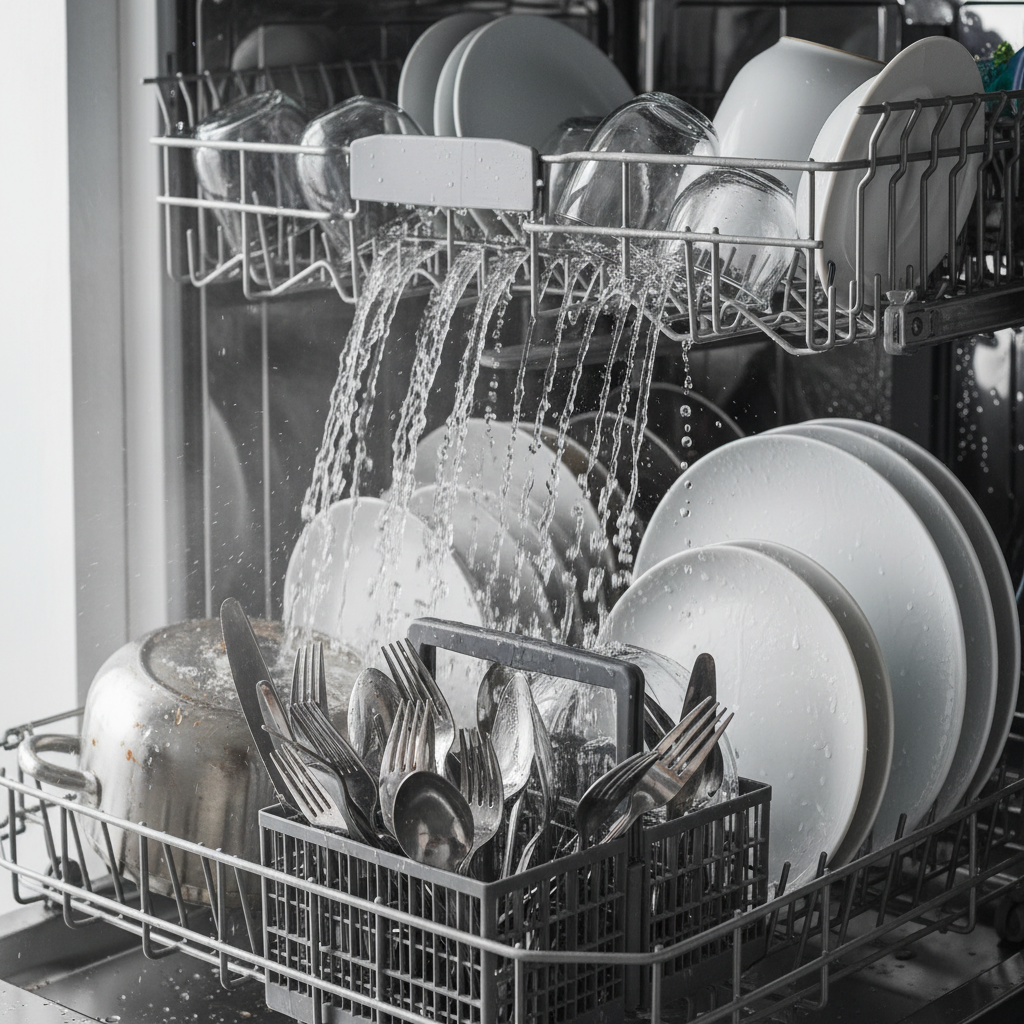
Let’s dive into the fascinating world of dishwashers, breaking down how these everyday marvels transform dirty dishes into sparkling cleanliness. Forget complex manuals and technical jargon; we’ll explore the simple science and ingenious engineering that make it all possible.
The Basic Principle: Hot Water and Powerful Spray
At a basic level, a dishwasher works because of a few simple, yet powerful, forces: hot water, powerful spraying action, and a bit of chemistry. Think of it as a miniature, automated car wash for your dishes. The hot water loosens and dissolves food particles and grease, while the spray arms blast away the grime. The detergent, of course, plays a crucial role in breaking down food and making the water “wetter” so it can get into all the nooks and crannies.
It’s not rocket science, but the magic is in the details. Let’s peel back the layers and see what’s really going on inside this workhorse of a machine.
The Anatomy of a Dishwasher: A Tour of the Key Components
Let’s take a closer look at the key parts that make your dishwasher a cleaning champion. It’s like taking apart a well-designed engine – once you understand the pieces, the whole thing clicks into place.
The Water Inlet: Bringing in the Lifeline
This is where the fresh water enters the dishwasher. It’s connected to your home’s water supply and controlled by a valve. The valve opens and closes to let water in at the right time and in the right amounts. Modern dishwashers often have sensors that detect the water pressure and temperature, ensuring optimal performance.
The Heating Element: Turning Up the Heat
Most dishwashers have a heating element, usually located at the bottom of the tub. This element heats the water to the desired temperature, which is crucial for dissolving grease and sanitizing your dishes. The thermostat monitors the water temperature, keeping it at a consistent level throughout the wash cycle.
The Spray Arms: The Muscle of the Operation
These rotating arms are the workhorses of the cleaning process. They have strategically placed nozzles that spray hot water and detergent onto the dishes from multiple angles. This powerful spraying action is what blasts away food particles and leaves your dishes spotless. The arms are powered by the water pressure itself; as water is forced through the nozzles, it causes the arms to spin.
The Detergent Dispenser: The Precise Dose
This compartment holds the detergent and opens at the appropriate time during the wash cycle. It ensures that the detergent is released into the water at the right stage, maximizing its cleaning power. Some models also have a pre-wash compartment for a quick rinse before the main wash.
The Pump and Drain System: Circulation and Disposal
The pump is the heart of the dishwasher’s water circulation system. It takes the water from the bottom of the tub, sends it up to the spray arms, and then recirculates it. After the wash cycle, the pump also removes the dirty water through the drain hose. A filter catches food particles, preventing them from clogging the pump and drain.
The Control Panel: The Brains of the Operation
This is where you choose your wash cycle, select options like heated drying, and start the machine. The control panel is connected to a computer that manages the entire washing process, from the water intake to the drying phase. It monitors the water temperature, the time of the cycles, and the status of different components. This gives you a variety of options to clean your dishes to your liking.
Step-by-Step: How a Dishwasher Cleans Your Dishes
Now that we understand the parts, let’s follow the journey of a dirty dish through a typical dishwasher cycle. Here’s a simplified breakdown, step by step:
-
Pre-Wash (Optional): Some cycles start with a quick rinse to remove loose food particles. This is like a quick shower before the main wash.
-
Water Intake: The water inlet valve opens, and the dishwasher fills with water. The water is heated to the programmed temperature by the heating element.
-
Detergent Release: The detergent dispenser opens, releasing the detergent into the water. This is when the cleaning magic begins!
-
Wash Cycle: The pump circulates the hot, soapy water through the spray arms, which blast the dishes with powerful jets. This is where the food and grime get blasted away.
-
Drain: The pump drains the dirty water, which has now collected all the food particles and grime, out of the dishwasher and into your drain.
-
Rinse Cycle(s): The dishwasher fills with clean water and rinses the dishes to remove any remaining detergent residue.
-
Drying Cycle (Optional): Many dishwashers have a heated drying cycle. The heating element warms the air inside the dishwasher, which helps dry the dishes. Some models use condensation drying, where the water condenses on the cold inner walls of the dishwasher and drains away.
-
Complete! Your dishes are clean, dry, and ready to be used.
Common Misconceptions: Dishwasher Myths Debunked
There are a few common myths surrounding dishwashers that can affect how we use them. Let’s clear them up:
-
Myth: You need to pre-rinse your dishes.
Reality: Modern dishwashers are designed to handle most food debris. Scraping off large pieces of food is helpful, but pre-rinsing is often unnecessary and a waste of water. It’s like double-washing the dishes.
-
Myth: Dishwashers use a lot of water.
Reality: Surprisingly, dishwashers are generally more water-efficient than hand washing, especially if you let the water run while you wash. Dishwashers recirculate the water throughout the cycle, using it more efficiently. Many newer models are designed for even greater water savings.
-
Myth: All detergents are the same.
Reality: Detergents come in various forms (powder, liquid, tabs), and the best choice depends on your dishwasher, water hardness, and personal preference. Some detergents are formulated for specific types of stains or water conditions. Following the manufacturer’s instructions on detergent is essential.
How Small Changes Affect Performance: Usage Habits and Environmental Factors
Even small changes in how you load your dishwasher or where you place it can impact its efficiency. Let’s look at a few examples:
-
Loading: Overloading your dishwasher can prevent water from reaching all the dishes, leading to poor cleaning results. Make sure dishes aren’t blocking the spray arms and that they are angled to allow water to run off.
-
Water Hardness: Hard water contains high mineral content, which can leave spots on your dishes and reduce the effectiveness of your detergent. Using a rinse aid or a dishwasher with a water softener can help.
-
Maintenance: Regularly cleaning your dishwasher’s filter and spray arms can prevent clogs and ensure optimal performance. This simple act keeps the machine working well. A clean dishwasher is a happy dishwasher.
-
Detergent Choice: Using the right detergent for your water hardness and the type of dishes can improve cleaning results. Consider switching detergent if you’re not happy with the current results.
Dishwashers in the Modern World: Efficiency and Innovation
Dishwashers have come a long way. Modern models are more energy-efficient, quieter, and offer more features than ever before. Many are Wi-Fi enabled, allowing you to control them remotely. Some models feature advanced sensors that detect the level of dirtiness in the water and adjust the wash cycle accordingly, optimizing both performance and water usage. The focus is increasingly on sustainability and convenience.
With smart features becoming more common, dishwashers are becoming even more integral to the connected home, and we’re all able to save energy and reduce our environmental footprint.
Closing Thoughts: From Grime to Shine
So, the next time you load your dishwasher, you’ll know it’s not just a box that cleans your dishes. It’s a complex machine that uses a combination of mechanics, chemistry, and technology to make your life easier. From the powerful spray arms to the precise detergent dispenser, every component plays a vital role in transforming dirty dishes into sparkling cleanliness. Understanding how this simple machine works can help you make the most of it, save water, and enjoy cleaner dishes. You can also explain this to a friend, who will probably think you’re a genius.
Frequently Asked Questions (FAQs)
Here are some common questions about dishwashers, answered simply:
1. Why aren’t my dishes getting clean?
There are a few possible reasons. Make sure you’re loading your dishwasher correctly, not overloading it, and that the spray arms can rotate freely. Check the filter for any food particles, and make sure you’re using the correct amount of detergent. Your water hardness also plays a part, so consider using rinse aid or a water softener.
2. How often should I clean my dishwasher?
It’s a good idea to clean your dishwasher regularly, about once a month, or more often if you use it a lot. Clean the filter and spray arms to remove any food debris. You can also run a cycle with a dishwasher cleaner to remove any buildup.
3. Is it okay to put all dishes in the dishwasher?
Most modern dishes are dishwasher-safe, but always check the manufacturer’s instructions. Wooden items, delicate glassware, and some plastic items may not be suitable for the dishwasher. Hand-wash items that could warp or be damaged by high heat.
4. How do I prevent water spots on my dishes?
Water spots are often caused by hard water. Using a rinse aid can help prevent spots by reducing the surface tension of the water, allowing it to sheet off the dishes more easily. Another solution is to consider a dishwasher with a built-in water softener, or adding a water softener to your home’s water system.
5. How much electricity does a dishwasher use?
The energy usage of a dishwasher varies depending on the model, the wash cycle, and the frequency of use. However, modern dishwashers are designed to be energy-efficient. Look for the Energy Star label when buying a new dishwasher to find models that meet strict energy efficiency guidelines.
6. What are the best ways to load a dishwasher?
Place dishes with their soiled surfaces facing the spray arms. Avoid overcrowding. Put large items on the bottom rack, and smaller items on the top rack. Load the silverware basket with the handles up for forks and spoons, and handles down for knives. Always consult your dishwasher manual for specific loading instructions.
7. Why does my dishwasher smell bad?
A bad smell in your dishwasher can be caused by food particles trapped in the filter or drain, or by mold or mildew. Regularly clean the filter and run a cleaning cycle with a dishwasher cleaner to eliminate odors. Consider running an empty cycle with vinegar to help.
8. Can I use regular dish soap in my dishwasher?
No, you should never use regular dish soap in your dishwasher. Dish soap is designed to create a lot of suds, which can overflow your dishwasher and cause damage. Always use detergent specifically designed for dishwashers.