
Picture this: It’s laundry day. You toss your favorite jeans and a few t-shirts into the washing machine, add some detergent, and hit start. The machine rumbles to life, and in a short while, your clothes come out fresh and clean. But have you ever stopped to wonder what’s actually happening inside that metal box? How does it get your clothes clean, and why does it sometimes sound like a jet engine is taking off in your laundry room?
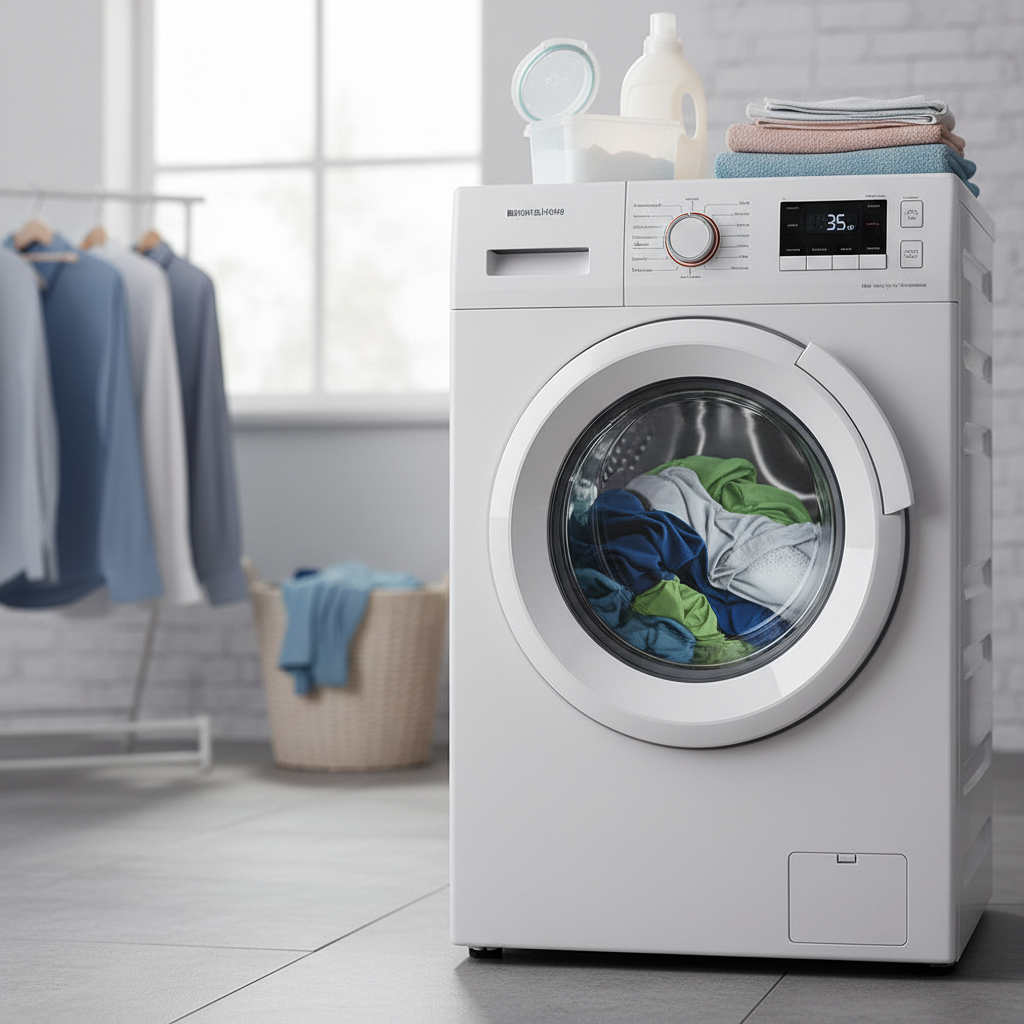
Let’s dive into the fascinating world of your washing machine and understand its inner workings. Forget textbooks and jargon. We’ll explore the simple mechanics and clever engineering that make this everyday appliance a true marvel of modern convenience.
The Basic Principle: Agitation, Water, and Detergent
At a basic level, your washing machine operates on a straightforward principle: remove dirt and stains from clothes using a combination of mechanical action (agitation), water, and detergent. It’s like giving your clothes a thorough scrub, but instead of doing it by hand, the machine does the hard work for you.
Think of it like this: Imagine you’re trying to wash a muddy pair of shoes. You wouldn’t just soak them in water, would you? You’d rub, scrub, and rinse. A washing machine essentially does the same thing, but in a controlled and efficient manner.
Breaking Down the Machine: The Key Components
To understand how a washing machine works, we need to break it down into its key components. Here’s a look at the major players in the laundry game:
- The Tub: This is the main container where the washing and rinsing happen. It’s usually made of stainless steel or plastic, and it’s designed to be water-tight.
- The Agitator or Impeller: Found in top-load and some front-load machines, the agitator is the central column that moves back and forth, creating the motion that helps scrub your clothes. Impellers, used in some front-load machines, are low-profile discs that rotate at the bottom of the tub to create a similar washing action.
- The Motor: The heart of the machine. The motor provides the power to turn the agitator/impeller and spin the drum during the wash and rinse cycles.
- The Pump: This removes the dirty water from the tub after washing and rinsing.
- The Control Panel: This is your command center. It allows you to select the wash cycle, water temperature, spin speed, and other settings.
- The Water Inlet Valves: These valves control the flow of hot and cold water into the machine.
- The Drain Hose: This hose carries the used water away from the machine to the drain.
- The Suspension System: This system (springs and dampers) supports the tub and helps to reduce vibrations during the spin cycle.
How the Washing Machine Does Its Magic: Step by Step
Now, let’s follow the journey of a load of laundry through a typical wash cycle:
- Filling: You select your desired wash cycle and temperature. The water inlet valves open, and hot and cold water fill the tub to the appropriate level. The machine also dispenses the detergent and any fabric softener.
- Agitation/Washing: The agitator (or impeller) begins to move, creating a swirling or churning action that helps loosen dirt and grime from your clothes. The detergent mixes with the water, breaking down stains and lifting dirt away from the fabric.
- Draining: Once the wash cycle is complete, the pump kicks in and drains the dirty water out of the tub through the drain hose.
- Rinsing: The machine refills with clean water to rinse away any remaining detergent and dirt. The agitation/impeller repeats.
- Spinning: The drum spins at high speed, using centrifugal force to remove excess water from your clothes.
- Draining (again): The pump drains the rinse water.
- Final Spin: The drum spins at high speed once more to remove as much water as possible before your clothes are ready to be moved to the dryer.
And voila! Your clothes are washed, rinsed, and spun, ready for the dryer or the clothesline.
Common Misconceptions: Debunking Laundry Myths
There are several common misconceptions surrounding washing machines. Let’s clear up a few of them:
- More detergent equals cleaner clothes: Actually, using too much detergent can leave residue on your clothes, making them feel stiff and attracting more dirt. Follow the detergent manufacturer’s instructions.
- Hot water always cleans best: While hot water is effective for some stains, it can also damage certain fabrics and cause colors to bleed. Cold water is often just as effective and uses less energy.
- You need to pre-treat every stain: While pre-treating can help, many washing machines are designed to handle most common stains without extra steps. Experiment to see what works best for you.
- All washing machines are the same: There are significant differences between top-load and front-load machines, as well as variations in features and efficiency. Front-load machines are generally more energy and water-efficient but may require more maintenance.
Why Small Changes Matter: Usage Habits and Performance
Your washing machine’s performance is affected by several factors. Here are some small changes you can make to improve its efficiency and lifespan:
- Load Size: Avoid overloading the machine. Overloading prevents clothes from moving freely, reducing cleaning effectiveness.
- Detergent Choice: Use the right type and amount of detergent for your machine and clothes. High-efficiency (HE) machines require HE detergents.
- Water Temperature: Use the appropriate water temperature for your fabrics and stains. Cold water is often sufficient and saves energy.
- Maintenance: Clean your washing machine regularly, including the detergent dispenser, the door seal (in front-load machines), and the filter.
- Level Surface: Ensure your machine is level. An unbalanced machine can vibrate excessively, leading to wear and tear.
The Modern Washing Machine: Tech and Trends in 2026
The washing machine has evolved considerably. Modern machines often include features such as:
- Smart Technology: Many machines now connect to Wi-Fi, allowing you to control and monitor them remotely through a smartphone app. You can start and stop cycles, receive notifications, and even diagnose potential problems.
- Automatic Dispensing: Some machines have built-in dispensers that automatically dispense the correct amount of detergent and fabric softener for each load.
- Advanced Sensors: Sensors can detect the load size, fabric type, and level of dirtiness, automatically adjusting the water level, wash time, and spin speed for optimal cleaning.
- Eco-Friendly Features: Energy-efficient models use less water and electricity, helping you save money and reduce your environmental impact.
As technology continues to advance, we can expect even more innovations in the washing machine world, such as even more eco-friendly cycles, better stain removal technology, and even smarter machines that learn your laundry habits and personalize their performance.
From Machine to Mental Model: Explaining It to Others
Now that you understand how your washing machine works, you can explain it to others. Here’s a simplified mental model:
“A washing machine is like a giant, automated scrubbing machine. It uses water, detergent, and motion to get your clothes clean. The machine fills with water, adds detergent, and then the agitator/impeller moves the clothes around to loosen dirt. After washing, the dirty water is drained, and the clothes are rinsed and spun to remove excess water. It’s all about a controlled version of what you might do by hand, but much more efficient.”
FAQ: Your Laundry Questions Answered
Here are some frequently asked questions about washing machines, answered in plain English:
- Why is my washing machine shaking so much? This could be due to an unbalanced load, the machine not being level, or a problem with the suspension system. Check the load, adjust the feet, and if the problem persists, call a repair person.
- Why does my washing machine smell musty? This is often caused by mildew growth. Clean your machine regularly, leaving the door open to air it out between washes. Run an empty cycle with hot water and some vinegar.
- How often should I clean my washing machine? It depends on how often you use it, but cleaning it every month or two is a good idea.
- What’s the difference between HE and regular detergents? HE (high-efficiency) detergents are low-sudsing and designed for use in HE machines. Using the wrong detergent can cause problems.
- Why is my washing machine not draining? This could be due to a clogged drain hose or a problem with the pump. Check the hose for blockages.
- Why does my washing machine leave residue on my clothes? This can be due to using too much detergent, not rinsing thoroughly, or a problem with your water quality.
- How do I prevent my clothes from getting tangled? Try to load clothes loosely and avoid washing very large items (like blankets) with smaller ones.
- What if my washing machine breaks down? Hopefully, you have a warranty. If not, contact a qualified appliance repair technician.
Your washing machine is a complex piece of engineering, but it’s based on some simple principles. Now, armed with this knowledge, you can appreciate the work that goes into keeping your clothes clean. Next time you load up the washing machine, remember the science and engineering behind this everyday marvel.