
Have you ever stopped to think about how an elevator *actually* works? You step in, push a button, and *voila* – you’re whisked away to another floor. It’s so commonplace that we rarely consider the clever engineering making it all possible. But behind the smooth ride and the simple button panel lies a world of counterweights, cables, and clever mechanics. Let’s take a look.
The Basic Principle: Counterbalance in Action
At its heart, an elevator is a masterclass in balance. It uses a system of counterbalance to move the elevator car (the thing you step into) up and down safely and efficiently. Imagine a seesaw. If you have two people of roughly equal weight, the seesaw balances, and only a small push is needed to move either person up or down. An elevator works on a similar principle.
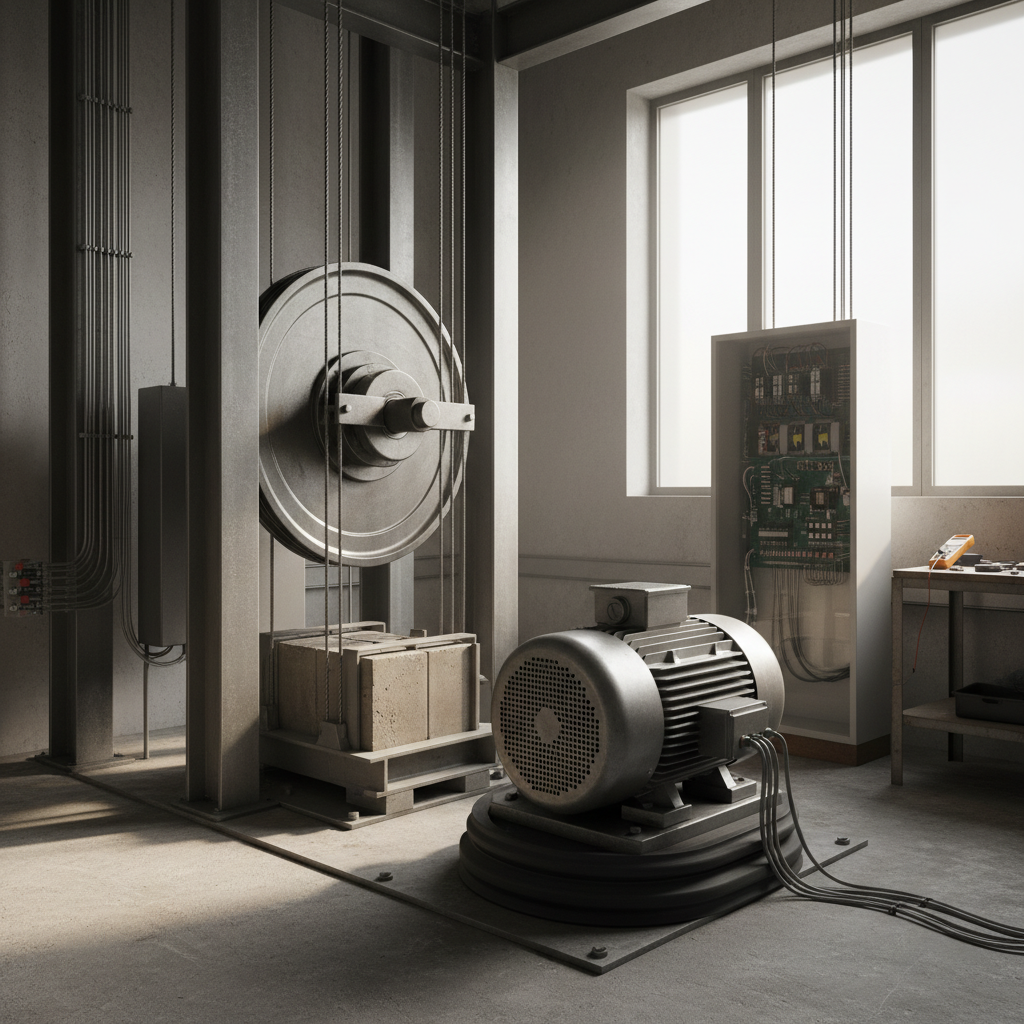
Instead of another person, the elevator uses a *counterweight*. This counterweight is typically made of heavy materials like concrete or steel. Its weight is carefully calculated to be roughly equal to the weight of the elevator car *plus* a portion of the maximum load it’s designed to carry. This clever setup means that the motor doesn’t have to lift the entire weight of the car and its passengers. Instead, it only needs to overcome the difference in weight, plus the friction in the system.
Key Components: The Elevator’s Building Blocks
Let’s break down the main parts of an elevator:
* **The Car (or Cabin):** This is the enclosed space where you stand. It’s designed to carry passengers or freight and is mounted on a platform.
* **The Hoistway (or Shaft):** This is the vertical enclosure where the car travels. It contains the car, the counterweight, and all the mechanical and electrical components.
* **The Counterweight:** As mentioned, this is a heavy mass that balances the weight of the car and its load.
* **The Ropes (or Cables):** Strong steel cables connect the car and the counterweight to a drive system. These cables are incredibly strong and designed with safety factors to prevent failure.
* **The Drive System:** This is the “engine” of the elevator. It includes an electric motor, a gearbox, and a sheave (a grooved wheel). The motor turns the sheave, and the ropes wrapped around the sheave move the car up or down. Some modern elevators use a gearless traction machine, where the motor is directly connected to the sheave for more precise movement.
* **The Controller:** This is the “brain” of the elevator. It receives signals from the buttons you press, manages the car’s movement, and controls various safety features.
* **Guide Rails:** These are steel rails that run vertically along the hoistway. They guide the car and the counterweight, ensuring a smooth and stable ride.
* **Safety Systems:** A variety of safety features are in place to prevent accidents. These include overspeed governors (which activate brakes if the car descends too quickly), emergency brakes, door safety systems, and overload sensors.
How It All Works Together: A Step-by-Step Guide
Here’s how these components work together to provide you with a smooth ride:
1. **You press a button:** When you press a button to go to a certain floor, the controller receives the signal.
2. **The controller activates the motor:** The controller then sends a signal to the electric motor to start turning.
3. **The sheave turns:** The motor turns the sheave, which is connected to the ropes. The ropes either wind up or unwind, depending on whether the car needs to go up or down.
4. **The car moves:** As the ropes move, they either lift the car (if you’re going up) or allow it to descend (if you’re going down). The counterweight moves in the opposite direction, helping to balance the system.
5. **The car arrives at your floor:** The controller monitors the car’s position and stops the motor when it reaches the desired floor. The brakes then engage to hold the car in place.
6. **The doors open:** Once the car is level with the floor, the doors open, and you can exit.
Common Misconceptions: Debunking Elevator Myths
There are a few things people often misunderstand about elevators:
* **”What if the cables break?”** This is a common fear, but modern elevators are incredibly safe. The cables are made of strong steel, and there are multiple cables for redundancy. Even if one cable were to break, the others would still support the car. Furthermore, elevators have a safety mechanism that clamps onto the guide rails if the car starts to fall too quickly.
* **”Elevators fall at incredible speeds.”** Elevators have speed governors that limit the speed at which the elevator can travel. This prevents the elevator from moving too fast, even in the event of a malfunction.
* **”Getting stuck is the worst thing that can happen.”** While getting stuck in an elevator can be inconvenient, it’s not usually dangerous. Elevators are equipped with emergency communication systems, and there are protocols for safely rescuing passengers.
Small Changes, Big Impact: Factors Affecting Performance
Several things can affect how an elevator performs:
* **Load:** An overloaded elevator will move more slowly and may struggle to reach its destination. That’s why overload sensors are important.
* **Usage Patterns:** During peak hours, elevators may make more frequent stops and take longer to reach your floor. Modern elevators use intelligent dispatch systems, which use AI to optimize traffic flow.
* **Maintenance:** Regular maintenance is critical for ensuring the smooth and safe operation of an elevator. This includes checking cables, brakes, and other components.
* **Age and Technology:** Older elevators may be slower and less energy-efficient than modern ones. Upgrading to newer technology can improve performance and safety.
Did you know that you can make your apartment more energy efficient? Check out My Fridge is Warm! A Real-Life Guide to Cooling Down Your Food (and Your Stress).
Modern Relevance: Elevators in the 21st Century
Elevator technology continues to evolve. Some of the latest innovations include:
* **Smart Systems:** Modern elevators are increasingly equipped with smart technology, like AI-powered dispatch systems, which analyze passenger traffic patterns to optimize performance.
* **Energy Efficiency:** New elevators use regenerative drives that capture energy generated during braking and return it to the building’s electrical grid, making them more energy-efficient.
* **High-Speed Elevators:** Advances in materials and engineering allow for faster elevator speeds, especially in skyscrapers.
* **Improved Safety Features:** Innovations include advanced door safety systems, emergency communication systems, and security features like keycard access and surveillance cameras.
Elevators are becoming an integral part of smart building technology, creating a more efficient and comfortable user experience.
Bringing It All Together: A Clearer Mental Model
So, the next time you step into an elevator, you can visualize it like this:
* A *car* that you ride in.
* A *counterweight* balancing the load.
* Strong *cables* connecting the car and the counterweight to a *motor*.
* A *controller* that acts as the brain.
* *Safety features* that constantly monitor and protect.
At a basic level, the motor turns the wheel. The wheel pulls or releases the cable to move the car.
Once you understand this, the rest makes sense. It’s a simple idea, beautifully executed. You can even explain it to someone else! And who knows, you might impress them with your newfound elevator expertise!
Frequently Asked Questions (FAQ)
Here are some common questions people have about elevators:
**1. Are elevators safe?**
Yes, elevators are incredibly safe. They have multiple safety features, including redundant cables, overspeed governors, emergency brakes, and door sensors.
**2. What happens if the power goes out while I’m in an elevator?**
Most elevators have emergency backup power systems. The elevator will usually travel to the nearest floor and open the doors. If there’s no backup power, the elevator will stop, but it will have an emergency light and an intercom to allow you to communicate with building staff.
**3. How often do elevators need to be inspected?**
Elevators are subject to regular inspections and maintenance to ensure they are operating safely and efficiently. The frequency of inspections varies depending on local regulations.
**4. How fast do elevators travel?**
Elevator speeds vary. In residential buildings, they might travel at 100-200 feet per minute. High-speed elevators in skyscrapers can travel much faster, reaching speeds of over 2,000 feet per minute.
**5. What should I do if I get stuck in an elevator?**
Stay calm and use the emergency communication system to contact building personnel or emergency services. Do not try to force the doors open.
**6. How do elevators know which floor to go to?**
When you press a button, the controller receives the signal and directs the elevator to the corresponding floor. The controller monitors the car’s position and stops the motor when it reaches the right level.
**7. Why do elevators have a counterweight?**
The counterweight helps balance the load of the elevator car and its passengers. This allows the motor to use less energy and makes the system more efficient.
**8. What are some of the latest advancements in elevator technology?**
Recent innovations include smart systems, AI-powered dispatch, energy-efficient designs, high-speed travel, and advanced safety features.