
Remember that time you just wanted to reheat your leftovers, but the microwave decided to play a game of “hot pockets” – scorching the edges while the center remained a freezer’s dream? Or maybe you’ve wondered why you can’t put metal in there, but the inside is made of metal? Microwaves are kitchen staples, but few of us truly understand what’s happening inside. Let’s demystify this everyday marvel.
The Big Picture: Invisible Waves, Visible Heat
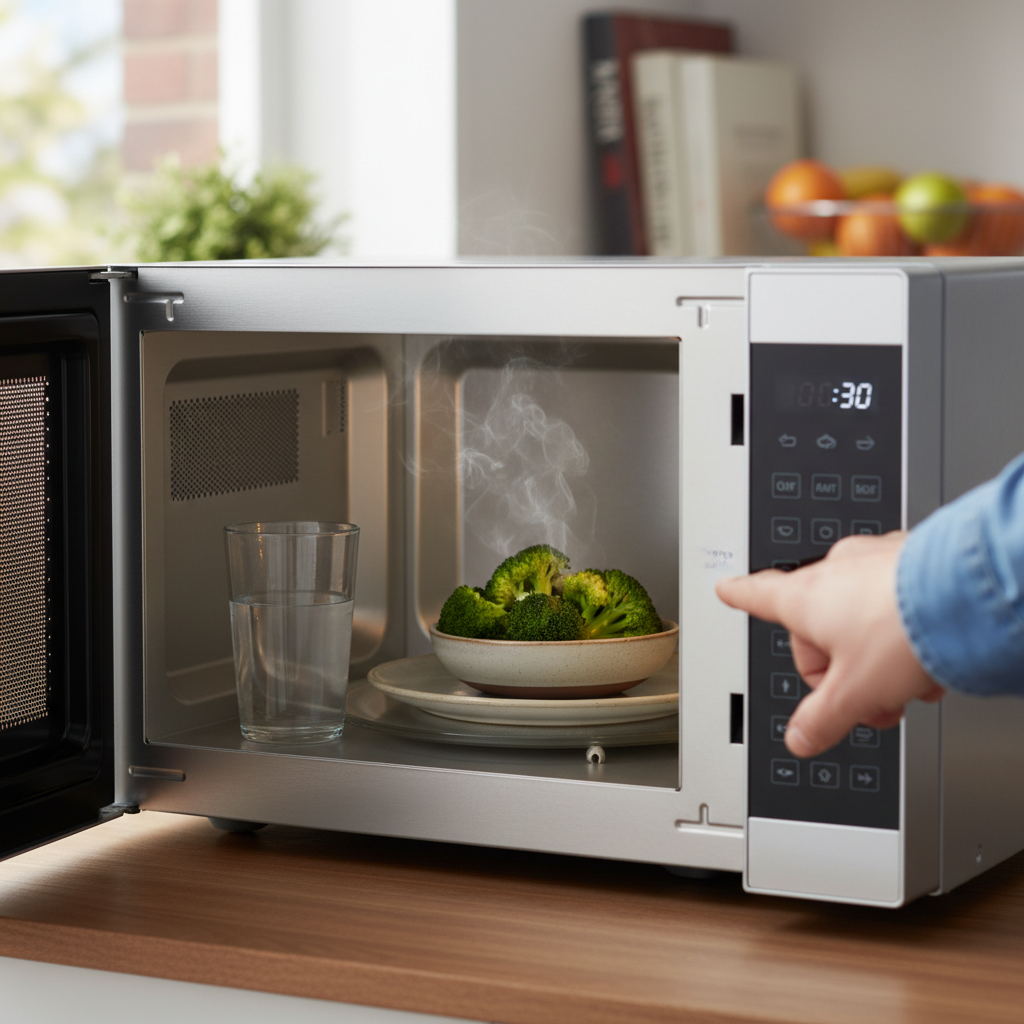
At a basic level, this works because microwaves use electromagnetic radiation to cook food. Think of it like a radio, but instead of audio waves, it sends out waves that specifically target the water molecules, fats, and sugars in your food. These waves are a type of energy, invisible to the human eye, that causes the molecules to vibrate and create heat. It’s a bit like rubbing your hands together really fast to warm them up. The faster the rubbing (vibration), the hotter things get.
Breaking it Down: The Key Components
Here’s the part most people never notice: a microwave is a clever combination of several key parts, working together to make your food warm:
* **The Magnetron:** This is the heart of the microwave, the engine that generates the microwaves. Think of it as the radio transmitter. It takes electricity from your wall socket and converts it into the high-frequency radio waves that do the cooking.
* **The Waveguide:** The magnetron’s microwaves need a path, and that’s where the waveguide comes in. This is a metal tube that directs the microwaves from the magnetron into the cooking chamber.
* **The Cooking Chamber:** This is the metal box where the food goes. The metal walls are crucial. They reflect the microwaves, bouncing them around so they cook the food evenly.
* **The Turntable (or Stirrer Fan):** Many microwaves have a rotating plate. This ensures that the food doesn’t have “cold spots” by constantly moving it through the microwave field. Some microwaves use a stirrer fan to distribute the microwaves evenly.
* **The Control Panel:** This is the brains of the operation. It lets you set the cooking time and power level.
* **The High-Voltage Transformer:** This component boosts the voltage from your wall outlet to power the magnetron.
* **Safety Features:** These include the door switch, which cuts power when the door is opened.
How It All Works Step-by-Step
Once you understand this, the rest makes sense:
1. **Plug and Play:** You plug in the microwave, and electricity flows into the machine.
2. **Magnetron Magic:** The magnetron, powered by the high voltage transformer, goes to work, generating microwaves.
3. **Waveguide Highway:** The microwaves travel through the waveguide and into the cooking chamber.
4. **Bouncing Around:** The microwaves bounce off the metal walls of the cooking chamber.
5. **Molecular Mayhem:** The microwaves are absorbed by water, fat, and sugar molecules in the food, making them vibrate rapidly.
6. **Heat is Born:** This rapid vibration generates heat, cooking your food from the inside out.
7. **Turntable Turns (or Fan Spins):** The turntable rotates (or fan spins), ensuring that all parts of the food are exposed to the microwaves for even cooking.
8. **Time’s Up!:** Once the timer goes off, the magnetron shuts down, and your food is ready.
Common Misconceptions and Why They Matter
One of the biggest misconceptions is that microwaves cook food “from the inside out.” Actually, microwaves penetrate food to a certain depth and heat the outer layers first. The heat then travels to the inside of the food via conduction.
Another common myth is that microwaves make food radioactive. This is completely false. Microwaves are a form of non-ionizing radiation, which means they don’t have enough energy to change the structure of the molecules in your food. They simply cause them to vibrate faster, creating heat.
Small Changes, Big Impact: Usage Habits and Performance
The way you use your microwave can significantly impact its performance. Here are a few things to keep in mind:
* **Metal is a No-Go:** Metal reflects microwaves, so it prevents food from heating up. That’s why you should never put metal containers or utensils in the microwave.
* **Microwave-Safe is Key:** Always use microwave-safe containers, usually made of glass or certain plastics. Regular plastic can melt and release chemicals into your food.
* **Uneven Heating:** Different foods heat up at different rates. Dense foods like potatoes take longer than lighter foods.
* **Cover It Up:** Covering food can help retain moisture and prevent splattering.
* **Stir and Rotate:** If your microwave doesn’t have a turntable, stir your food or rotate it halfway through cooking to ensure even heating.
Microwaves in the Modern World (2025-2026)
In today’s fast-paced world, microwaves are more relevant than ever. They’re essential for busy families and individuals who want quick and convenient meals. New models are constantly being developed with features like:
* **Smart Technology:** Some microwaves connect to your smartphone, allowing you to control them remotely and access recipes.
* **Convection Capabilities:** Some microwaves now combine microwave technology with convection heating for more versatile cooking options.
* **Energy Efficiency:** Modern microwaves are designed to be more energy-efficient than older models, saving you money on your electricity bill.
It’s amazing how this technology has continued to evolve! You can read more about other home appliances and energy efficiency on our [Internal Link 1: My Fridge is Warm! A Real-Life Guide to Cooling Down Your Food (and Your Stress)] website.
A Clearer Mental Model
So, the next time you use a microwave, remember this: It’s not magic, but a clever use of electromagnetic waves. The magnetron generates the waves, the waveguide directs them, the metal chamber reflects them, and the food absorbs them, creating heat. This is a safe and efficient way to heat food! Now, you can explain it to your friends. For more on how things work, check out our [Internal Link 2: ] homepage.
Frequently Asked Questions (FAQ)
Here are some common questions people have about how microwaves work:
* **Are microwaves safe?** Yes, microwaves are safe when used properly. They are non-ionizing radiation, meaning they don’t damage cells. Make sure to use microwave-safe containers and avoid putting metal in the microwave.
* **Why can’t I put metal in the microwave?** Metal reflects microwaves, which can cause sparks and damage the microwave.
* **Why does my food sometimes heat unevenly?** Uneven heating can be due to several factors, including the shape and density of the food, the microwave’s design, and whether you’re using a turntable.
* **How do I clean my microwave?** Clean your microwave regularly with a damp cloth and mild soap. Avoid abrasive cleaners.
* **Can I reheat water in the microwave?** Yes, but be careful. Superheated water can sometimes erupt when disturbed.
* **Why do some containers melt in the microwave?** Not all plastics are microwave-safe. Check the container for a “microwave-safe” label.
* **What is a magnetron, and what does it do?** The magnetron is the component that generates the microwaves.
* **Why does popcorn sometimes burn in the microwave?** Overcooking popcorn causes the kernels to burn. Follow the instructions on the popcorn bag and listen for the popping to slow down.