
Picture this: You flick a light switch, and bam, the room is flooded with light. Or, you plug in your phone to charge, and a little battery icon slowly fills up. Most of us take these everyday miracles for granted. We rarely stop to think about the complex system that makes it all possible: the electrical wiring in our homes. Today, let’s pull back the curtain on this hidden network and see how it works, demystifying this essential part of modern life.
The Big Picture: What’s Actually Happening?
At its core, your home’s electrical wiring is designed to safely deliver electricity from the power company to the devices you use every day. Think of it like a network of superhighways for electrons. These tiny particles, carrying an electrical charge, zoom through wires, powering everything from your refrigerator to your television. The power company acts as the main power plant, generating electricity and sending it through high-voltage transmission lines. This electricity then gets stepped down to a lower voltage and enters your home through the service entrance.
The entire system is a closed loop. Electricity flows from the power source, through your appliances, and back to the source (though the return path is usually through a different set of wires). This circular flow is what enables everything to work.
Breaking Down the System: The Key Components
To understand how your home’s wiring works, let’s break it down into its main parts:
- The Service Entrance: This is where the power from the utility company first enters your home. It includes the meter, which measures your electricity usage, and the main circuit breaker. The circuit breaker acts as a safety device, cutting off the power supply if it detects an overload or a short circuit.
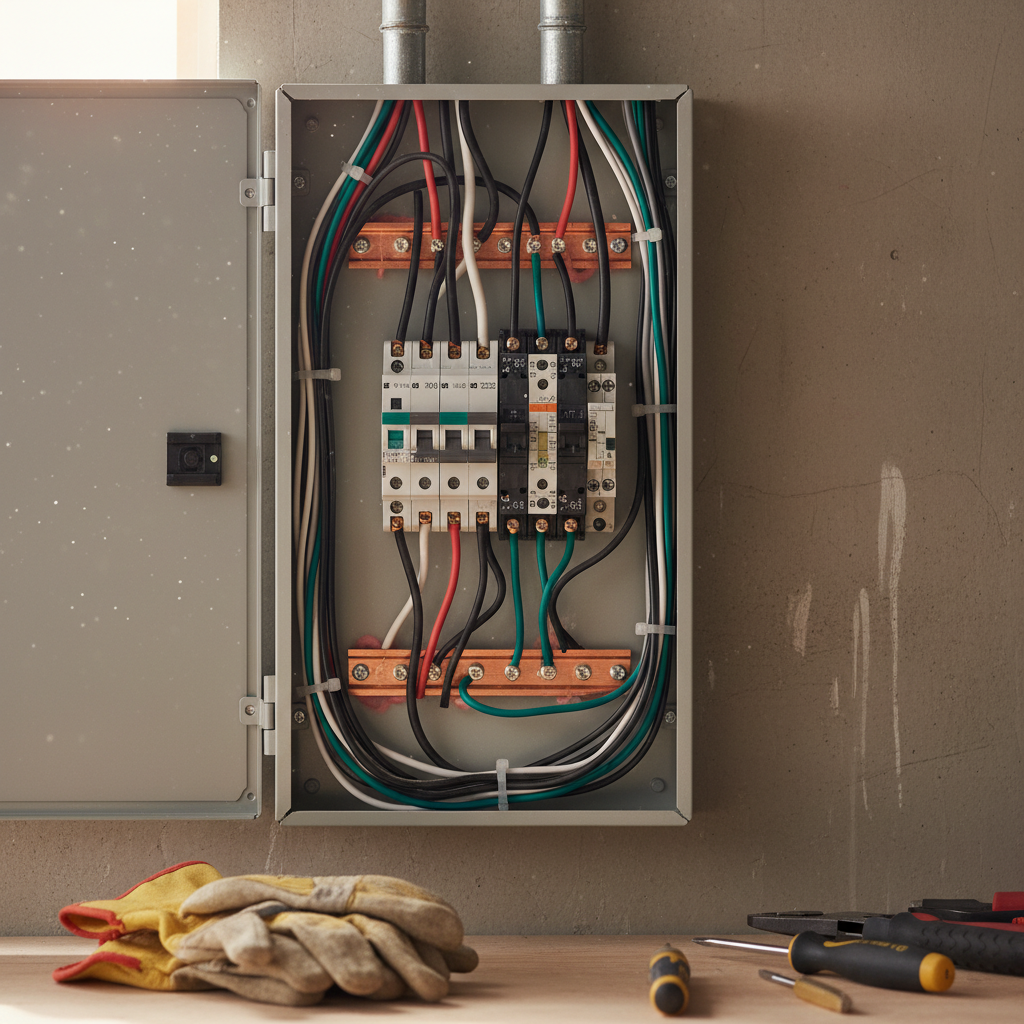
- The Electrical Panel (or Breaker Box): Often found in a utility room, the electrical panel is the central distribution point for electricity in your home. It contains multiple circuit breakers, each controlling a specific circuit (or group of outlets and appliances). When a circuit breaker trips, it shuts off power to that particular circuit to prevent damage.
- Wiring: Copper or aluminum wires are the pathways that carry electricity throughout your home. Different circuits are wired with different gauges of wire, depending on the amount of current they need to handle. For example, wires for high-powered appliances like your electric oven or air conditioner are typically thicker than the wires for your lights and outlets.
- Outlets and Switches: These are the interfaces where you connect your appliances and control the flow of electricity to lights and other devices. Outlets provide the connection point for your appliances, while switches allow you to turn lights and devices on and off.
- Grounding System: A grounding system provides a safe path for electricity to flow in case of a fault, such as a short circuit. It helps prevent electrical shocks and protects your appliances from damage. This is a crucial safety feature, often overlooked.
Step-by-Step: How Electricity Flows Through Your Home
Now, let’s follow the journey of electricity through your home, from the power company to your favorite lamp:
- Power Generation: The power company generates electricity, usually at a power plant.
- Transmission: High-voltage transmission lines carry electricity from the power plant to your neighborhood.
- Step-Down Transformer: At a local substation, a transformer reduces the high voltage to a safer level for residential use (typically 120 or 240 volts in the United States).
- Service Entrance: Electricity enters your home through the service entrance and passes through the meter, which records your electricity consumption.
- Electrical Panel: The electricity then flows to your electrical panel, where it is distributed to various circuits.
- Circuit Breakers: Each circuit has its own circuit breaker, which acts as a safety valve. If a circuit is overloaded, the breaker trips, cutting off the power to prevent damage or fire.
- Wiring to Outlets and Switches: From the panel, the electricity flows through wires to outlets and switches throughout your home.
- Appliance Connection: When you plug in an appliance or turn on a light switch, you complete the circuit, allowing electricity to flow through the device.
- Return Path: The electricity flows through the appliance and returns to the electrical panel through the neutral wire, completing the circuit.
Common Misconceptions and Why They Matter
Many of us have a few misconceptions about home electrical wiring. Understanding these can help you stay safe and prevent problems:
- “More Amps is Always Better”: The amperage (amps) rating of a circuit is the maximum amount of current it can safely handle. Using too many appliances on a single circuit can overload it, causing the breaker to trip or, in extreme cases, starting a fire. Choose appliances that match your home’s electrical capacity.
- “All Wires are the Same”: Different wires are rated for different current levels. Using the wrong gauge of wire can be dangerous. For instance, using too-thin wires for a high-powered appliance can cause the wires to overheat, posing a fire hazard.
- “Electricity Always Flows in Straight Lines”: Electricity actually flows in a closed circuit, not a straight line. It has to complete the loop to power a device. This is why you need both a hot wire (carrying the electricity to the device) and a neutral wire (returning the electricity to the source).
- “Grounding Isn’t Important”: Grounding provides a safe path for electricity to flow in case of a fault. Without it, you could receive a potentially fatal electric shock if you touch a faulty appliance.
How Small Changes Affect Performance
Your habits and the environment around your home can significantly impact the performance and safety of your electrical wiring system:
- Overloading Circuits: Plugging too many appliances into a single outlet or using extension cords that aren’t rated for the load can overload the circuit and trip the breaker.
- Using Energy-Intensive Appliances Simultaneously: Running multiple high-wattage appliances (like a hair dryer, microwave, and space heater) at the same time on the same circuit can overload it.
- Ignoring Flickering Lights: Flickering lights can be a sign of a loose connection or an overloaded circuit. It’s a signal to investigate and address the problem before it becomes serious.
- Ignoring Grounding: Ensuring your outlets are properly grounded is a critical safety measure. Using ungrounded outlets, especially in areas with moisture, can be dangerous.
- Poor Wiring Maintenance: Regularly check for signs of damage or wear and tear in your wiring. This includes looking at outlets, switches, and wiring in accessible areas.
By understanding these factors, you can make informed decisions to improve the efficiency and safety of your home’s electrical system. This could mean upgrading your electrical panel if you have an older home, or simply changing your usage habits.
Modern Relevance: Wiring in the 2020s
In today’s world, our reliance on electricity is greater than ever. Smart homes, electric vehicles, and high-tech appliances demand more from our electrical systems. Here’s how the trends are shaping home wiring:
- Smart Home Integration: Smart home devices, such as smart thermostats, lights, and security systems, are becoming increasingly common. These devices require a reliable and robust electrical infrastructure.
- Electric Vehicle (EV) Charging: With the rise of EVs, many homeowners are installing dedicated charging stations. This requires a 240-volt circuit and possibly an upgrade to the electrical panel.
- Increased Load Demands: The proliferation of high-powered appliances, home offices, and entertainment systems means that homes are using more electricity than ever before. This may necessitate electrical panel upgrades to handle the increased load.
- Energy Efficiency: More and more homeowners are looking for ways to conserve energy and reduce their electricity bills. This includes using energy-efficient appliances, installing smart plugs, and optimizing their home’s energy consumption. You might consider using a system to monitor your home energy use, like the ones highlighted in this article Unseen Home Energy Vampires: How to Stop Wasting Electricity and Save Money Without Even Trying.
Mental Model: Explaining It to Someone Else
Now, let’s see if you can explain how your home’s electrical wiring works in simple terms. Imagine you’re explaining it to a friend:
“Okay, so think of your house like a city. The power company is like the city’s power plant, generating electricity. Electricity comes into your house through a main line, like a big road. It goes into a control center called the electrical panel (or breaker box). The panel is like a traffic controller, distributing the power to different parts of your house through wires. These wires are like smaller roads, each leading to outlets, lights, and appliances. When you plug something in or turn on a light, you’re completing the circuit, allowing electricity to flow from the panel, through the device, and back to the panel. Safety features, like circuit breakers, are there to protect everything. If too much power tries to go through a wire, the breaker trips, like a roadblock, to prevent a problem. It’s really just a system to safely deliver the power you need from the power company to your everyday devices.”
Frequently Asked Questions (FAQs)
Here are some common questions people have about their home’s electrical wiring:
- Why does my circuit breaker keep tripping? This usually means you’re overloading the circuit. Try unplugging some appliances or moving them to a different circuit. If it keeps happening, you may need an electrician to check the wiring.
- What’s the difference between 15-amp and 20-amp circuits? The amp rating indicates the maximum amount of current a circuit can handle. 20-amp circuits are typically used for appliances that require more power, like refrigerators or air conditioners.
- What should I do if an outlet sparks? Immediately stop using the outlet and call an electrician. Sparks are a sign of a serious problem.
- How often should I have my electrical system inspected? It’s a good idea to have your electrical system inspected every 5-10 years, or more often if you’re experiencing problems or have an older home.
- Why do some outlets have three prongs and some have two? Three-prong outlets are grounded, which is a safety feature. Two-prong outlets are usually found in older homes and may not be grounded.
- Can I do electrical work myself? Minor electrical work, like changing a light fixture, is usually okay. However, any complex or potentially dangerous work should be done by a licensed electrician.
- How can I make my home more energy-efficient? You can use energy-efficient light bulbs (LEDs), unplug electronics when not in use, and consider upgrading to energy-efficient appliances. Also, check out ways to stop wasting energy in your home.
- What are some signs that I need to upgrade my electrical panel? Flickering lights, frequently tripping breakers, and not having enough outlets are all potential signs that you might need a panel upgrade.
Understanding how your home’s electrical wiring works isn’t just about knowing how to flip a switch. It’s about being informed, safe, and empowered to make the best choices for your home and your family. By understanding the fundamentals, you can troubleshoot basic issues, practice safe usage habits, and ensure your home’s electrical system functions efficiently for years to come.
Your home’s electrical system is a complex network, but by breaking it down into manageable parts and understanding the basics, you can have a much better idea of how it all works.
And remember, if in doubt, always consult a qualified electrician. Safety first!