
Ugh, there’s nothing quite like the sinking feeling of realizing your washing machine has decided to become a personal swimming pool. The clothes are soaked, the laundry room is flooded, and you’re staring at a machine that’s stubbornly refusing to do its one job: drain.
Been there, done that. More times than I care to admit, actually. That gurgling, sloshing sound? It’s the sound of a clogged washing machine, and trust me, it’s a problem most of us will face eventually. But don’t panic. Before you start dreaming of a new appliance (or worse, calling a repair person), let’s get your laundry back on track.
What’s Actually Going On? Why Isn’t My Washing Machine Draining?
First things first: let’s understand why this happens. It’s usually not a sign of a major mechanical failure. In most cases, it’s a blockage somewhere in the drain system. Think of it like a clogged artery in your home’s plumbing.
Here are the usual suspects:
- Lint Buildup: This is the most common culprit. Over time, lint from your clothes accumulates in the drain hose, the pump, and the filter.
- Small Objects: Stray socks (yes, they disappear in the wash!), coins, buttons, or even small toys can get caught in the pump or drain hose.
- Soap Residue: Using too much detergent or the wrong type can lead to a buildup of soap scum, which contributes to clogs.
- Foreign Material: Anything that shouldn’t be in the wash – tissues, paper, or packaging from new clothes – can cause a blockage.
The good news? Most of these problems can be fixed with a little DIY detective work.
What You’re Probably Doing Wrong (and How to Fix It)
Okay, let’s be honest. When your washing machine refuses to drain, your first instinct might be to frantically press every button, unplug the machine in frustration, or maybe even give it a good kick. I’ve been there. But here’s what you should actually do to fix the problem.
Mistake #1: Ignoring the Obvious (and the Drain Hose)
Often, the problem is right in front of you: the drain hose. This is the corrugated hose that empties into the standpipe (the vertical pipe in the wall). Here’s where many people go wrong: they assume the problem is internal and skip the easiest check.
The Fix:
- Safety First: Unplug the washing machine from the power outlet. Water and electricity are a bad mix.
- Locate the Drain Hose: Find where the drain hose connects to the standpipe.
- Check the Hose: Gently pull the hose out of the standpipe (have a bucket or towels ready, just in case). Look for any visible blockages, kinks, or twists.
- Clear the Hose: Run water through the hose to see if it flows freely. You can use a garden hose or even the faucet to flush it out. If there’s a clog, you can try using a straightened wire hanger to dislodge it.
- Reattach the Hose: Once the hose is clear, reattach it securely to the standpipe.
Mistake #2: Skipping the Pump Filter
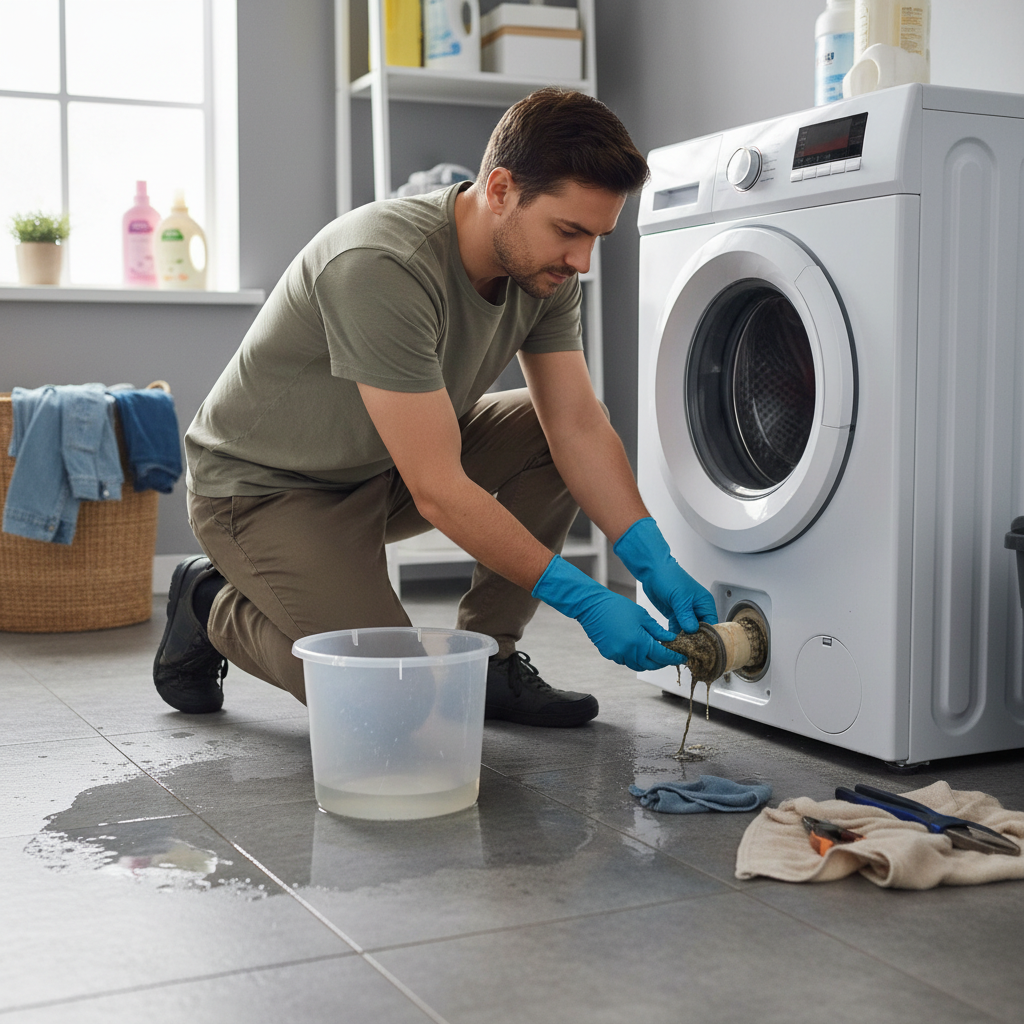
Most washing machines have a pump filter that traps debris before it reaches the pump. This filter is designed to be cleaned regularly, but it’s often overlooked. Many people don’t even know it exists!
The Fix:
- Locate the Filter: The pump filter is usually located behind a small access panel at the bottom front of the washing machine. Consult your washing machine’s manual if you’re unsure where it is.
- Prepare for Water: Have towels and a shallow container ready, as some water will likely spill out when you open the filter.
- Open the Filter: Carefully open the access panel and unscrew the filter cap (usually counterclockwise).
- Clean the Filter: Pull out the filter and remove any lint, hair, buttons, or other debris. Rinse the filter under running water.
- Reassemble: Put the filter back in place, screw the cap back on tightly, and close the access panel.
Mistake #3: Assuming It’s a Major Mechanical Issue
Unless your washing machine is very old or has been giving you other problems, a drainage issue is rarely a sign of a broken pump or motor. Jumping to the most expensive conclusion is a common mistake that can lead to unnecessary repair costs.
The Fix:
Before you call a repair person, try the steps above. If you’ve checked the drain hose and cleaned the filter, and the machine still isn’t draining, then you can consider other possibilities, like a faulty pump. However, in most cases, a simple clog is the culprit.
When to Call for Help (and When You Can DIY)
So, when is it time to admit defeat and call a professional? Here’s a quick guide:
- You’ve Tried Everything: If you’ve checked the drain hose, cleaned the pump filter, and still have a problem, it might be something more complex.
- The Machine Makes Unusual Noises: If you hear grinding, squealing, or other strange sounds coming from the pump, it could indicate a mechanical issue.
- The Machine is Old: Older washing machines may have worn-out parts.
- You’re Not Comfortable with DIY: If you’re not comfortable working with appliances or are unsure about any of the steps, it’s always best to call a professional.
Otherwise, you can usually handle this issue yourself, saving you both time and money. Don’t be afraid to get your hands a little dirty!
Long-Term Prevention: Keeping Your Washing Machine Happy
Now that you’ve (hopefully) unclogged your washing machine, let’s talk about how to prevent this from happening again.
- Clean the Pump Filter Regularly: Make it a monthly habit. It takes just a few minutes.
- Use the Right Amount of Detergent: Too much detergent can lead to a buildup of residue. Follow the detergent instructions, and consider using high-efficiency (HE) detergent if you have an HE machine.
- Check Pockets Before Washing: Get into the habit of checking pockets for coins, pens, and other potential clog-causers.
- Don’t Overload the Machine: Overloading your washing machine can strain the pump and other components.
- Wash Delicates in a Mesh Bag: This will protect delicate items and prevent small pieces from getting lost in the machine.
- Run a Cleaning Cycle: Once a month, run an empty cycle with hot water and washing machine cleaner to remove any buildup of soap scum or residue.
Following these tips can significantly extend the life of your washing machine and save you from the headache of a clogged drain. It’s really about taking a few simple precautions, much like regular car maintenance.
Common Myths and Misinformation
Let’s debunk some common myths about washing machine drainage issues:
- Myth: You need a special “washing machine cleaner” every time. Fact: While cleaners can be helpful, regular maintenance and proper detergent usage are more important.
- Myth: You need to replace the entire pump if the machine doesn’t drain. Fact: Often, a simple clog is the problem. Check the hose and filter first!
- Myth: You can’t fix it yourself. Fact: Most of the time, a little DIY effort can solve the problem.
Frequently Asked Questions (FAQ)
Here are some of the most common questions people ask when dealing with a washing machine that won’t drain:
1. Why is my washing machine not draining, but the pump is running?
This usually means the pump is working, but there’s a blockage in the drain hose or filter. Check these areas first.
2. How do I know if the washing machine pump is bad?
If you’ve checked the hose and filter, and the machine still won’t drain, and you hear unusual noises from the pump, it might be failing. However, this is less common than a simple clog.
3. Can I use a plunger to unclog my washing machine?
Yes, but with caution. You can try a plunger designed for toilets, but avoid excessive force, as you could damage the machine. It’s usually more effective to check the hose and filter first.
4. How do I clean my washing machine drain hose?
Disconnect the hose from both the machine and the standpipe. Run water through it with a garden hose or faucet to flush out any clogs. You can also use a straightened wire hanger to dislodge stubborn blockages.
5. My washing machine is draining slowly. What should I do?
Slow draining is often a sign of a developing clog. Check the drain hose and filter and clean them thoroughly. You may need to repeat the cleaning.
6. What kind of detergent should I use?
Use the type of detergent recommended for your washing machine (HE or standard). Avoid using excessive amounts of detergent, as this can lead to buildup.
7. How often should I clean my washing machine filter?
Ideally, clean the filter once a month, or more often if you frequently wash items that shed a lot of lint (e.g., towels).
8. Can I use baking soda and vinegar to clean my washing machine?
Yes, a mixture of baking soda and vinegar can help clean your machine and remove odors. Run an empty cycle with a cup of baking soda and then a cup of vinegar in the dispenser. However, this is not a substitute for regular maintenance and cleaning of the drain hose and filter.
There you have it! Hopefully, this guide will help you fix your washing machine problem and keep your laundry flowing smoothly. Remember, don’t get discouraged. Often, the solution is much simpler than you think. And if all else fails, at least you’ll know you gave it your best shot.
Now go forth, and conquer that laundry mountain!