
Picture this: It’s a Tuesday evening. You’re starving, and the leftovers from last night’s dinner are calling your name. You pop that container into the microwave, punch in a couple of numbers, and in a few minutes, presto—a hot meal. But have you ever stopped to wonder, what’s actually happening inside that humming box? It’s easy to take it for granted, but the microwave oven is a clever piece of technology. Let’s pull back the curtain on how this everyday appliance works its magic.
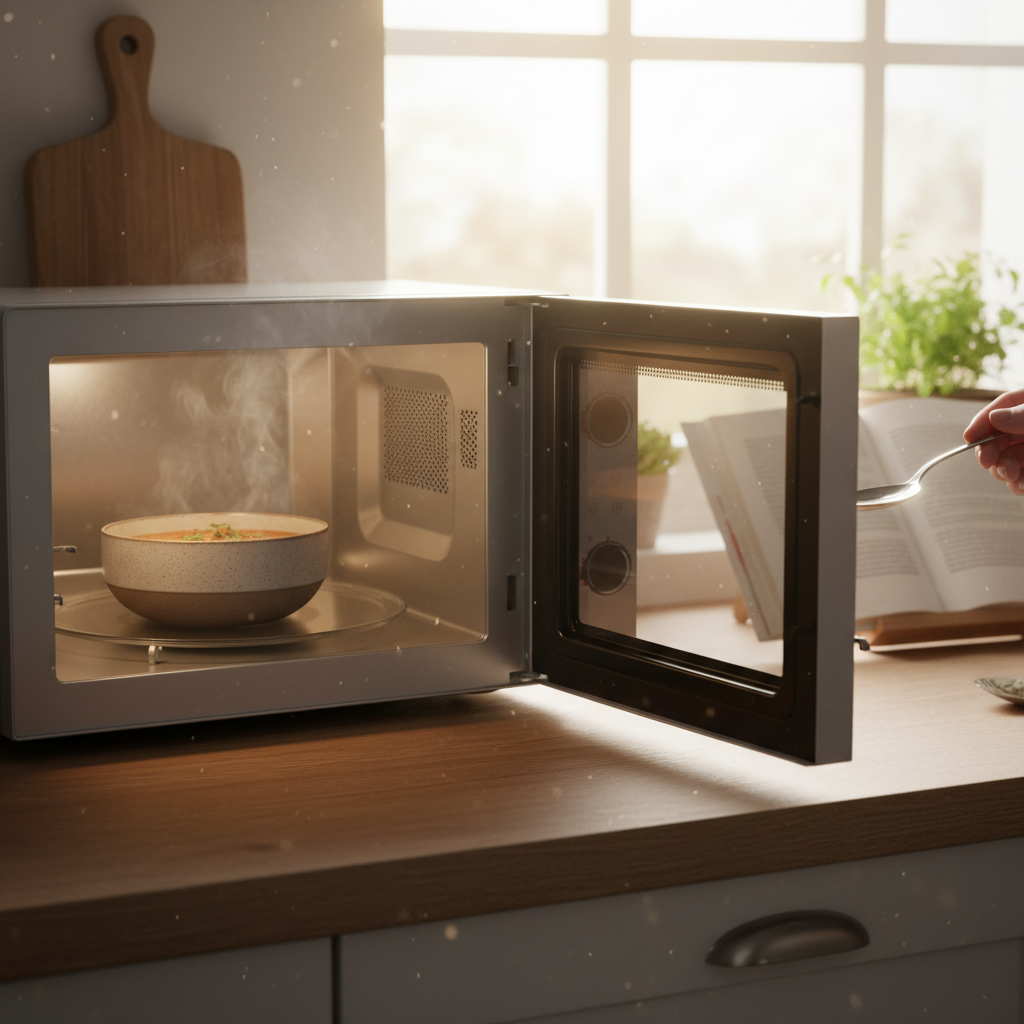
The Basic Principle: Heat from Invisible Waves
At its core, a microwave oven is designed to heat food using a very specific kind of energy: microwave radiation. These aren’t like the radio waves that bring you music, nor are they the same as the X-rays you get at the doctor’s office. Microwave radiation sits in the middle of the electromagnetic spectrum. What’s special about these waves is that they cause water molecules (and to a lesser extent, fats and sugars) in your food to vibrate rapidly. This rapid vibration generates heat, which cooks your food from the inside out.
Breaking It Down: The Key Components
Let’s take a look inside the microwave and see what makes it tick:
- The Magnetron: This is the heart of the microwave. It’s a vacuum tube that generates the microwaves. Think of it as the engine of the operation.
- The Waveguide: This is like a pipe that directs the microwaves from the magnetron into the cooking chamber. It ensures the waves go where they’re needed.
- The Cooking Chamber: This is the space where you put your food. It’s usually made of metal, which reflects the microwaves, helping to cook the food evenly.
- The Turntable: This rotating plate ensures that the food is exposed to the microwaves from all angles, so it cooks uniformly.
- The Control Panel: This is your interface. You use it to set the cooking time and power level.
- The High-Voltage Transformer: This critical component steps up the voltage to power the magnetron. It’s a workhorse, providing the necessary juice.
How It Works, Step by Step
Now, let’s go through the process in a step-by-step manner:
- You press the start button: This closes the circuit and starts the process.
- The transformer kicks in: It takes the regular household electricity and boosts the voltage significantly to power the magnetron.
- The magnetron gets to work: It starts generating microwaves, which are channeled through the waveguide.
- Microwaves enter the cooking chamber: The waves bounce around the metal interior, getting absorbed by the food.
- Water molecules vibrate: As the microwaves hit the food, the water molecules (and to a lesser degree, fats and sugars) start vibrating very quickly.
- Heat is generated: This rapid vibration creates heat, which cooks the food.
- The turntable rotates: This ensures even cooking.
- You enjoy your meal! Once the timer goes off, your food is ready to eat.
Common Misconceptions
There are some common myths about microwave ovens. Let’s bust a few:
- Myth: Microwaves make food radioactive. Nope. Microwaves are a form of non-ionizing radiation, meaning they don’t have enough energy to damage your cells or make food radioactive. They simply cause the water molecules to vibrate.
- Myth: Microwaves cook food from the inside out. While this is partially true, the microwaves penetrate the food, but the outer layers get heated first. The heat then spreads towards the center through conduction.
- Myth: You can’t put metal in a microwave. This is mostly true. Metal can cause sparks and damage the microwave because it reflects the microwaves. However, some microwaves are designed with metal racks or trays, but they are specially designed to interact safely with the microwaves.
The Impact of Small Changes
Small things can make a big difference in how your microwave performs:
- Food composition: Foods with higher water content heat up faster. That’s why your broccoli cooks more quickly than your steak.
- Container materials: Use microwave-safe containers! Metal containers will cause sparks, while some plastics can melt and contaminate your food. Glass and microwave-safe plastics are your best bets.
- Power levels: The “power level” setting controls how long the magnetron is on. Lower power settings mean the magnetron turns on and off, giving the food a chance to cook more evenly without overheating.
- Food placement: For even cooking, arrange food in a circle on the turntable, with thicker parts towards the outside.
Microwaves in the Modern World
Today’s microwaves are becoming even smarter. Many models now have:
- Sensor cooking: These microwaves detect the humidity released by food and automatically adjust the cooking time.
- Inverter technology: This allows for more precise power control, resulting in more even heating.
- Smart features: Some microwaves can connect to your smartphone, allowing you to control them remotely or download recipes.
The humble microwave has come a long way! Now, the home page has more details on smart devices.
Explaining it to Someone Else
So, next time someone asks you how a microwave works, here’s the simplified explanation:
“A microwave is basically a box that uses invisible waves to make the water molecules in your food vibrate. This vibration creates heat, which cooks your food. A magnetron creates these waves, and a metal box reflects them around, so everything cooks evenly. You set the time and power, and the machine does the rest.”
FAQ: Your Burning Microwave Questions Answered
Here are some of the most common questions people have about how a microwave works, explained in simple terms:
1. Why does my food sometimes come out unevenly heated?
This is usually because of uneven distribution of microwaves or the way the food is arranged. Make sure your food is spread out evenly on the turntable. Also, some parts of the microwave may receive more energy than others. Some models use a rotating antenna to make the distribution more even.
2. Why can’t I put metal in the microwave?
Metal reflects microwaves. If microwaves hit metal, they can create sparks and damage the microwave. That’s why it’s so important to use microwave-safe containers.
3. Are microwaves dangerous?
No, microwaves themselves are not dangerous if the appliance is used correctly. They are a form of non-ionizing radiation, which does not have enough energy to damage your cells. The main risk is from burns, if the food or container gets very hot.
4. Why does my microwave sometimes make a humming noise?
That humming noise is the magnetron doing its job, generating the microwaves. It’s a normal part of the process.
5. Why does my food dry out in the microwave?
Microwaves heat food by exciting water molecules. If there isn’t much water in the food to begin with, or if you cook it for too long, it can dry out. Covering food can help retain moisture.
6. Can I use aluminum foil in the microwave?
Generally, no. Small amounts of foil can be used for shielding, but large amounts will cause arcing and could damage the microwave. It’s best to avoid it.
7. Why does the microwave seem to cook from the inside out?
Microwaves penetrate the food and heat the inside layers initially. However, heat then spreads outwards through conduction, meaning the outer layers also get cooked.
8. How can I keep my microwave clean?
Wipe up spills immediately. To clean the inside, you can microwave a bowl of water with a little lemon juice or vinegar. The steam will loosen the grime, making it easier to wipe away.