We’ve all been there. You’re rushing out the door, and without a second thought, you leave your phone charger plugged in. Or maybe you switch off your TV with the remote, assuming that’s the end of it. Most of us don’t give these little habits a second thought, but they quietly chip away at our wallets and, surprisingly, even our peace of mind. I’ve learned this the hard way over two decades of managing a home and juggling a million tech gadgets.
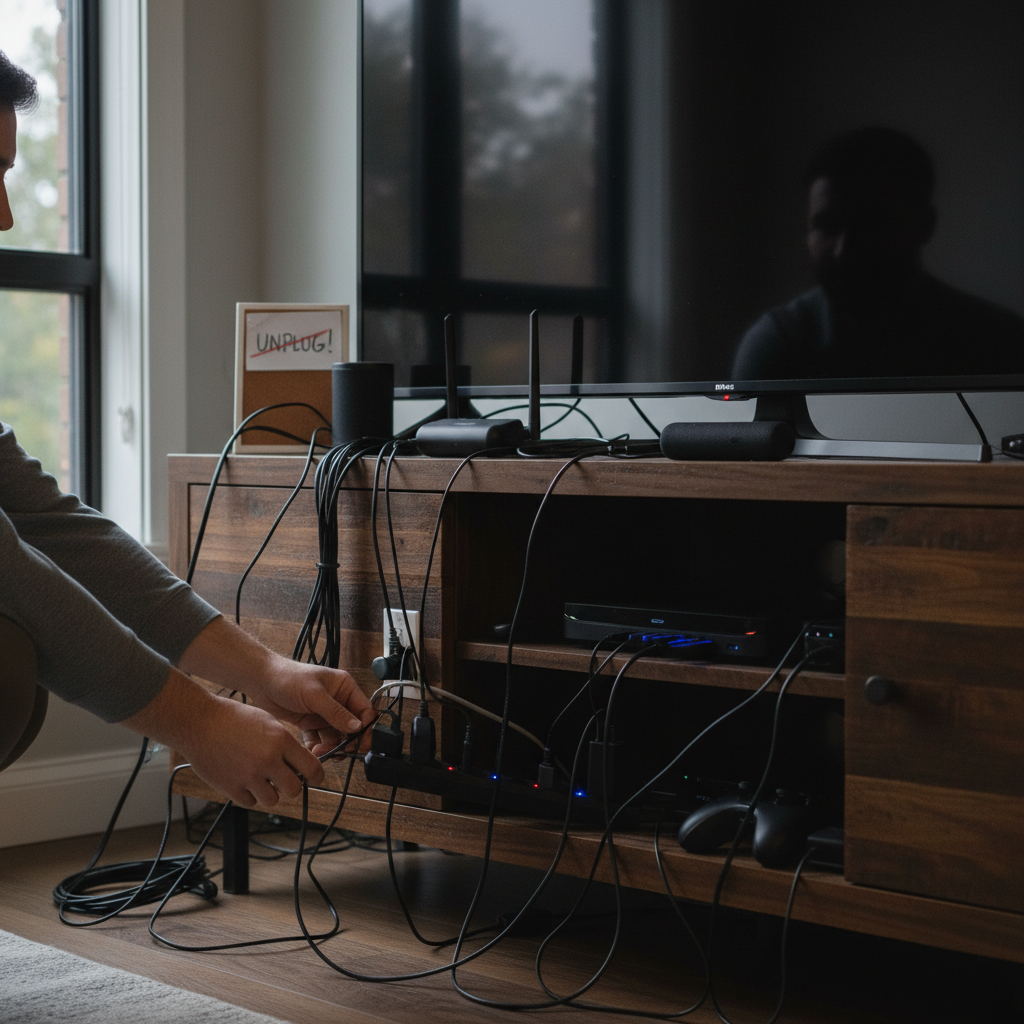
This isn’t about some complicated energy audit or a complete overhaul of your home. It’s about recognizing the ‘phantom load’ – the electricity your devices guzzle even when they’re “off” or idle. It’s a small detail that, over time, becomes a significant expense and a source of unnecessary stress.
The Sneaky Drain of Standby Power
Think about it: your TV, your gaming consoles, your microwave, even your laptop (when it’s fully charged but still plugged in) – many of these devices draw power constantly. It’s often called “standby power” or “vampire power” because it sucks energy even when you’re not actively using them. This is a silent thief, and most of us don’t even realize it’s there.
It’s easy to overlook. A single device might only use a few watts when in standby, but when you multiply that by the number of devices in your home and the number of hours in a day, it adds up. You’re essentially paying to have these devices “ready” for you, even when you’re not using them.
The Real-World Impact: What’s the Damage?
Let’s get practical. While the exact cost depends on your electricity rates and the number of devices you have, the impact can be substantial. According to recent estimates, standby power can account for anywhere from 5% to 10% of your total electricity bill. That’s money you’re literally throwing away.
Let’s say your monthly electricity bill is $200. Even at the low end, 5% is $10 a month, or $120 a year. And in 2026, with energy prices fluctuating, those costs can quickly climb higher. But it’s not just about the money. Think about the environmental impact. Every watt of wasted energy contributes to the demand for power, which often means more fossil fuels burned and more pollution in the air.
Common Mistakes We Make (Without Realizing It)
We’re all guilty of these. Here are a few common habits that contribute to phantom load:
- Leaving chargers plugged in: Even if your phone or laptop is fully charged, the charger continues to draw power.
- Using the remote to turn off the TV: This often puts the TV in standby mode rather than truly turning it off.
- Not unplugging appliances: Microwaves, coffee makers, and other appliances with digital displays often use power continuously.
- Leaving gaming consoles and computers on: These devices can consume a significant amount of power when idle.
And let’s bust a myth: some people think it’s not worth the effort. They believe the savings are too small to matter. I get it. We’re busy. But these small habits, consistently applied, do add up over time. And once you start, it becomes second nature.
Simple Habits for Big Savings and Peace of Mind
The good news is that you don’t need to be a tech guru or an energy expert to make a difference. Here are some simple, actionable tips that I’ve used for years, and they’ve made a tangible difference in my home:
1. Unplug, Unplug, Unplug!
This is the most straightforward solution. Unplug chargers, appliances, and electronics when you’re not using them. Make it a habit. Keep a small, foldable step stool handy in the kitchen. (Trust me, it’ll make reaching those outlets behind the microwave much easier!).
2. Use Power Strips with On/Off Switches
Power strips are your best friend. Plug multiple devices into a single power strip, and then switch the whole strip off when you’re done. This is especially useful for entertainment centers, computers, and home office setups. Look for power strips with individual switches for even more control. You can turn off the devices you don’t need, without turning off the ones you do.
3. Embrace Smart Plugs
Smart plugs are a game-changer. You can control devices remotely using an app on your smartphone, or set schedules to automatically turn devices on and off. This is perfect for things like lamps, coffee makers, and even your TV. Some smart plugs also monitor energy usage, so you can see exactly how much power each device is consuming. The benefits are many, and the cost has gone way down.
4. Be Mindful of “Quick Charge”
While quick chargers are convenient, they can sometimes draw more power than standard chargers, even when the device is fully charged. Consider using a standard charger overnight or when you’re not in a hurry.
5. Upgrade to Energy-Efficient Devices
When you’re replacing appliances or electronics, look for the Energy Star label. Energy Star-certified products are designed to use less energy, both when in use and in standby mode. The upfront cost may be slightly higher, but the long-term savings on your electricity bill will often make it worthwhile.
6. Consider a “Home Energy Audit”
Many utility companies offer free or low-cost home energy audits. An auditor will come to your home and identify areas where you can save energy, including phantom load. They can also provide recommendations on insulation, lighting, and other energy-saving measures.
How These Habits Matter More in the Modern Era
In 2026, our homes are more connected than ever. We have more devices, more smart appliances, and more ways to stay connected. This increased connectivity, while convenient, also means more opportunities for phantom load. It’s even more crucial to be vigilant about these habits now.
Consider the rise of smart home technology. Smart speakers, smart thermostats, and other connected devices can draw power continuously, even when you’re not actively using them. Taking control of your energy consumption is about being smart and proactive.
Long-Term Benefits: Beyond the Dollar Signs
The benefits of these simple habits extend far beyond saving money. You’ll gain:
- Peace of Mind: Knowing you’re not wasting energy and contributing to a more sustainable lifestyle.
- Reduced Risk of Overheating: Unplugging devices eliminates a potential fire hazard.
- Extended Device Lifespan: Unplugging chargers, for example, prevents them from getting excessively hot, which can damage them over time.
- A More Organized Home: Unplugging devices and using power strips can help declutter your space and make it easier to manage your electronics.
These may seem like small changes, but they create a cumulative impact on your home, your wallet, and the planet. These are changes that truly matter in the long run.
FAQ: Your Questions Answered
Here are some frequently asked questions, answered from experience:
Q: How much money can I really save by unplugging devices?
A: The savings vary depending on your electricity rates and the number of devices you have, but it can easily be $50 – $150 or more per year. Over time, it adds up.
Q: Is it really worth unplugging things every day?
A: Yes! It becomes a habit, just like brushing your teeth. And the more consistently you do it, the more you’ll save.
Q: Do I need to buy expensive equipment to reduce phantom load?
A: No. Start with simple habits like unplugging and using power strips. Smart plugs are a great option, but they’re not essential.
Q: I’m worried about damaging my appliances by turning them off and on all the time. Is this a real concern?
A: Modern appliances are designed to be turned on and off. The wear and tear from this is minimal compared to the energy savings you’ll achieve.
Q: Does it matter if I leave my phone charger plugged in even if my phone isn’t connected?
A: Yes! The charger still draws power, even when nothing is connected. Unplug it to save energy.
Q: Are there any devices I should *not* unplug?
A: Smoke detectors and security systems are the main exceptions. They need a constant power supply.
Q: I heard some appliances use more energy when you turn them on and off frequently. Is this true?
A: This is largely a myth. While some appliances (like refrigerators) use a surge of power when starting, the energy used in standby mode far outweighs the initial surge. Continuous usage is usually what drives up the electricity bill.
Q: Is there a good time to start these habits?
A: The best time to start is now! The sooner you start, the sooner you’ll start saving money and reducing your environmental impact.
This is a marathon, not a sprint. The payoff is a cleaner conscience, a fatter wallet, and a less cluttered life. Give it a try. You’ll be surprised at the difference it makes.