
We all have them: those little things we do every day without a second thought. They’re the habits, the routines, the ways we navigate our busy lives. But some of these seemingly harmless practices can be quietly draining your wallet, endangering your home, and shortening the life of your devices. One of the most significant culprits? Your everyday electrical habits.
The Habit You Probably Ignore: Outlet Overload
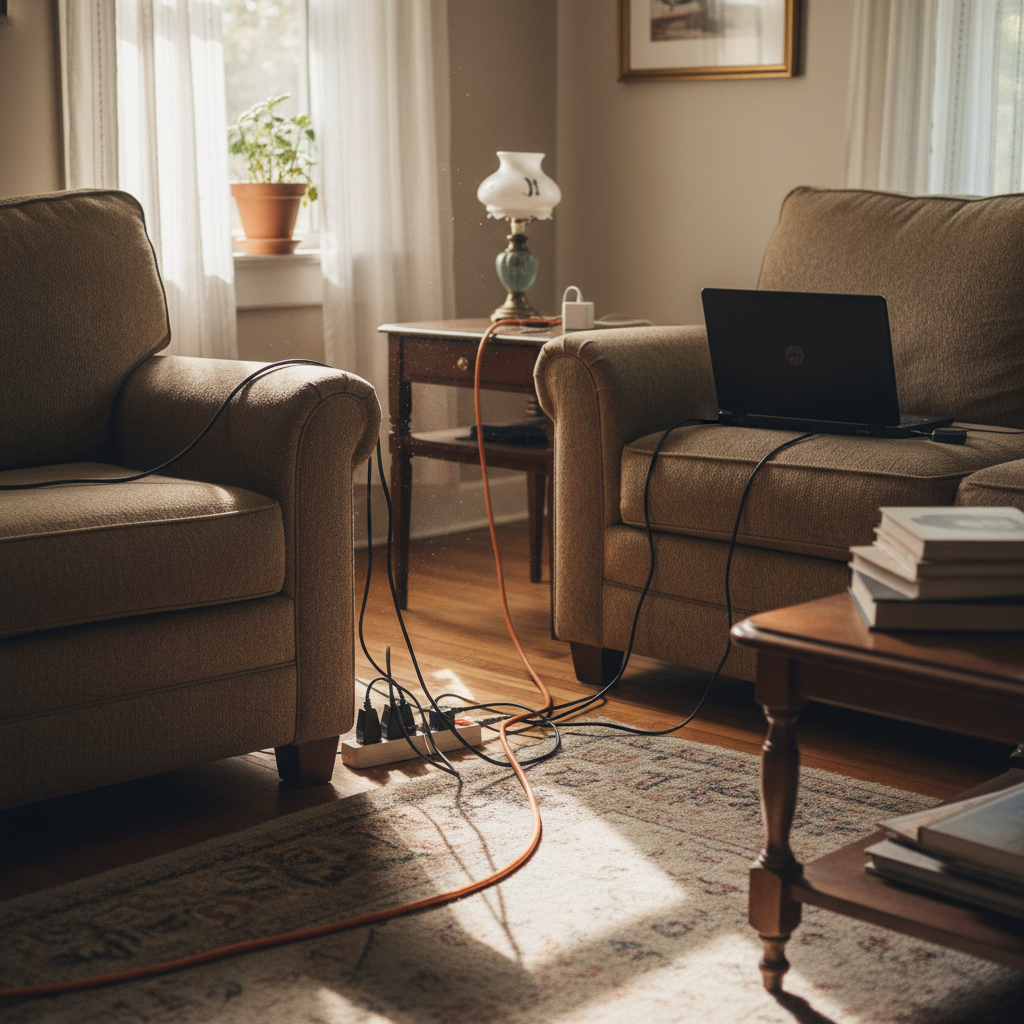
Think about your typical evening. Maybe you’re unwinding on the couch, phone charging, with a lamp on nearby. Perhaps a TV is running, or a laptop is charging. How many devices are plugged into a single outlet, maybe even through a power strip or extension cord? For most of us, it’s a lot. And we rarely give it a second thought. We plug things in, we unplug them when we’re done, and that’s that.
But this simple act of plugging multiple devices into a single outlet can be a ticking time bomb if not managed carefully. It’s a habit so ingrained in modern life that we often overlook the potential consequences. It’s a habit that is easily ignored until something goes wrong.
The Hidden Costs of Overloading Outlets
This small habit of overloading outlets quietly causes a range of problems that can hit you where it hurts: your finances, your safety, and the lifespan of your devices.
Device Lifespan
Overloading outlets can damage your devices. Power strips and outlets have limits on how much electricity they can safely handle. When you plug in too many devices, you force the outlet to work harder, which can lead to overheating. This heat can damage the internal components of your devices over time, shortening their lifespan. Think about it: that phone you charge every night, the laptop you use for work, even the television in your living room. All are vulnerable to the subtle but persistent effects of outlet overload.
Home Safety
Overloaded outlets are a fire hazard. When an outlet is overloaded, the wires inside can heat up to dangerous levels. This heat can melt the insulation, creating sparks and potentially igniting nearby materials. The National Fire Protection Association (NFPA) indicates that electrical malfunctions are a leading cause of home fires. Even a small spark can quickly turn into a devastating blaze. The risk is especially high in older homes with outdated wiring that is not equipped to handle the demands of modern electronics.
Electricity Bills
While not a direct cause, the habit of leaving multiple devices plugged in, even when they’re not in use, can contribute to higher electricity bills. This “phantom load,” where devices continue to draw a small amount of power even when turned off, adds up over time. While the amount of electricity used by a single device might seem insignificant, the cumulative effect of multiple devices left plugged in can increase your monthly bill. In fact, unplugging small electronics and appliances when you aren’t using them, can keep devices from turning on or short circuiting if there’s a voltage surge.
Common Mistakes People Make
Many people make simple mistakes that amplify the risks associated with outlet overload. Here are a few common ones:
- Using too many power strips: A power strip is designed to add outlets, not increase the amount of power the outlet receives. Using too many power strips can exacerbate the problem.
- Not checking the wattage: Not paying attention to the wattage of your appliances and devices. Plugging a high-wattage appliance, like a space heater, into an overloaded circuit can quickly lead to problems.
- Ignoring warning signs: Failing to recognize the warning signs of an overloaded outlet, such as flickering lights or warm outlets.
- Using damaged cords: Continuing to use frayed or damaged extension cords.
Debunking the “Quick Fix” Myths
The internet is full of “quick fix” tips, but many of them can be misleading or even dangerous. Here are a few myths to be aware of:
- “Power strips with surge protection solve everything”: Surge protectors are great for protecting devices from power surges, but they won’t prevent an outlet from overloading.
- “You can plug anything into an outlet”: Not all outlets are created equal. Some outlets are designed for specific appliances and have different amperage ratings.
- “As long as the breaker doesn’t trip, you’re fine”: Breakers are designed to protect against overloads, but they don’t always trip immediately. An outlet can overheat long before the breaker trips, especially if the breaker is old or faulty.
Practical Tips for a Safer Home
The good news is that you can significantly reduce the risks associated with outlet overload by adopting some simple habits:
- Assess your needs: Take a look around your home and identify where you’re plugging in the most devices.
- Distribute the load: Try to spread out your devices across different outlets and circuits. Avoid plugging high-wattage appliances into the same outlet or circuit.
- Use power strips with caution: Use power strips with surge protection, but don’t overload them. Make sure the power strip is rated for the total wattage of the devices you’re plugging in.
- Unplug when not in use: Unplug devices when you’re not using them, especially electronics and chargers.
- Inspect your outlets and cords regularly: Check for any signs of damage, such as discoloration, burn marks, or fraying. If you see any damage, replace the outlet or cord immediately.
- Upgrade your electrical system if needed: If you have an older home with outdated wiring, consider upgrading your electrical panel to handle the demands of modern electronics. If your circuits keep tripping often, it could mean you should upgrade your electrical panel to handle more power.
How These Habits Matter More in 2026
In 2026, our reliance on technology is greater than ever. With more smart home devices, electric vehicles, and high-powered electronics, the demand on our electrical systems has increased exponentially. This means that the risks associated with outlet overload are more significant than ever before. Every home should have the electrics checked by a qualified electrician, and at least every five years after that.
Consider the impact of the Internet of Things (IoT). More and more appliances are connected to the internet, all requiring power. Smart TVs, gaming consoles, and streaming devices are commonplace in homes. Even electric vehicles, which require dedicated charging stations, are becoming more common. All of these devices increase the load on your electrical system. To make sure your home’s electrical system is safe and functional, test your electrical outlets using a simple outlet tester.
The Long-Term Benefits
Making a few small changes to your everyday electrical habits can lead to significant long-term benefits:
- Peace of mind: Knowing that you’ve taken steps to protect your home and family from electrical hazards can provide invaluable peace of mind.
- Savings on energy bills: By unplugging devices and avoiding overloaded outlets, you can reduce your energy consumption and lower your monthly bills.
- Fewer device breakdowns: Protecting your devices from overheating and power surges can extend their lifespan and save you money on replacements.
- Reduced risk of costly repairs: Preventing electrical fires and other problems can save you from expensive repairs down the road.
FAQs
Here are some frequently asked questions about electrical safety and outlet overload:
Q: How do I know if an outlet is overloaded?
A: Look for these signs: warm or hot outlets, flickering lights, burning smells, and tripped circuit breakers. You can also see exposed wires.
Q: What should I do if an outlet feels warm?
A: Turn off the power to the outlet immediately and call a qualified electrician. An electrician can examine and fix malfunctioning outlets.
Q: How often should I have my electrical system inspected?
A: It’s a good idea to have your electrical system inspected every few years, or if you notice any problems. Schedule annual inspections by qualified professionals. Additionally, schedule a professional inspection before extreme weather seasons or after major home renovations.
Q: Is it safe to plug a power strip into another power strip?
A: It’s generally not recommended. This can easily lead to overloading and create a fire hazard.
Q: What kind of extension cord should I use?
A: Use extension cords that are properly rated for the amount of electricity you’ll be using. For extension cords rated for outdoor use, consider using waterproof covers as protection from the elements.
Q: Where should I install GFCI outlets?
A: Install ground fault circuit interrupters (GFCIs) on all outlets located outdoors, in bathrooms, and kitchens.
Q: What are the warning signs of outlet failure?
A: The warning signs include: discolored wall plates, scorch marks, burning odors, buzzing noises, electrical outlet sparking, and outlets that are warm or hot to the touch.