
Picture this: It’s a hot summer day. You’re craving a refreshing drink. You reach for a cold soda from your refrigerator, expecting that satisfying chill. But when you open the fridge, the soda is lukewarm, the ice cream is melty, and you’re staring down a serious food safety concern. Annoying, right? But have you ever stopped to wonder *how* your fridge even works to keep things cold in the first place? It’s a question many of us have, and the answer is surprisingly simple.
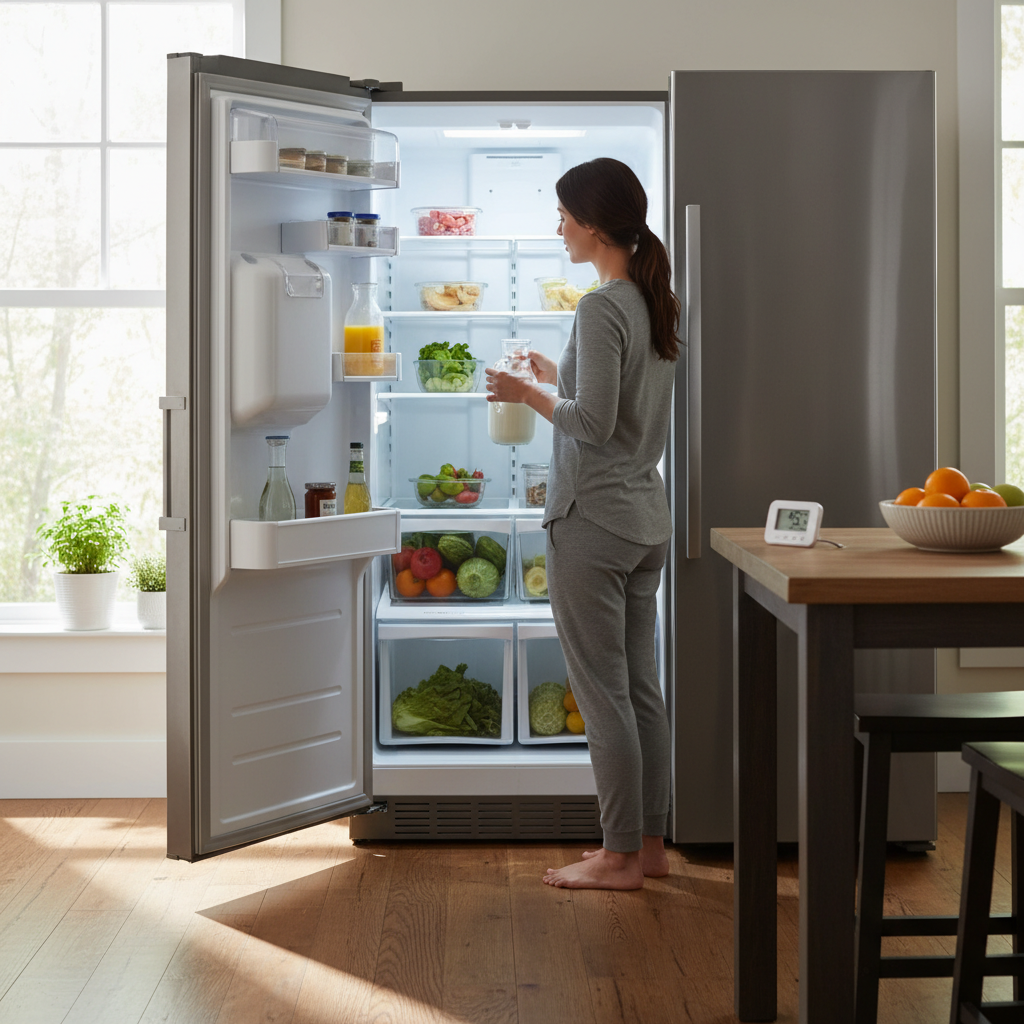
The Big Picture: Not Just a Box of Cold Air
At a basic level, your refrigerator isn’t just a box that magically generates cold air. Instead, it’s a heat-moving machine. Think of it like this: your fridge *removes* heat from the inside and dumps it outside, usually through the coils on the back or bottom. It’s the opposite of a heater, which adds heat to a space. This is the fundamental principle of refrigeration: to cool something down, you have to move heat *away* from it.
So, how does it do this? Let’s break it down into the key components.
The Main Players: Refrigerant, Compressor, and Coils
Your refrigerator has a few crucial players working together in a closed-loop system:
- Refrigerant: This is a special fluid, often a type of Freon (though modern fridges use more environmentally friendly alternatives), that easily changes between liquid and gas at different temperatures and pressures. It’s the workhorse that actually moves the heat.
- Compressor: This is the heart of the system. It’s a pump that squeezes the refrigerant, increasing its pressure and temperature. Think of it like a bicycle pump – when you squeeze the handle, the air gets hotter and more compressed.
- Coils (Condenser and Evaporator): These are the metal tubes you see on the back (condenser coils) and inside the fridge (evaporator coils). The refrigerant flows through these coils, changing state and releasing or absorbing heat.
These components work together in a continuous cycle to move heat.
Step-by-Step: The Heat-Moving Dance
Here’s how this heat-moving dance plays out:
- Compression: The compressor takes low-pressure, gaseous refrigerant and compresses it. This increases both its pressure *and* its temperature. Now it’s a hot, high-pressure gas.
- Condensation (Releasing Heat): The hot, high-pressure gas flows through the condenser coils (the ones on the back or bottom of your fridge). These coils are designed to release heat to the surrounding environment. As the refrigerant cools down, it condenses into a high-pressure liquid. This is why the back of your fridge feels warm – it’s dumping the heat it’s extracted from the inside.
- Expansion (Absorbing Heat): The high-pressure liquid refrigerant then passes through an expansion valve (sometimes called a capillary tube). This valve suddenly reduces the pressure of the refrigerant. This drop in pressure causes the liquid refrigerant to rapidly cool and turn into a low-pressure, cold gas.
- Evaporation (Absorbing Heat): The cold, low-pressure refrigerant now flows through the evaporator coils, which are inside the fridge. Here, the refrigerant absorbs heat from the inside of the fridge, causing it to evaporate back into a gas. This is where the magic happens – the fridge is literally sucking the heat out of your food and drinks.
- Back to the Beginning: The now-warm, low-pressure gas goes back to the compressor, and the whole cycle starts over again.
This cycle repeats continuously, keeping the inside of your fridge cold by constantly removing heat.
Common Misconceptions: Debunking the Myths
There are a few common misconceptions about how refrigerators work:
- “My fridge makes cold air.” Nope! It *removes* heat. It’s not generating cold, it’s removing warmth.
- “The back coils are for cooling.” No, the back coils (condenser) are where heat is *released* to the outside. The cooling happens inside, in the evaporator coils.
- “More Freon makes it colder.” Refrigerant leaks can cause a fridge to stop cooling properly. However, simply adding more refrigerant isn’t the solution. The system is designed to work with a specific amount. If it’s low, it indicates a leak that needs to be repaired.
Why Small Changes Matter: Usage Habits and Performance
Several factors can affect your fridge’s performance. Understanding these can help you avoid problems:
- Door Seals: Make sure the rubber seals around the door are clean and in good condition. If they don’t seal properly, warm air will leak in, forcing the fridge to work harder and use more energy.
- Airflow: Don’t pack your fridge so full that it blocks the vents. Good airflow is essential for even cooling.
- Placement: Keep your fridge away from direct sunlight and heat sources, like ovens or radiators. This makes it work harder.
- Temperature Settings: Don’t set your fridge colder than necessary. Every degree lower increases energy consumption. Aim for 37-40°F (3-4°C) for the main compartment and 0°F (-18°C) for the freezer.
- Regular Maintenance: Clean the condenser coils (usually on the back or bottom) a couple of times a year. Dust and debris make it harder for the coils to release heat.
- Door Openings: Every time you open the fridge door, warm air rushes in, and the fridge has to work to cool it back down. Be mindful of how long you leave the door open.
Consider the impact of leaving your charger plugged in – it’s a similar concept of energy waste, but on a smaller scale. Appliances can be energy hogs if not used with care.
Modern Relevance: Smart Fridges and Energy Efficiency
In 2026, we’re seeing some cool (pun intended!) advancements in refrigerator technology:
- Smart Fridges: These fridges have built-in cameras, touchscreens, and connectivity. You can see what’s inside without opening the door, order groceries, and even get alerts if a door is left open.
- Energy Efficiency: Manufacturers are constantly improving the energy efficiency of refrigerators. Look for the Energy Star label when buying a new one. This can save you a significant amount of money on your electricity bill over the lifespan of the appliance.
- Variable Speed Compressors: These compressors adjust their speed based on the cooling demand, which can lead to greater energy savings and more consistent temperatures.
- Advanced Insulation: Better insulation materials help to keep the cold in and the heat out, reducing the amount of work the compressor has to do.
Making Sense of it All: The Mental Model
Now, let’s create a mental model of how a refrigerator works. Instead of a magical cold box, picture this:
A Heat-Moving Machine: Your fridge is a machine that sucks heat from the inside and dumps it outside. A pump (the compressor) squeezes a special fluid (refrigerant), making it hot and then cooling it down. This cooled fluid absorbs heat from inside the fridge and goes back to the pump. This happens again and again, moving heat away from the food.
Next time your fridge starts to act up, remember this simple principle. This model will help you troubleshoot potential problems (is it sealing properly?), understand why it’s running more (hot weather?), and appreciate the clever engineering that keeps your food fresh.
FAQ: Your Fridge Questions Answered
Here are some frequently asked questions about refrigerators:
- Why is my fridge running constantly? It could be several things. Check the door seals, the temperature settings, and make sure the condenser coils are clean. Also, is it a really hot day? The fridge works harder in warmer environments.
- Why is my food freezing in the fridge? If food is freezing in your fridge, your temperature setting might be too low. You may also have food touching the vents, blocking airflow.
- Why is my fridge making noises? Refrigerators can make various noises. Some are normal (the compressor running), and some might indicate a problem (a fan hitting something, or a gurgling sound). If it sounds unusually loud or different, it’s time to investigate.
- How long does a refrigerator last? The average lifespan is 10-20 years, depending on the brand, how well you maintain it, and how often you use it.
- How do I clean my refrigerator coils? Unplug the fridge. Locate the coils (usually on the back or bottom). Use a brush or vacuum attachment to remove dust and debris. Plug the fridge back in.
- What’s the best temperature for my refrigerator? Aim for 37-40°F (3-4°C) in the main compartment and 0°F (-18°C) in the freezer.
- Why is my refrigerator not cooling? This could be a variety of issues, from a broken compressor, refrigerant leaks, or a faulty thermostat. Consider calling a repair person.
- Is it okay to put hot food in the refrigerator? It’s best to let hot food cool down somewhat before putting it in the fridge. This prevents the fridge from having to work too hard to cool it down, and it reduces the risk of raising the temperature of other food items.
If you are mindful of your energy consumption, it could also help you reduce some of the bills you may have to pay.
When you understand how your refrigerator works, you can take better care of it and troubleshoot any issues that arise. You can also make informed decisions when it comes time to buy a new one, opting for energy-efficient models and features that fit your lifestyle. Understanding how your refrigerator works makes the everyday a little easier.
Hopefully, this explanation has removed some of the mystery around your refrigerator’s inner workings. Go forth, and enjoy that cold soda!