
Remember that moment when you first switched from those old, power-hungry incandescent bulbs to the sleek, instantly-on LEDs? Maybe you were drawn in by the promise of lower electricity bills, or maybe it was the modern, clean look. Whatever the reason, you’ve likely experienced the shift to this amazing technology. But have you ever stopped to wonder how these little wonders actually work? It’s pretty fascinating, and trust me, it’s a lot simpler than you might think.
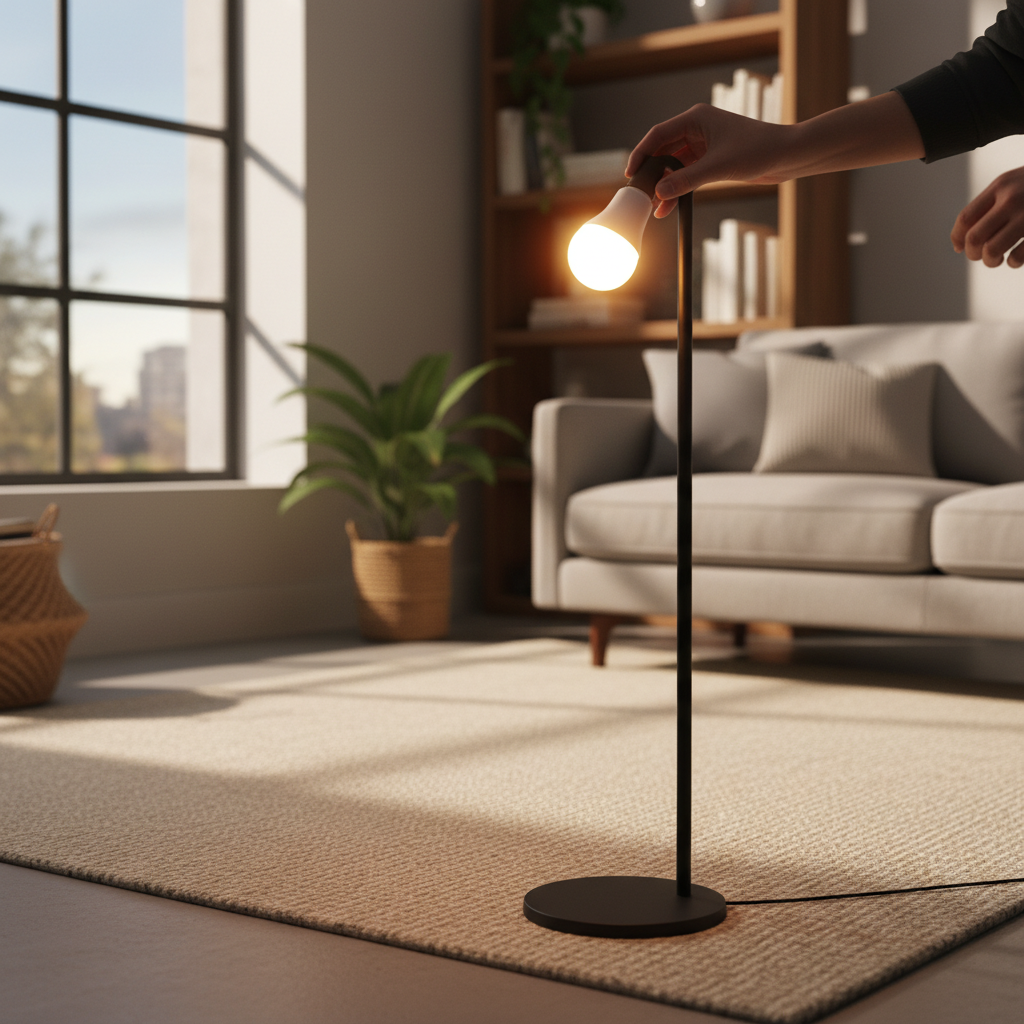
The Basic Principle: Turning Electricity into Light (Without Wasting Energy)
At a basic level, an LED (Light Emitting Diode) bulb works by converting electrical energy directly into light. Unlike those old incandescent bulbs, which heated a filament until it glowed (and wasted most of the energy as heat), LEDs are incredibly efficient. They barely get warm, and almost all the energy goes towards producing light. Think of it like this: an incandescent bulb is like a campfire – a lot of the energy goes up in smoke and heat. An LED is like a laser pointer – all the energy is focused on one thing: light.
Breaking It Down: The Key Parts of an LED Bulb
To really understand how an LED bulb works, let’s take a look at its key components. It’s not as complex as you might imagine. Here’s what you’ll typically find inside:
- The LED Chip(s): This is the heart of the bulb, the actual light-producing element. It’s a tiny semiconductor, usually made of materials like gallium arsenide or gallium nitride. When electricity flows through this chip, it emits photons – the basic units of light. Most modern LED bulbs use multiple small LED chips to achieve the desired brightness and light distribution.
- The Heat Sink: LEDs are efficient, but they still produce some heat. This heat sink, often made of metal, is crucial for drawing heat away from the LED chips. It keeps the LEDs from overheating and extending their lifespan. You’ll often see these as the ribbed or finned part of the bulb.
- The Driver Circuit: This is the brain of the operation. It takes the AC (alternating current) electricity from your wall socket and converts it to DC (direct current), which LEDs need to function. The driver also regulates the voltage and current, ensuring the LEDs get the correct power and protects them from surges. This is where most of the “magic” happens.
- The Diffuser: This is the plastic or glass cover that softens the light and spreads it evenly throughout the room. It also helps to protect the LED chips from dust and damage. Without it, the light would be very directional and harsh.
- The Base: This is the part that screws into your light socket. It contains the electrical contacts that connect the bulb to your home’s wiring.
Step-by-Step: How an LED Bulb Creates Light
Now, let’s follow the electricity’s journey and see how these parts work together, step by step:
- Power Enters: When you flip the switch, electricity from your home’s electrical system (AC) flows into the base of the LED bulb.
- AC to DC Conversion: The driver circuit inside the bulb takes the AC current and converts it into DC current. It also regulates the voltage to the correct level for the LEDs.
- Electrons Flow: The DC current then flows through the LED chips.
- Light Emission: As electrons move through the semiconductor material in the LED chips, they release energy in the form of photons – light! The color of the light depends on the materials used in the semiconductor.
- Heat Dissipation: The heat sink absorbs the heat generated by the LEDs, preventing them from overheating.
- Light Diffusion: The light passes through the diffuser, which scatters and softens it, creating a more pleasant and even illumination.
- Light to the World: Finally, the soft, bright light illuminates your room, ready to do the job.
Common Misconceptions: Debunking the Myths
There are a few things people often misunderstand about LED bulbs. Let’s clear up some of the most common misconceptions:
- “LEDs are expensive.” While they may have been initially pricier, the cost of LED bulbs has plummeted. They are often comparable to, or even cheaper than, other types of bulbs.
- “LEDs are only for cold, harsh light.” Not true! LEDs are available in a wide range of color temperatures, from warm, inviting tones to cool, bright whites. You can find LEDs that perfectly match the atmosphere you want to create in your home.
- “LEDs burn out suddenly.” LED bulbs don’t “burn out” in the same way as incandescents, with a dramatic filament failure. They gradually dim over time. The lifespan of an LED bulb is typically measured in tens of thousands of hours.
- “Higher wattage means brighter.” With LEDs, wattage is less important than lumens. Lumens measure the actual light output. A lower-wattage LED can often produce more light (more lumens) than a higher-wattage incandescent bulb.
How Usage and Environment Affect Performance
A few factors can impact how well your LED bulbs perform and how long they last:
- Heat: While LEDs are designed to dissipate heat, excessive heat can shorten their lifespan. Make sure the bulb is used in an appropriate fixture with adequate ventilation. Over time, heat exposure will degrade the components of the bulb.
- Voltage Fluctuations: Power surges or fluctuations in your home’s electrical supply can damage the driver circuit. Using a surge protector can help protect your LED bulbs (and other electronics).
- Quality: Not all LED bulbs are created equal. Cheaper bulbs may use lower-quality components that degrade more quickly.
- Usage Patterns: Turning an LED bulb on and off frequently doesn’t affect its lifespan as it did with incandescent bulbs. LEDs are very resistant to this “cycling” behavior.
Modern Relevance: LEDs in the Age of Smart Homes and Energy Efficiency
LED technology is at the forefront of the smart home revolution. You can now get smart LED bulbs that can be controlled via your smartphone or voice assistant. You can change the color, dim the light, set timers, and integrate them with other smart home devices. LEDs are also crucial for achieving energy efficiency, helping to reduce your carbon footprint and save money on electricity bills. Their long lifespan also means less waste and fewer trips to the store to buy replacement bulbs.
In the future, we’ll likely see even more innovation in LED technology. Expect to see further improvements in efficiency, color rendering, and integration with smart home systems.
Bringing It All Together: A Clearer Mental Model
So, the next time you flip on an LED bulb, you can visualize the process: Electricity enters, the driver converts and regulates, the LED chips glow, heat is dissipated, and the diffuser spreads the light. It’s a simple, elegant system, and a perfect example of how modern technology makes our lives easier, more efficient, and more sustainable. Now, you can explain it to someone else!
FAQ: Your Burning Questions Answered
Here are a few common questions people often ask about LED light bulbs:
- Are LED bulbs really worth the cost? Absolutely! While the initial investment might be slightly higher, the long lifespan and energy savings of LEDs make them a worthwhile investment in the long run. Plus, they will keep on working longer than older bulb types.
- How long do LED bulbs last? A good quality LED bulb can last for 15,000 to 25,000 hours, or even longer, depending on usage and quality. That’s years of use!
- Do LED bulbs get hot? They do generate some heat, but significantly less than incandescent bulbs. Most of the heat is dissipated through the heat sink.
- What’s the best color temperature for my home? This depends on your personal preference and the room. Warm white (2700K-3000K) is great for living rooms and bedrooms, while cooler white (3500K-4000K) is often preferred for kitchens and bathrooms.
- Can I use LED bulbs in any lamp or fixture? Generally, yes. Most LED bulbs are designed to fit standard sockets. However, it’s always a good idea to check the compatibility of the bulb and the fixture, especially for enclosed fixtures, where heat can build up.
- Why do some LED bulbs flicker? Flickering can be caused by a few things, including compatibility issues with the dimmer switch, a faulty driver circuit, or an unstable power supply. Make sure your dimmer is LED-compatible.
- Are there different sizes of LED bulbs? Yes, LED bulbs come in a variety of shapes and sizes. You can find them in the standard A-shape, as well as globes, spotlights, and more.
- How do I dispose of LED bulbs? Most LED bulbs can be recycled. Check with your local recycling center to find out how to properly dispose of them in your area.
Hopefully, this guide has illuminated the inner workings of LED bulbs. For more insights on how everyday technology works, check out related articles.