
Picture this: You flip a switch, and poof, the lights are on. Or, you plug in your phone to charge, and hours later, it’s ready to go. We interact with electricity every single day, yet most of us don’t give a second thought to how it actually gets from the power source to our devices. It’s like magic, right? Well, not quite. It’s actually a fascinating dance of electrons, wires, and circuits, all working together to power our modern lives. Let’s pull back the curtain on this everyday marvel and see how your home’s electrical wiring really works.
The Big Picture: Electricity as a Flow
At its heart, electricity is the flow of electrons, tiny particles that carry a negative charge. Think of it like water flowing through pipes. The power plant is the water source, the wires are the pipes, and your appliances are the faucets that use the water (or in this case, electricity). This flow of electrons is called current, and it’s measured in amps (amperes). The “pressure” pushing the electrons is called voltage, measured in volts. And the “resistance” that slows down the flow is measured in ohms.
The electricity that comes into your home is typically alternating current (AC). This means the flow of electrons reverses direction periodically, usually 50 or 60 times per second. This is different from direct current (DC), where the flow is in one direction, like in a battery. AC is used because it’s easier and more efficient to transmit over long distances from the power plant to your home.
From Power Lines to Your Plug: The Journey of Electricity
So, where does this electricity journey begin? Let’s follow it step by step:
- The Power Plant: Coal, natural gas, nuclear, solar, wind – whatever the source, the power plant generates electricity. This is done by spinning turbines, which turn massive generators, creating the initial electrical current.
- High-Voltage Transmission: The electricity is then “stepped up” to a very high voltage (thousands of volts) by a transformer. This is like increasing the water pressure. High voltage is crucial for efficient long-distance transmission, minimizing energy loss through the wires.
- Transmission Lines: The high-voltage electricity travels through massive power lines, strung across those familiar metal towers. These lines carry the power across the countryside, often for hundreds of miles.
- Substations: Along the way, substations reduce the voltage using transformers. Think of them as pressure-reducing valves for electricity.
- Distribution Lines: These lines carry the electricity to your neighborhood. They’re usually mounted on utility poles.
- Your Home’s Transformer: Before the electricity reaches your home, another transformer on the utility pole (or sometimes underground) steps the voltage down again, usually to 120 or 240 volts (depending on your country’s standards). This is the safe voltage that your appliances can handle.
- The Service Entrance: The electricity enters your home through the service entrance, which includes the meter (that measures how much electricity you use) and the main breaker panel (also known as a breaker box or fuse box).
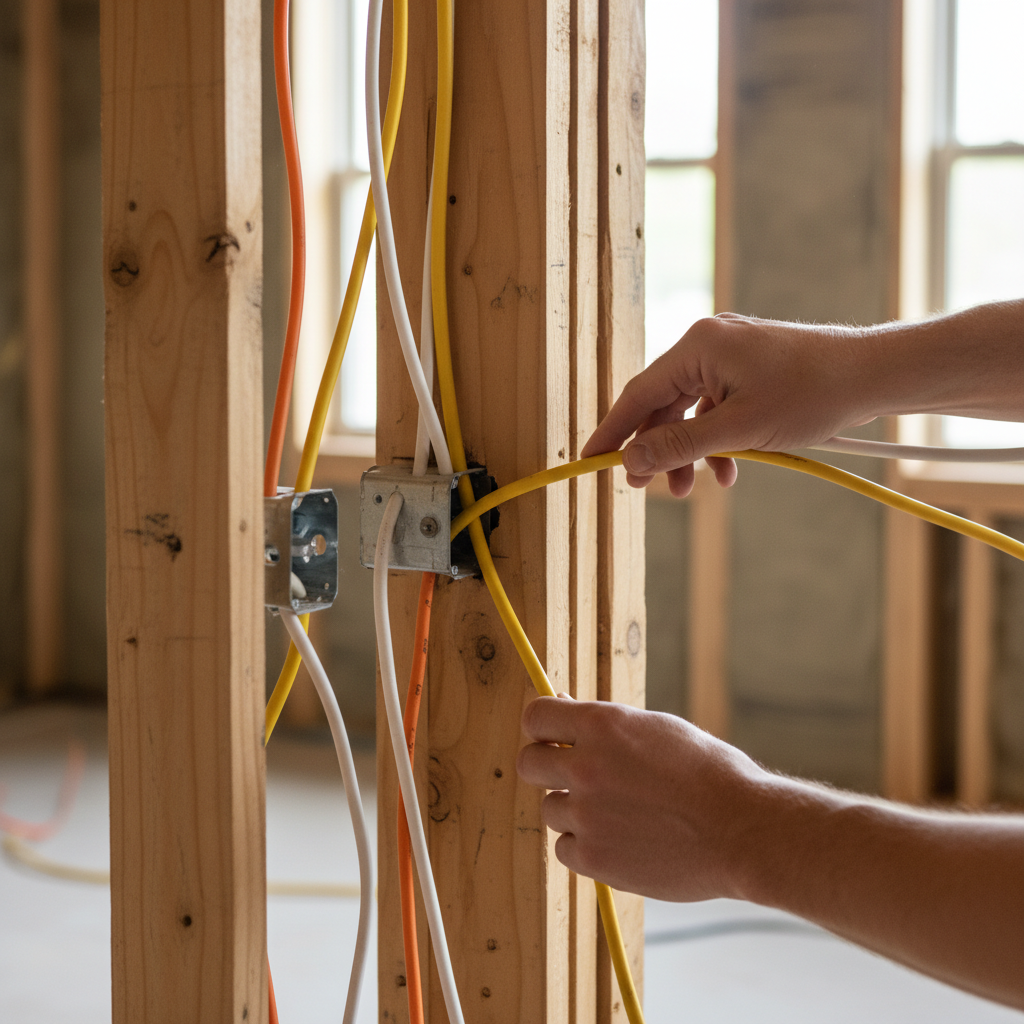
- The Wiring Inside Your Walls: This is where things get interesting. From the breaker panel, wires run through your walls, ceilings, and floors to outlets, light fixtures, and appliances. These wires are like the arteries of your home’s electrical system, delivering power where it’s needed.
The Anatomy of Your Home’s Wiring
Let’s dive deeper into the wiring within your walls. Here’s what you need to know:
- Wires: These are the “pipes” carrying the electricity. They’re usually made of copper or aluminum because these materials are good conductors, meaning they allow electricity to flow easily. The wires are insulated with plastic to prevent shocks and short circuits.
- Wire Gauges: Wires come in different sizes, called gauges. Thicker wires (lower gauge numbers like 12 or 10) can carry more current safely than thinner wires (higher gauge numbers like 14). This is why you might see different wire sizes for outlets versus lights.
- Circuits: Your home’s wiring is organized into circuits. Each circuit is a path that the electricity flows through. Circuits are protected by circuit breakers (or fuses).
- Circuit Breakers: These are safety devices designed to cut off the flow of electricity if a circuit becomes overloaded (too much current) or if a short circuit occurs. They’re like the trip switches for your electricity.
- Outlets and Switches: These are the points where you connect your appliances and control the flow of electricity. Outlets provide the electrical connection, and switches open and close the circuit, turning the lights or appliances on and off.
- Grounding: This is a crucial safety feature. The grounding wire provides a low-resistance path for electricity to flow back to the source (the ground) if there’s a fault in an appliance or wiring. This helps prevent electric shock.
Understanding Circuits: The Heart of Your Electrical System
Your home’s wiring isn’t a single, monolithic system. It’s divided into several independent circuits. Each circuit is designed to handle a specific amount of electrical load, measured in amps. Here’s why this is important:
Overloading a Circuit: Imagine trying to run too many appliances on a single circuit. If you plug in a space heater, a hairdryer, and a vacuum cleaner all at once, you’re likely to overload the circuit. The circuit breaker will then “trip,” cutting off the power to that circuit. This is a safety mechanism to prevent fires. You might see a “tripped breaker” as a common issue in many households.
Types of Circuits:
- Lighting Circuits: These circuits usually have a lower amperage (15 amps) and are designed for lights and small appliances.
- Outlet Circuits: These circuits typically have a higher amperage (20 amps) to handle the increased load from appliances like TVs, computers, and kitchen gadgets.
- Dedicated Circuits: Some appliances, like electric stoves, water heaters, and air conditioners, require dedicated circuits with higher amperage to prevent overloading.
Common Misconceptions and Why They Matter
There are some common misconceptions about home electrical wiring that can lead to safety hazards. Let’s clear them up:
- “Bigger is always better”: While it’s tempting to use larger gauge wires everywhere, it’s not always necessary and can even be unsafe. Using wires that are too thick for a circuit can prevent a breaker from tripping when it should, creating a fire hazard.
- “Flipping the breaker fixes everything”: While resetting a tripped breaker restores power, it doesn’t fix the underlying problem. You need to identify the cause of the overload (too many appliances, a faulty appliance, or a short circuit) and address it.
- “Electricity is just a flow of power”: This is a simplification. Electricity is a complex interaction of voltage, current, and resistance. This is why you need to match wire gauges, circuit breaker ratings, and appliance requirements carefully.
- “Grounding is just for older homes”: Grounding is crucial in all homes, new or old. Grounding provides a safety path for electricity and is a vital safety feature.
How Your Habits and Environment Affect Performance
Your everyday actions and the environment around you can impact your home’s electrical system:
- Appliance Usage: Overloading circuits is a major concern. Be mindful of how many appliances you’re using on a single circuit. If you constantly trip a breaker, you might need to reconfigure your appliances or have additional circuits installed.
- Power Strips and Extension Cords: Use power strips and extension cords responsibly. Don’t overload them, and never use them as a permanent wiring solution. Make sure they are UL-listed.
- Environmental Factors: Moisture is electricity’s enemy. Keep electrical outlets and wiring away from water sources. Regularly inspect outlets and switches for any signs of damage or corrosion.
- Energy Efficiency: Upgrading to LED light bulbs and energy-efficient appliances can reduce your electricity consumption. This is good for your wallet and the environment.
Modern Relevance: The Smart Home and Beyond
In today’s world, our homes are getting smarter, and electricity plays a key role. Here’s how:
- Smart Appliances: Smart refrigerators, ovens, and washing machines connect to your home’s Wi-Fi network and offer remote control and energy monitoring.
- Smart Lighting: Smart light bulbs and switches allow you to control your lights remotely, set schedules, and even change the color of the light.
- Home Automation: Smart home systems integrate all these devices and more, allowing you to control your home’s electricity usage, security, and entertainment systems from a single interface.
- Electric Vehicle (EV) Charging: With the rise of electric vehicles, home charging stations are becoming increasingly common. These require dedicated circuits and can significantly increase your home’s electricity demand.
As we rely more on technology, understanding our home’s electrical system is more critical than ever. Consider the impact of your charging habits and other small energy drains, as well. Small changes in your habits can add up.
The Takeaway: A Clearer Mental Model
Now that we’ve peeled back the layers of your home’s electrical wiring, you should have a clearer understanding of how it all works.
Think of it like this: Electricity flows from the power plant, through high-voltage transmission lines, to your neighborhood. A transformer reduces the voltage, then it enters your home through the service entrance. Inside, wires carry the electricity to your outlets, lights, and appliances. Circuits protect these wires from overloading, and grounding provides a safety net. By understanding these basics, you’ll be more confident in your ability to interact with electricity safely and efficiently.
The next time you turn on a light, charge your phone, or use an appliance, remember the invisible journey of the electrons that make it all possible.
FAQ: Your Burning Questions Answered
Here are some frequently asked questions about how your home’s electrical wiring works:
1. Why do my lights flicker sometimes?
Flickering lights can have a few causes. Loose wiring, a failing light bulb, or an overloaded circuit are common culprits. If the flickering is frequent or persistent, it’s best to consult an electrician.
2. What should I do if a circuit breaker trips frequently?
First, unplug some appliances from the circuit. If the breaker still trips, there might be a wiring issue or a faulty appliance. Consult an electrician to investigate.
3. What’s the difference between amps, volts, and watts?
Think of it this way: Amps are the amount of electricity flowing, volts are the “pressure” pushing the electricity, and watts are the measure of how much power an appliance uses. You can calculate watts by multiplying volts and amps (Watts = Volts x Amps).
4. Why do outlets have three prongs?
The third prong is the grounding wire. It provides a safe path for electricity to flow back to the ground if there’s a fault in the appliance, preventing electric shock.
5. Can I work on my home’s wiring myself?
Unless you’re a licensed electrician, it’s best to leave electrical work to the professionals. Electricity is dangerous, and improper wiring can lead to fires and electrocution. If you’re undertaking DIY projects, make sure to turn off the main power supply!
6. How often should I have my home’s electrical system inspected?
It’s a good idea to have your home’s electrical system inspected every 5-10 years, especially if you live in an older home or have recently renovated.
7. What are GFCI outlets, and where are they used?
GFCI (Ground Fault Circuit Interrupter) outlets are designed to protect you from electric shock. They quickly shut off the power if they detect a ground fault (a loss of current). You typically find them in bathrooms, kitchens, and outdoor areas.
8. Is it safe to overload a power strip?
No, it’s not safe to overload a power strip. Overloading a power strip can cause it to overheat and potentially cause a fire.