
Remember that late-night craving for leftovers? Or maybe it’s the quick popcorn fix for movie night. We all use microwave ovens. But have you ever stopped to wonder how these seemingly magical boxes heat up our food so quickly? It’s a pretty neat trick, and it’s not actually that complicated when you break it down.
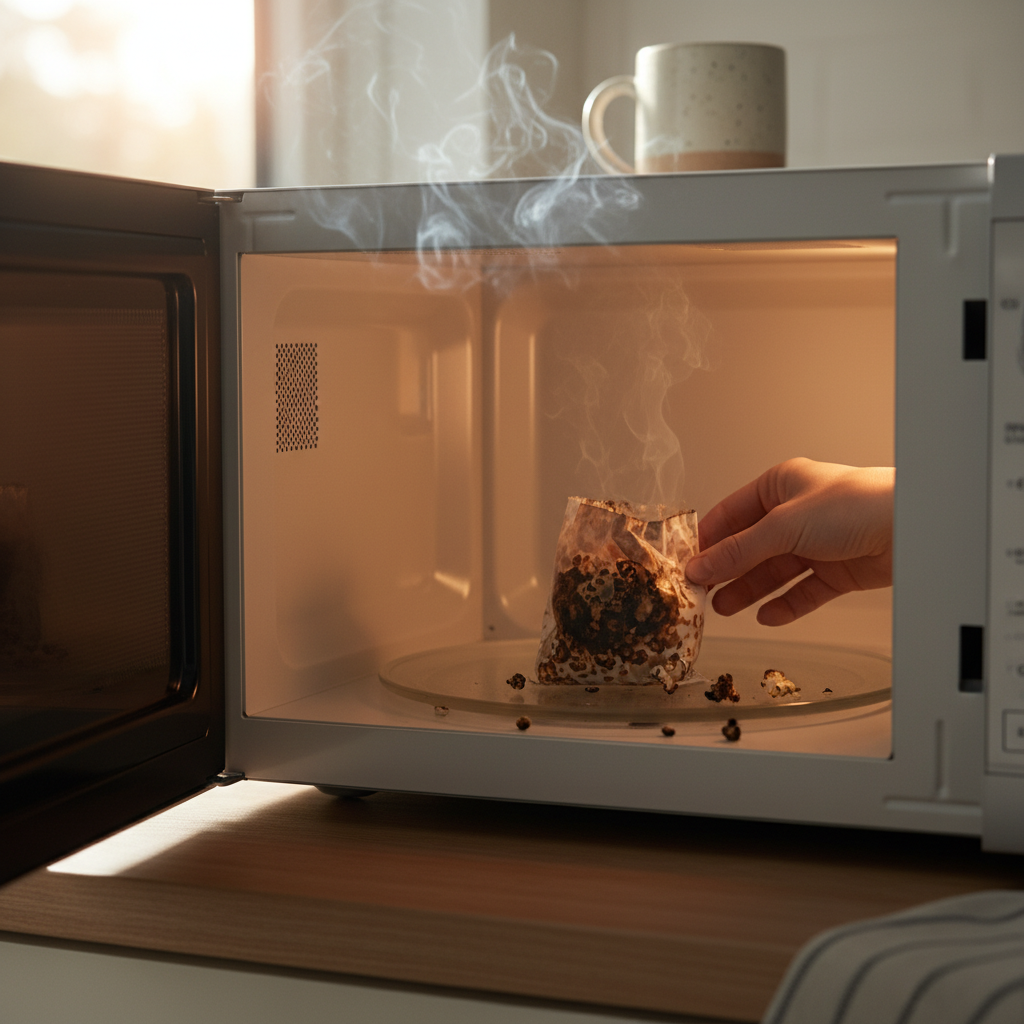
Let’s dive in. We’ll start with the basics, then look at the key components, and finally, we’ll understand why sometimes your popcorn ends up a charred, smoky mess. Ready?
The Big Picture: Invisible Waves, Visible Heat
At a basic level, a microwave oven works because it uses microwaves – a type of electromagnetic radiation – to cook food. Think of it like a radio transmitter, but instead of sending information, it sends energy. This energy gets absorbed by the water, fats, and sugars in your food, causing their molecules to vibrate rapidly. This rapid vibration generates heat, and that’s what cooks your food.
It’s all about making the molecules move faster. It’s similar to rubbing your hands together really fast to warm them up. The faster the molecules move, the hotter the food becomes. It’s that simple.
Key Components: What Makes the Magic Happen
Let’s open up our imaginary microwave and peek inside. You’ll find a few key players:
- The Magnetron: This is the heart of the microwave. It’s a specialized vacuum tube that generates the microwaves. Think of it as the engine.
- The Waveguide: This is a metal tube that directs the microwaves from the magnetron into the cooking chamber. It’s like a pipe that guides the energy.
- The Cooking Chamber: This is the main compartment where you put your food. It’s made of metal to reflect the microwaves and keep them inside.
- The Turntable: This rotating platform ensures that your food cooks evenly by rotating it in the microwave field.
- The Control Panel: This is where you set the cooking time and power level. It’s the brain of the operation.
- The High-Voltage Transformer: This component boosts the voltage to power the magnetron. It’s the power supply.
These components work together to deliver the microwaves that cook your food. It’s a well-coordinated dance of energy, guided by metal and controlled by your button presses.
How it Works, Step by Step: From Wall Socket to Warm Meal
Let’s follow the journey of the electricity from your wall socket to your plate:
- Power Up: You plug in the microwave and select a cooking time and power level.
- Voltage Boost: The high-voltage transformer kicks in, ramping up the voltage to power the magnetron.
- Microwave Generation: The magnetron hums to life, generating microwaves.
- Waveguide Directs: The waveguide channels these microwaves into the cooking chamber.
- Reflection and Absorption: The microwaves bounce around the metal chamber, repeatedly hitting the food.
- Molecular Excitement: The water, fats, and sugars in the food absorb the microwave energy, causing their molecules to vibrate.
- Heat Generation: This rapid vibration creates heat, cooking your food from the inside out.
- Turntable’s Role: The turntable rotates, ensuring that the food is exposed to the microwaves evenly.
- Delicious Result: After the set time, your food is hot, ready, and (hopefully) delicious!
The Popcorn Predicament: Why Does It Burn?
We’ve all been there – that telltale smell of burning popcorn filling the kitchen. Why does this happen? Several factors come into play:
- Uneven Heating: The distribution of microwaves isn’t perfectly uniform. Some areas of the popcorn bag might get more intense exposure.
- Moisture Content: Popcorn kernels need a specific moisture content to pop properly. Too much or too little can lead to burning.
- Power Level: Cooking popcorn at full power for too long can easily scorch the kernels.
- Bag Design: The design of the popcorn bag can affect how the microwaves reach the kernels.
Here’s the part most people never notice: Microwaves cook food from the outside in, and then from the inside out. When the moisture in a kernel converts to steam, it expands, causing the kernel to explode. Once the moisture is gone, the kernel is likely to burn.
To avoid burnt popcorn, follow these tips:
- Use the popcorn setting If your microwave has a popcorn setting, use it.
- Listen for the pops Stop cooking when the popping slows down. Don’t wait for all the kernels to pop.
- Power Down If you’re using the manual setting, reduce the power level.
- Experiment Every microwave is different. You might need to adjust the cooking time slightly to avoid burning.
Common Misconceptions: Debunking the Microwave Myths
Let’s clear up some common misunderstandings about microwave ovens:
- Microwaves cook food from the inside out: Actually, microwaves penetrate the food and heat the outer layers first. The heat then spreads inward.
- Microwaves make food radioactive: This is completely false. Microwaves are a form of non-ionizing radiation, meaning they don’t have enough energy to change the structure of atoms.
- Microwaves are unsafe: Microwaves are generally safe when used correctly. The oven is designed to contain the microwaves.
Small Changes, Big Impact: Usage Habits and Performance
Your microwave’s performance can be influenced by several factors:
- Cleanliness: A clean microwave works more efficiently. Food splatters can absorb microwaves and reduce the oven’s effectiveness.
- Food Placement: Arrange food so that thicker parts are towards the outside of the dish for more even cooking.
- Container Materials: Use microwave-safe containers. Metal containers will reflect the microwaves and prevent cooking.
- Ventilation: Make sure the oven’s vents are not blocked, as this can affect its performance.
Taking care of your microwave means it will take care of you, providing quick and easy meals for years to come.
Modern Relevance: Microwaves in the 21st Century
Microwaves are more than just a quick way to heat leftovers. They’ve evolved with technology and our lifestyles.
- Smart Microwaves: Modern microwaves can connect to Wi-Fi and be controlled by your smartphone. Some even come with pre-programmed recipes and automatic cooking settings.
- Sensor Technology: Sensors can detect the moisture level in the food and adjust the cooking time accordingly. This reduces the risk of overcooking or undercooking.
- Energy Efficiency: Manufacturers are constantly working to improve energy efficiency, making microwaves more environmentally friendly.
They’re still a key part of our kitchens, making our busy lives a little easier, from your morning coffee to a quick dinner.
A Final Thought: Understanding, Not Just Using
Now, when you use your microwave, you have a clearer idea of what’s happening inside. You understand that it’s all about invisible waves, vibrating molecules, and the magic of physics. You know how the components work together to cook your food, and you know how to avoid the dreaded burnt popcorn. You are now equipped to explain the concept to your friends, or even fix a minor issue.
This understanding helps you use your microwave more effectively and appreciate the science behind this everyday appliance. It can make you a more confident cook and consumer. You can also apply the same principles to other appliances, such as dishwashers or washing machines. For example, if you are struggling with a Wi-Fi connection, you can try reading a calm guide to a stable connection and less frustration.
FAQ: Your Microwave Questions Answered
Here are some frequently asked questions about microwave ovens, answered in plain English:
- Why does my microwave sometimes spark?
This usually happens when you put metal objects in the microwave. Metal reflects microwaves, and the energy can build up and create sparks. Always use microwave-safe containers.
- Can I put aluminum foil in the microwave?
Generally, no. Small amounts of foil can be used if you follow the microwave’s instructions. Otherwise, it can cause arcing and damage your oven.
- Why does my food cook unevenly?
This can be due to a few reasons: the food’s shape, the position of the food in the oven, or the microwave’s power level. Try rotating the food during cooking and using a lower power setting.
- Is it safe to stand near a microwave while it’s running?
Yes, it’s safe. Microwaves are designed to contain the radiation. The only real risk is if the door seal is damaged.
- How long does a microwave last?
With proper care, a microwave can last for 7–10 years. The lifespan depends on how often it’s used and how well it’s maintained.
- Why does my microwave make a buzzing sound?
The buzzing sound is usually from the magnetron, the component that generates the microwaves. This is normal, but if the buzzing is excessively loud or unusual, it might indicate a problem.
- Can I reheat food in a microwave more than once?
Yes, you can. However, each time you reheat food, the quality might decline, and the food might dry out. Ensure that the food is heated thoroughly to kill any bacteria.
- Why does my microwave oven seem less powerful than it used to be?
Over time, the magnetron in your microwave oven can degrade, resulting in lower power output. Additionally, if the waveguide or other components are dirty, it can also decrease efficiency. If you feel it’s not heating as it should, consider having it checked by a professional.
Understanding how your microwave works makes it less mysterious and more useful. So go ahead, heat up those leftovers, and enjoy the science of a hot meal!