
Remember that feeling? You turn the key (or push the button), and vroom, your car springs to life. We do this every day, right? But how many of us have truly stopped to think about what’s happening under the hood? It’s a symphony of controlled explosions, precise movements, and ingenious engineering – a fascinating story that often gets overlooked in our busy lives.
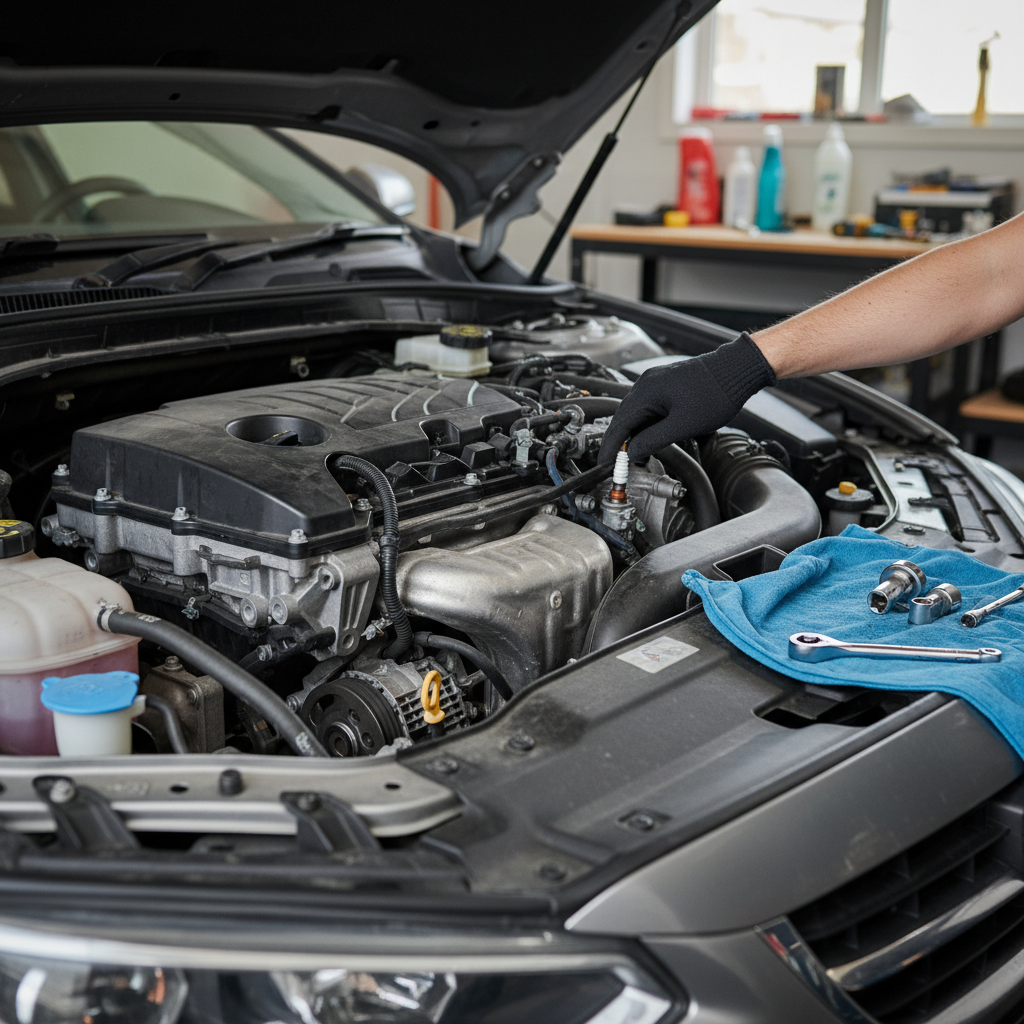
Let’s dive in. I’m not going to bore you with technical jargon. Instead, we’ll break down the car engine into its essential parts and understand how they work together, step by step. You’ll be surprised how much sense it makes when it’s explained simply.
The Big Picture: Controlled Chaos
At a basic level, your car’s engine is a machine that converts fuel’s chemical energy into mechanical energy that turns your wheels. Think of it like a tiny, contained fireworks display. The engine isn’t a single, monolithic object. Instead, it is made up of different components that work together.
The core concept is this: You introduce fuel (usually gasoline) and air into a contained space. You then ignite that mixture, causing a rapid expansion of gases (the explosion). That explosion pushes a part called a piston, which moves up and down. That piston’s movement turns a rotating shaft. The rotating shaft is connected to your car’s wheels, making them turn. Simple, right? Well, that is the basic idea, let us look at the details.
Meet the Players: Key Engine Components
Now, let’s meet the main players in this automotive drama. These are the key parts that make the engine’s magic happen:
- The Engine Block: This is the foundation, the main frame of the engine, usually made of metal. It houses all the other components and provides the structure. It’s like the walls and floors of a house, holding everything together.
- The Cylinders: These are the “rooms” inside the engine block where the action happens. Inside the cylinders, the fuel and air mixture burns. Most cars have multiple cylinders (four, six, or even eight are common).
- The Pistons: These are like the “workers” inside each cylinder. They move up and down in response to the explosions, converting the expanding gases into motion.
- The Connecting Rods: These rods connect the pistons to the crankshaft and transmit the up-and-down motion of the pistons into the circular motion that turns the wheels.
- The Crankshaft: This is the heart of the operation. It’s a rotating shaft that gets its power from the up-and-down movement of the pistons. The crankshaft’s rotation is what ultimately drives the wheels.
- The Valves: These are the “gates” that control the flow of air and fuel into the cylinders and the exhaust gases out.
- The Spark Plugs: These are the “igniters.” They create the spark that ignites the air-fuel mixture in the cylinders.
- The Fuel Injectors: These devices spray the fuel into the cylinders or intake manifold, ensuring the correct fuel-to-air ratio.
- The Camshaft: The camshaft controls the opening and closing of the valves, ensuring the timing of air and fuel intake and exhaust.
The Four-Stroke Cycle: The Engine’s Breathing Pattern
Most car engines use a four-stroke cycle, also known as the Otto cycle. It’s a series of four movements that repeat continuously, creating the power that drives your car.
- Intake: The piston moves down, creating a vacuum that draws a mixture of air and fuel into the cylinder through the intake valve.
- Compression: The intake valve closes, and the piston moves up, compressing the air-fuel mixture. This compression increases the mixture’s temperature and makes the subsequent explosion more powerful.
- Combustion (Power): The spark plug ignites the compressed air-fuel mixture. The resulting explosion forces the piston down with tremendous force. This is where the power is generated.
- Exhaust: The exhaust valve opens, and the piston moves up, pushing the burnt gases out of the cylinder.
This four-stroke cycle happens incredibly fast, thousands of times per minute. The crankshaft converts the linear motion of the pistons into the circular motion that spins the wheels.
How the Parts Work Together: The Symphony Unfolds
Now, let’s see how all these parts work together in perfect harmony. Think of it as a well-choreographed dance:
- The crankshaft, driven by the connecting rods and pistons, turns continuously.
- As the crankshaft rotates, it causes the camshaft to rotate as well. The camshaft is timed perfectly to open and close the intake and exhaust valves at the correct moments.
- The fuel injectors precisely spray fuel into the intake manifold or directly into the cylinders.
- The air mixes with the fuel (or is drawn in separately).
- As the piston moves down, it draws in the air-fuel mixture through the intake valve.
- The piston moves up, compressing the mixture.
- The spark plug ignites the compressed mixture, causing an explosion.
- The explosion forces the piston down, turning the crankshaft.
- The piston moves up again, pushing the exhaust gases out through the exhaust valve.
- This cycle repeats continuously, converting fuel into power and turning the wheels.
Common Misconceptions: Busting the Myths
Let’s clear up some common misunderstandings:
- “More cylinders equal more power.” While engines with more cylinders often produce more power, it’s not the only factor. Engine design, displacement (the volume of the cylinders), and other factors also play a huge role.
- “Octane rating means more power.” Octane rating refers to the fuel’s resistance to premature ignition. Higher octane fuel doesn’t necessarily mean more power for your car unless it is engineered to require it.
- “Engines are simple.” Engines are complex machines with many intricate parts. But by breaking it down step by step, we can understand the basic principles.
Why Small Changes Matter: Everyday Habits and Engine Performance
Your driving habits and environmental conditions can significantly impact your engine’s performance and lifespan. Here’s how:
- Regular maintenance: Changing your oil, filters, and spark plugs as recommended by your car’s manual is crucial. It keeps the engine clean and lubricated, reducing wear and tear.
- Driving style: Aggressive driving (hard acceleration, rapid braking) puts extra stress on the engine and can decrease fuel efficiency.
- Fuel quality: Using good-quality fuel helps keep the engine clean and running smoothly.
- Operating conditions: Extreme temperatures (very hot or very cold) can affect engine performance. Warming up your engine properly in cold weather is a good practice.
Modern Relevance: The Future of Engines
Engine technology is constantly evolving. In 2026, we see exciting innovations:
- Hybrid and electric vehicles: Many cars combine internal combustion engines with electric motors to improve fuel efficiency and reduce emissions. Electric vehicles are becoming increasingly popular.
- Advanced fuel injection systems: These systems deliver fuel more precisely, optimizing combustion and improving fuel economy.
- Turbocharging: Turbochargers force more air into the engine, increasing power without increasing engine size.
- Downsizing: Engine manufacturers are designing smaller, more efficient engines that still deliver impressive performance.
So, You Can Explain It Now
Now that you’ve seen how the engine is made, here’s the mental model: You put fuel and air in, and you get an explosion that pushes a piston. The piston’s movement turns a shaft, which then turns the wheels. Your engine uses a series of repeating movements, with different parts working together to keep the process going. Remember the four strokes and how each one contributes to the cycle. Now you can explain it to your friends!
Understanding how your car’s engine works removes the mystery and gives you a new appreciation for the engineering marvel that gets you from point A to point B. Next time you start your car, take a moment to appreciate the controlled chaos within, the dance of the pistons, and the power that gets unleashed with a simple turn of the key.
Frequently Asked Questions
Here are some of the most common questions people have about car engines:
- Why does my car need an oil change? Oil lubricates the engine’s moving parts, reducing friction and preventing wear. Over time, the oil breaks down and becomes contaminated, so regular changes are essential.
- What’s the difference between gasoline and diesel engines? Gasoline engines use spark plugs to ignite the fuel-air mixture, while diesel engines compress air to ignite the fuel. Diesel engines are generally more fuel-efficient but may produce more pollutants.
- What is engine knock, and what causes it? Engine knock, or pinging, is a metallic sound caused by premature ignition of the fuel-air mixture. It can be caused by low-octane fuel, carbon buildup, or other issues.
- What does “horsepower” mean? Horsepower is a unit of measurement for engine power. It’s a way of quantifying how quickly an engine can do work.
- Why does my car sometimes struggle to start? This could be due to a dead battery, a faulty starter motor, a problem with the fuel system, or other issues.
- How can I improve my car’s fuel economy? Driving smoothly, keeping your tires properly inflated, and regular maintenance can all help improve fuel economy.
- What is the purpose of the catalytic converter? The catalytic converter reduces harmful emissions from the engine’s exhaust gases.
- How often should I get my car serviced? Follow the service schedule recommended by your car’s manufacturer, which will depend on mileage, driving conditions, and other factors.