
Picture this: It’s late, you’re starving, and that leftover biryani from last night is calling your name. You slap the container into the microwave, punch in a few numbers, and in a couple of minutes, a delicious, hot meal awaits. But have you ever stopped to wonder how a simple box can turn cold food into a steaming delight so quickly? Let’s dive in and demystify the magic behind your microwave oven.
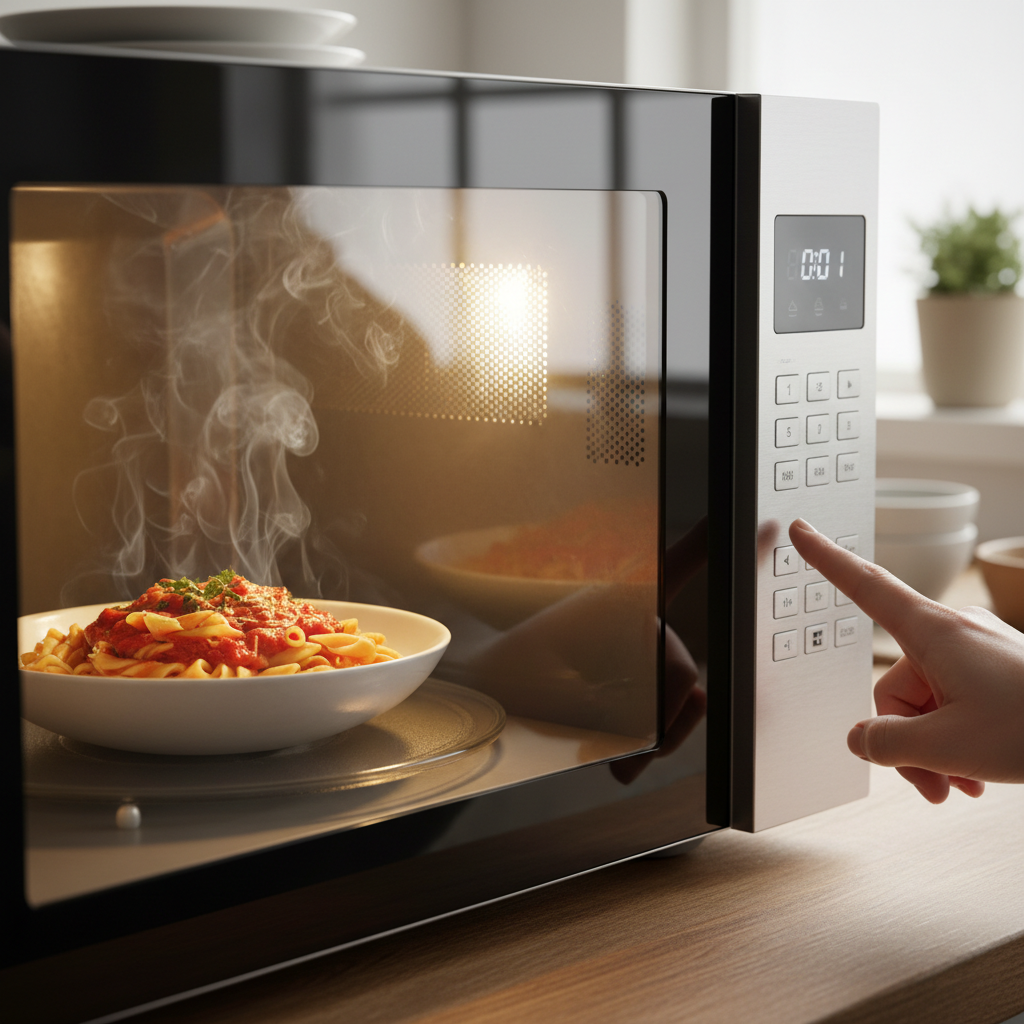
The Big Picture: Invisible Waves, Visible Results
At a basic level, your microwave uses invisible waves, called microwaves, to heat food. Think of it like a tiny, focused sun inside a box. These microwaves are a type of electromagnetic radiation, similar to radio waves, but with a much shorter wavelength. The key is that these waves interact with the water molecules inside your food, causing them to vibrate rapidly. This vibration generates heat, which cooks your food from the inside out. Pretty neat, huh?
Now, I know what you might be thinking: “Microwaves? Aren’t those dangerous?” Well, the microwaves themselves aren’t inherently dangerous. The danger comes from being exposed to high levels of microwave radiation, which is why your microwave is designed with safety in mind. The metal box acts like a Faraday cage, preventing the waves from escaping, and the door has a special mesh that blocks any stray radiation.
Breaking It Down: The Anatomy of a Microwave
To really understand how a microwave works, let’s take a look at its main components:
- The Magnetron: This is the heart of the microwave, the part that generates the microwaves. It’s a vacuum tube that uses electricity to create high-frequency radio waves. Think of it as the engine of your microwave.
- The Waveguide: The waveguide is a metal tube that directs the microwaves from the magnetron into the cooking chamber. It’s like a tunnel that channels the energy.
- The Cooking Chamber: This is the main compartment where you put your food. It’s usually made of metal, which helps to reflect the microwaves and keep them inside.
- The Turntable: Many microwaves have a rotating turntable. This ensures that the food cooks evenly by constantly moving it through the microwave field.
- The Control Panel: This is where you set the cooking time and power level. It’s the brain of the operation, telling the magnetron when to turn on and off.
- High Voltage Transformer: This is the part that takes the standard voltage from your wall and steps it up to the high voltage needed to power the magnetron.
- The Door and Safety Features: The door has a special interlocking mechanism that shuts off the microwave when opened. The mesh screen in the door prevents microwave leakage.
How It All Works Together: A Step-by-Step Guide
Now, let’s see how these parts work together, step-by-step:
- You Press the Buttons: You select the cooking time and power level on the control panel.
- Electricity Flows: The microwave draws electricity from the wall socket.
- The Transformer Kicks In: The high voltage transformer steps up the voltage, providing the power needed for the magnetron.
- Microwaves are Born: The magnetron begins generating microwaves.
- The Waveguide Directs: The waveguide channels the microwaves into the cooking chamber.
- Microwaves Bounce Around: The microwaves bounce off the metal walls of the cooking chamber.
- Food Absorbs the Energy: The microwaves are absorbed by the water, fats, and sugars in your food, causing these molecules to vibrate and create heat.
- The Turntable Rotates (if applicable): The turntable rotates the food, ensuring even cooking.
- Food Gets Hot: Your food heats up from the inside out!
- Timer Runs Out: Once the timer runs out, the magnetron shuts off, and the microwave stops cooking.
Common Misconceptions and Why They Matter
There are a few myths surrounding microwaves that I’d like to address:
- “Microwaves cook food from the inside out.” This is mostly true, but it’s more accurate to say that they heat the food throughout simultaneously. Microwaves penetrate the food to a certain depth and heat all the areas they reach.
- “Microwaves destroy nutrients.” While some nutrient loss can occur, it’s generally comparable to or less than with other cooking methods, such as boiling or steaming. Because the cooking time is often shorter, less nutrient loss occurs in the microwave than in a traditional oven.
- “Microwaves are unsafe.” As mentioned earlier, the microwaves themselves aren’t inherently dangerous. Modern microwaves are designed with safety features to prevent leaks.
How Your Habits and the Environment Affect Performance
A few things can affect how well your microwave works:
- Food Type: Different foods absorb microwaves differently. Water-rich foods (like vegetables) heat up quickly, while denser foods (like meat) might take longer.
- Container Matters: Use microwave-safe containers! Metal containers will reflect microwaves and won’t heat up your food, while some plastics can melt or leach chemicals.
- Power Level: The power level setting controls how long the magnetron operates in a given time period. Higher power means faster cooking, but it can also lead to uneven heating or exploding food.
- Placement: Position your food in the center of the turntable for even cooking.
Also, where you live can have a small impact. Microwaves, like most appliances, work best with a stable power supply. If your home’s electrical grid has frequent fluctuations (more common in some areas), it could subtly affect performance, though the microwave itself usually has built-in protection. This is more of an extreme edge case though.
The Microwave in the Modern World
Today, microwaves are more than just reheating machines. They’re used for everything from defrosting to cooking entire meals. Modern microwaves have advanced features like pre-programmed settings for different foods, sensor cooking that automatically adjusts the cooking time, and even convection capabilities for crispier results. Some microwaves can even connect to your home’s Wi-Fi!
Looking ahead, we’ll likely see more integration with smart home systems. Imagine a microwave that knows when you’re home and automatically starts cooking dinner when you’re on your way back from work! We’ll probably also see more focus on energy efficiency and eco-friendly designs. The microwave is evolving, but the basic principle of heating food with microwaves remains the same.
Final Thoughts: Your New Mental Model
So, the next time you pop something in the microwave, remember this: A magnetron creates invisible waves that bounce around inside a metal box. These waves are absorbed by the water molecules in your food, causing them to vibrate and generate heat. It’s a quick, efficient, and surprisingly simple process. You can now impress your friends and family with your newfound microwave mastery!
If your microwave stops working, you might be tempted to just toss it. But before you do, check out this guide on clearing clogs – even though it’s about washing machines, the core idea of troubleshooting and exploring potential fixes is the same!
Frequently Asked Questions (FAQs)
Here are some common questions about how microwaves work:
1. Can I put metal in a microwave?
No, you generally shouldn’t put metal in a microwave. Metal reflects microwaves, which can damage the microwave or cause sparks and fire.
2. Why does my food sometimes cook unevenly in the microwave?
Uneven cooking can be due to several factors, including food placement, food density, and the microwave’s design. Use the turntable, and try to arrange food evenly.
3. Is it safe to stand in front of a microwave while it’s running?
Yes, it’s generally safe. Microwaves are designed to prevent radiation leakage. However, it’s always a good idea to maintain a safe distance.
4. Why does my microwave sometimes make a buzzing sound?
The buzzing sound is usually the magnetron working. It’s normal. If the sound is excessively loud or unusual, then you should get it checked out.
5. How long does a microwave typically last?
Microwaves can last for many years with proper care and maintenance. But with the constant advances in technology, and the relatively inexpensive price, it’s common to replace it every 5-10 years.
6. Can I use aluminum foil in the microwave?
Small amounts of aluminum foil can sometimes be used for shielding, but generally, it’s best to avoid it. Foil can cause arcing (sparks) that can damage the microwave.
7. Why does my microwave take longer to cook food than the instructions say?
This can be due to a variety of factors: the age of your microwave, the power level, the food’s starting temperature, and the amount of food being cooked. Always keep an eye on your food when using a new microwave.
8. Can microwaves cause cancer?
No, microwaves do not cause cancer. Microwaves are a form of non-ionizing radiation, which does not damage DNA like ionizing radiation (e.g., X-rays). The waves stop when the microwave is turned off.