
Picture this: You flick a switch, and bam! The lights are on. Or, you plug in your phone to charge, and a few hours later, it’s ready to go. We do these things every single day, without a second thought. But have you ever stopped to wonder what’s actually happening behind the walls, inside the outlets, and all through those mysterious wires?
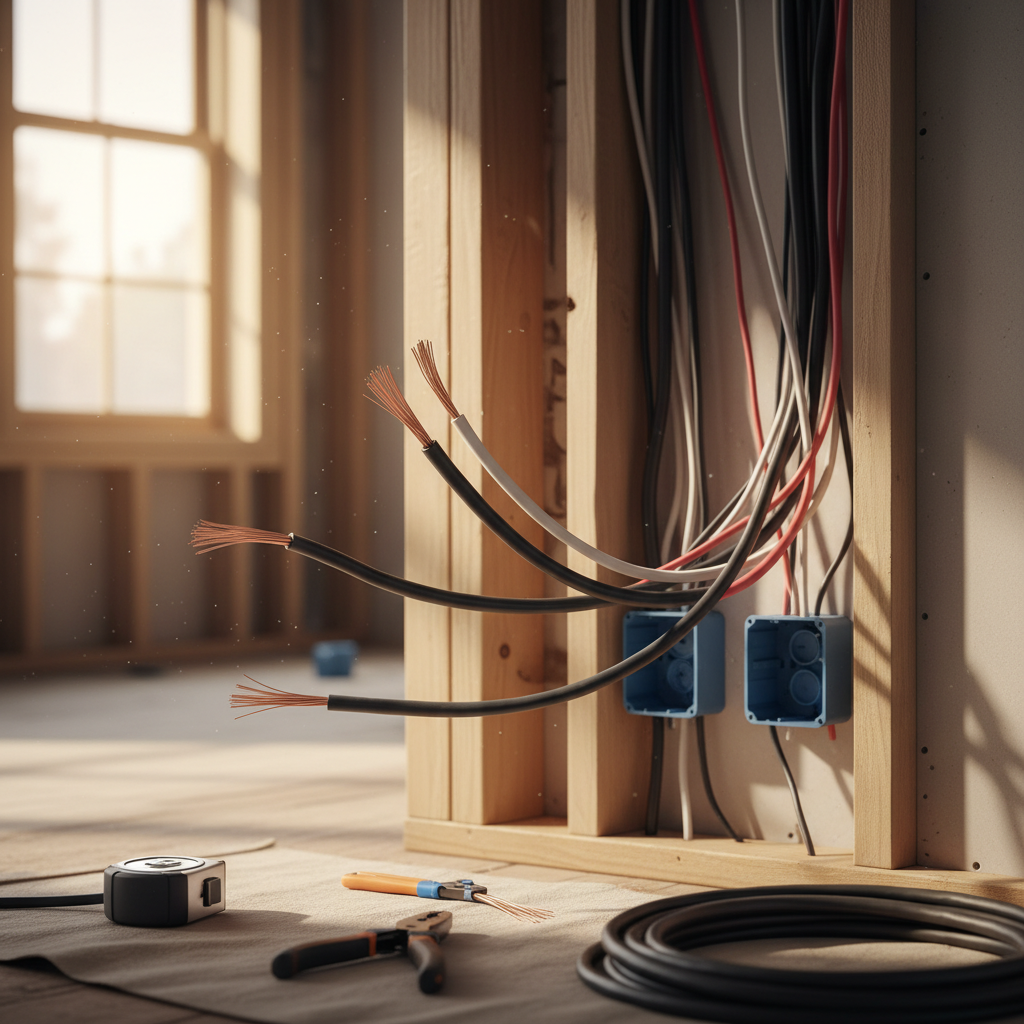
Let’s dive in and unravel the simple, yet amazing, story of how the electrical wiring in your home works. Trust me, it’s less complicated than you might think. We’ll skip the jargon and get straight to the point, explaining it in a way that makes sense.
The Big Picture: Electricity as a Flow
At a basic level, electricity is all about the movement of tiny particles called electrons. Think of it like a river. Instead of water, we have electrons flowing through wires. This flow is what we call an electric current. It’s measured in amps (Amperes), which tells us how much ‘electron flow’ is happening.
Now, this flow doesn’t just happen on its own. It needs a push, a force to get things moving. That’s where voltage comes in. Voltage is the electrical pressure, like the water pressure in your pipes. The higher the voltage, the more ‘push’ there is to move the electrons.
In your home, the electricity typically comes in at 120 volts (in the US and some other countries), but can be 240 volts for certain appliances like your electric oven or dryer. This voltage is what gives the electrons the oomph they need to do work.
The Main Players: Wires, Breakers, and Outlets
So, how does this electron river get from the power company to your devices? Let’s meet the main players:
- Wires: These are the highways for the electrons. They’re usually made of copper because copper is a great conductor (it lets electricity flow through easily). The wires are insulated (covered in plastic) to prevent shocks and fires.
- Circuit Breakers: These are the safety guardians. They are designed to shut off the power if too much current flows through a circuit. Think of them like the flood gates in a dam. If the river (electricity) gets too high, the gates close to prevent damage.
- Outlets: These are the access points where you plug in your devices. They provide the connection for the electricity to flow into your lamps, your phone chargers, and everything else.
Step-by-Step: From Power Plant to Plug
Let’s trace the journey of electricity:
- The Source: It all starts at a power plant (coal, natural gas, solar, wind, etc.). Here, energy is converted into electricity.
- Transmission: High-voltage power lines carry electricity long distances from the power plant to your neighborhood.
- The Transformer: Before the electricity reaches your home, it passes through a transformer, which lowers the voltage to a safe level (120 or 240 volts).
- The Meter: Your electricity meter measures how much electricity you’re using.
- The Main Panel: This is the heart of your home’s electrical system. It contains the main circuit breaker and individual circuit breakers for each circuit in your house.
- The Wires: Wires run from the main panel through the walls and ceilings to your outlets, switches, and lights.
- The Outlets: When you plug in a device, you create a complete circuit, allowing electricity to flow through the device and power it.
The Importance of Circuits
Your home’s electrical system isn’t just one big, continuous wire. It’s broken down into circuits. Each circuit is like a separate ‘pathway’ for the electricity. This is crucial for safety and convenience.
Think of it like roads in a city. You wouldn’t want every car in the city to use the same road, right? It would be a huge traffic jam. Similarly, circuits prevent electrical overloads. If you plug too many devices into one circuit (like too many appliances in a single room), the circuit breaker will trip, shutting off the power to that specific area. This prevents the wires from overheating and potentially starting a fire.
Different circuits typically power different areas of your home. Kitchens and bathrooms often have dedicated circuits because they use appliances that draw a lot of power (like refrigerators, microwaves, hair dryers). This minimizes the risk of overloading the circuit.
Common Misconceptions: Debunking the Myths
Let’s clear up some common misunderstandings about household wiring:
- Myth: “The wires in my walls are all the same.”
Reality: Wires come in different sizes (gauges). Thicker wires can handle more current than thinner wires. Your electrician chooses the right wire size for each circuit based on its intended use.
- Myth: “If I touch a wire, I’ll get electrocuted.”
Reality: If the wire is properly insulated (and the circuit breaker is working), you shouldn’t get shocked. However, it’s always best to be cautious and leave electrical work to qualified professionals.
- Myth: “Turning off the light switch cuts off the electricity completely.”
Reality: The switch simply interrupts the flow of electricity to the light fixture. The wires are still live (carrying electricity) until the circuit breaker is turned off.
How Your Habits and the Environment Affect Performance
Your daily habits and the environment around your home can significantly impact your electrical system’s performance and safety.
- Overloading Circuits: As mentioned earlier, plugging too many high-powered devices into a single circuit can trip the breaker. Avoid using multiple power-hungry appliances (like space heaters, hair dryers, and toasters) on the same circuit simultaneously.
- Water and Electricity Don’t Mix: Water is a conductor, meaning it allows electricity to flow through it. Always be extremely cautious around water and electricity. Never use electrical devices near water sources (like the sink or bathtub). If an appliance gets wet, unplug it and let it dry completely before using it again.
- Old Wiring: Older homes may have wiring that’s not up to modern safety standards. If your home has old wiring (especially if it’s aluminum), it’s a good idea to have it inspected by a qualified electrician.
- Proper Grounding: Grounding provides a safe path for electricity to flow in case of a fault (like a short circuit). Make sure your outlets are properly grounded.
- Regular Inspections: Have a qualified electrician inspect your home’s electrical system periodically (every few years) to ensure everything is working safely and efficiently.
Modern Relevance: Smarter Homes and Energy Efficiency
In today’s world, our homes are becoming increasingly connected. Smart devices, like smart lights, smart thermostats, and smart appliances, are becoming more and more common. This ‘Internet of Things’ (IoT) revolution is changing the way we interact with our homes.
These smart devices often communicate wirelessly (Wi-Fi or Bluetooth), but they still need power. Your home’s electrical wiring is the backbone that provides this power.
Along with smart homes, energy efficiency is also a major focus. Using energy-efficient appliances and LED lighting can significantly reduce your electricity bill and your environmental impact. These changes can also reduce the load on your home’s electrical system, potentially extending its lifespan and reducing the risk of problems.
If you’re interested in making your home more energy-efficient, you might want to look into solar panels. Solar panels convert sunlight into electricity, which can be used to power your home. This is a great way to reduce your reliance on the grid and save money on your electricity bill.
The Takeaway: A Clearer Mental Model
So, next time you flip a switch, you’ll have a better understanding of what’s happening. You’ll know that it’s not magic; it’s the carefully planned and installed electrical wiring in your home, working together to bring you power.
Here’s your new mental model:
- Electricity flows like water in a river, through wires.
- The wires are like pathways, and they are protected by circuit breakers that act as safety valves.
- Outlets are access points that let you tap into the electrical flow.
- When you plug in an appliance, you complete a circuit, and the appliance starts working.
- Your habits (how many appliances you plug in) and the condition of the wiring impact safety and efficiency.
Now, you can explain it to someone else! You understand that your home’s electrical system is a carefully designed and integrated network that makes modern life possible.
FAQ: Your Burning Questions Answered
Let’s address some of the questions you might have about how your home’s electrical wiring works:
- Why do my lights flicker sometimes?
Flickering lights can be a sign of a few things: a loose connection in the wiring, a failing light bulb, or an overloaded circuit. If it happens frequently, it’s best to call an electrician. - What does “grounding” mean?
Grounding provides a safe path for electricity to flow in case of a fault. It helps prevent electric shock. Modern outlets have a third prong for grounding. - What should I do if a breaker trips?
First, unplug some of the devices on that circuit to reduce the load. Then, reset the breaker by flipping it to the “off” position and then back to the “on” position. If it trips again, you may have a wiring problem and should call an electrician. - Can I do electrical work myself?
Some minor tasks, like changing a light switch or outlet, are generally safe if you know what you’re doing. But for any major electrical work, it’s best to call a licensed electrician. Electricity is dangerous, and mistakes can be costly. - How often should I have my electrical system inspected?
It’s a good idea to have your electrical system inspected by a qualified electrician every few years, especially if you live in an older home or have made any major changes to your electrical system. - What is the difference between amps and volts?
Amps (amps) measure the amount of electrical current flowing through a wire, while volts (voltage) measure the electrical pressure. Think of amps as how much water is flowing through a pipe, and volts as how much pressure is pushing the water. - What are those black boxes on the power lines?
Those are transformers. They step down the high voltage electricity from the power lines to a safe level for your home. - Why does my phone charger get warm?
Phone chargers, like many electronics, convert electricity from the wall outlet to a lower voltage and current that your phone can use. This conversion process generates some heat.
Understanding how your home’s electrical wiring works can help you stay safe, identify potential problems, and make informed decisions about your home’s electrical system. So, the next time you turn on the lights, you can appreciate the hidden power that makes it all possible.
For more information, feel free to explore our homepage: Energy Revolutions System. Or, check out My Air Conditioner is Blowing Warm Air! A Cool-Headed Guide to a Chill Home to learn more.