
Picture this: It’s late, you’re starving, and that leftover pizza is calling your name. You slap it in the microwave, punch in a minute, and *poof* – instant warmth. But have you ever stopped to wonder, how does that box of magic actually work? Let’s dive in and demystify the microwave oven.
The Basic Principle: Turning Invisible Waves into Heat
At a basic level, this works because microwaves are a type of electromagnetic radiation, just like radio waves, light, and X-rays. The key difference? Microwaves have a specific frequency that is *perfectly* absorbed by water molecules, fats, and sugars – the very things that make up your food. When these molecules absorb microwaves, they vibrate and bump into each other, creating friction. This friction generates heat, and that’s how your food gets cooked. It’s like rubbing your hands together really, really fast.
Breaking Down the Parts: Inside the Microwave’s Belly
Let’s take a peek inside and see the main players:
- The Magnetron: This is the heart of the microwave. It’s a specialized vacuum tube that generates the microwaves. Think of it as the engine of the whole operation.
- The Waveguide: This is a metal tube that channels the microwaves from the magnetron into the cooking chamber. It’s like a pipe for invisible energy.
- The Cooking Chamber: This is where the food goes. The inside is usually made of metal, which reflects the microwaves, bouncing them around to cook the food evenly.
- The Turntable: This rotating plate ensures that the food doesn’t have a “hot spot” and cooks uniformly.
- The High-Voltage Transformer: This boosts the voltage from your wall outlet to power the magnetron. It’s a crucial component that helps generate the microwaves.
- The Control Panel: This is your interface. It allows you to set the cooking time and power level.
Step-by-Step: How It All Comes Together
Here’s the process, step by step:
- Power Up: When you press the start button, the microwave gets power from your wall outlet.
- Voltage Boost: The high-voltage transformer kicks in, ramping up the electricity to power the magnetron.
- Microwave Generation: The magnetron hums to life, creating microwaves.
- Waveguide Delivery: The microwaves travel through the waveguide into the cooking chamber.
- Reflection and Absorption: The metal walls of the cooking chamber reflect the microwaves, bouncing them around. The microwaves are absorbed by the water molecules, fats, and sugars in your food, causing them to vibrate and produce heat.
- Cooking: The turntable rotates the food so that all sides get cooked evenly.
- Finished! Once the timer goes off, the microwave shuts down, and your food is ready to eat.
Common Misconceptions: Debunking the Myths
There are a few things people often get wrong about microwaves:
- “Microwaves cook food from the inside out.” This isn’t entirely true. Microwaves penetrate the food to a certain depth and heat the outer layers first. The heat then conducts inwards, cooking the rest of the food.
- “Microwaves make food radioactive.” Nope! Microwaves are a form of non-ionizing radiation, which means they don’t have enough energy to change the structure of the molecules in your food or make them radioactive.
- “Microwaves destroy all the nutrients.” While some nutrients can be lost during microwaving, the overall nutrient loss is generally comparable to or even less than other cooking methods, such as boiling or frying. Because cooking times are usually shorter, microwaves can sometimes preserve more nutrients.
Why Small Changes Matter: Usage Habits and Performance
Here’s where your habits affect how well your microwave works:
- Food Placement: Spreading food evenly on a plate helps it cook uniformly.
- Covering Your Food: Covering food with a lid or plastic wrap (that’s microwave-safe) helps trap steam, preventing food from drying out and ensuring more even cooking. It also helps to prevent splatters, making cleanup easier.
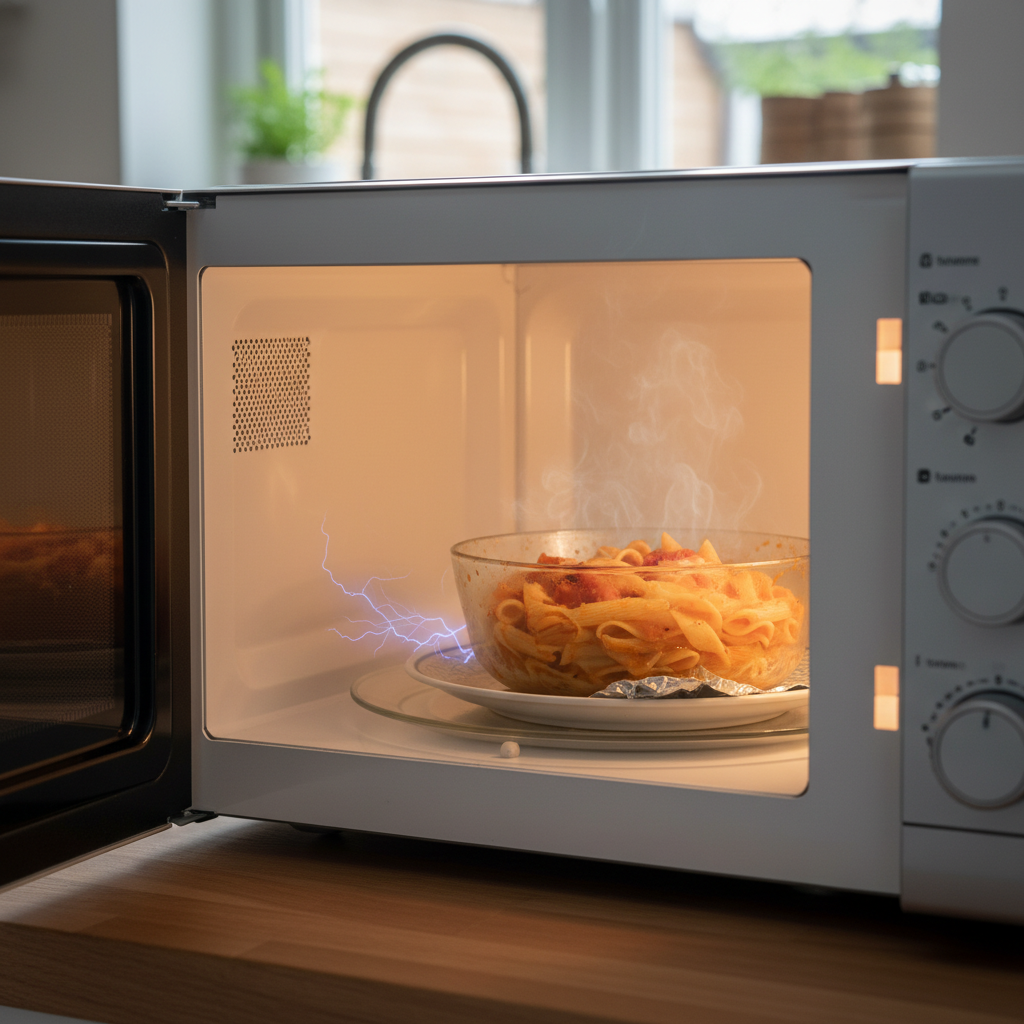
- Metal and Microwaves Don’t Mix: Never put metal objects in the microwave. Metal reflects microwaves, which can cause sparks, arcing, and potentially damage the appliance. Foil, certain containers with metallic trim, and metal utensils are all no-nos.
- Power Levels: Using lower power levels for longer periods allows the food to cook more evenly. It prevents the outside from overcooking while the inside remains cold.
Modern Relevance: The Microwave in 2026
Microwaves are evolving. Here’s what’s trending:
- Smart Microwaves: These connect to Wi-Fi and offer features like voice control, automatic cooking programs, and the ability to download new recipes.
- Inverter Technology: Some microwaves use inverter technology to provide more consistent power, leading to more even cooking.
- Built-in Microwaves: Increasingly, microwaves are integrated into kitchen designs, offering a sleek and modern look.
The Sparking Question: Why Does My Microwave Sometimes Spark?
Ah, the dreaded sparks! The most common culprits are:
- Metal: As mentioned earlier, metal reflects microwaves, leading to arcing and sparks. Avoid using metal containers, foil, or dishes with metallic trim.
- Damaged Components: Sometimes, a damaged waveguide cover (the plastic or ceramic plate inside the microwave) or a faulty magnetron can cause sparking.
- Food with High Sugar Content: Foods like pastries or sauces with high sugar content can sometimes spark if they overheat and caramelize.
- Dry Running: Running the microwave without anything inside can damage the magnetron and lead to sparking.
If you see sparks, immediately stop the microwave and investigate the cause. If you’re unsure, it’s always best to consult the microwave’s manual or have it checked by a professional.
Explaining it to a Friend: Your Microwave Model
So, next time someone asks you about their microwave, you can say this:
“It’s like this: there’s this box that sends out invisible waves – microwaves – that are perfect for heating up food. Inside, there’s a special tube called a magnetron that makes the waves. These waves bounce around inside the microwave, and when they hit the water, fat, and sugar in your food, those molecules start to jiggle and create heat. The turntable spins your food, so it cooks evenly. Just remember to keep metal out, and you’re good to go!”
FAQ: Your Microwave Questions Answered
Here are some frequently asked questions, answered simply:
Q: Can I put aluminum foil in the microwave?
A: Generally, no. Foil reflects microwaves, which can cause sparking and damage to the microwave.
Q: Is it safe to microwave plastic containers?
A: Only if they are specifically labeled as “microwave-safe.” Look for the microwave-safe symbol.
Q: Why does my microwave cook unevenly?
A: Uneven cooking can be due to food placement, the type of food, or issues with the microwave’s components. Make sure food is spread out, use the turntable, and consider using lower power levels.
Q: Does microwaving destroy nutrients in food?
A: Some nutrients can be lost, but the overall loss is often comparable to or less than other cooking methods.
Q: Can I use metal utensils in the microwave?
A: No. Metal reflects microwaves and can cause arcing and sparks.
Q: How do I clean my microwave?
A: You can clean your microwave by heating a bowl of water with lemon juice or vinegar to create steam. Then, wipe down the interior with a damp cloth.
Q: Why does my microwave make a buzzing sound?
A: The buzzing sound is typically the magnetron working to generate the microwaves. It’s a normal sound.
Q: Is it safe to stand near a microwave while it’s running?
A: Yes, it is generally safe. Microwaves are designed to contain the radiation. However, it’s best to maintain a reasonable distance.
Hopefully, this article has provided a clear picture of how your microwave works. You’re now equipped with the knowledge to troubleshoot common issues and confidently use this everyday kitchen appliance. For further information on home appliances and systems, check out our related article.