
Let’s face it: most of us take our washing machines for granted. Toss in the dirty clothes, pour in some detergent, press a few buttons, and *poof* – clean clothes. But have you ever stopped to wonder what’s actually *happening* inside that metal box? What makes it so effective at removing dirt, grime, and the occasional rogue spaghetti sauce stain? Let’s pull back the curtain and explore how a washing machine works, breaking down this everyday appliance into its essential parts and processes.
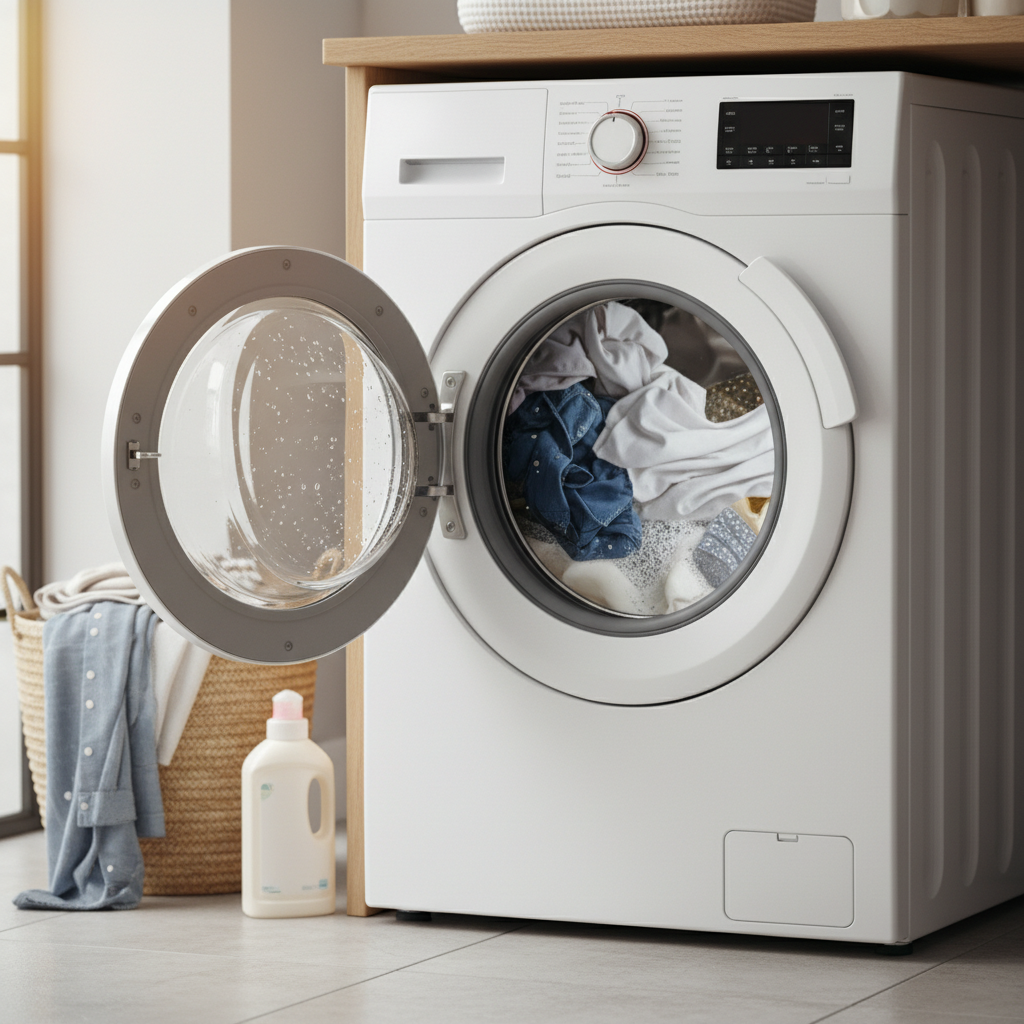
The Big Picture: Agitation, Water, and Detergent
At a basic level, a washing machine works because of three key ingredients:
* **Agitation:** The mechanical action that moves the clothes around, loosening dirt.
* **Water:** Acts as a solvent, helping to carry away the loosened dirt and grime.
* **Detergent:** Chemical agents that break down stains and suspend dirt in the water, preventing it from redepositing on the clothes.
The magic happens when these three elements combine within a carefully engineered system. But how do these components function together? Let’s take a closer look at the key parts that make this possible.
Inside the Machine: The Core Components
A washing machine is more complex than it seems, comprised of several interconnected components, working in perfect sync. Here’s a rundown of the key players:
* **The Drum (or Tub):** This is where the action happens. The drum holds the clothes, water, and detergent. There are actually two drums in many washing machines. The inner drum, where your clothes go, is perforated to allow water to circulate. The outer drum contains the water and supports the inner drum.
* **The Agitator or Impeller:** This is the workhorse of the washing process. In top-load washers, the agitator is a central column with vanes that move the clothes, generating friction and helping remove dirt. Front-load washers often use an impeller, a low-profile disc at the bottom of the drum that uses a rotating motion to tumble the clothes gently.
* **The Motor:** The motor provides the power needed to rotate the drum or drive the agitator/impeller. Modern machines often use a highly efficient electric motor.
* **The Water Pump:** The water pump circulates water during the wash cycle and removes it during the drain and rinse cycles.
* **The Water Inlet Valves:** These valves control the flow of hot and cold water into the machine, regulating the water level and temperature depending on the selected wash cycle.
* **The Drain Pipe:** This pipe is responsible for expelling the dirty water after the wash cycle.
* **The Control Panel and Circuit Board:** The control panel allows you to select your desired wash cycle, and the circuit board acts as the “brain” of the machine, managing all the processes. The circuit board commands the control panel and wash cycles.
How the Washing Machine Does Its Job: A Step-by-Step Breakdown
So, how do all these parts work together to transform a pile of dirty clothes into a fresh, clean load? Here’s the sequence of events:
1. **Loading and Assessment:** You put your clothes in the drum, close the lid or door, and select your wash cycle. Modern machines use sensors to detect the load size and the type of fabrics.
2. **Water Intake:** The water inlet valves open, allowing water to flow into the drum. The machine mixes the water to the right temperature.
3. **Detergent Dispensing:** If your machine has a detergent dispenser, it releases the detergent into the water.
4. **Agitation/Tumbling:** The agitator (top-load) or impeller (front-load) starts moving, creating the necessary friction to loosen dirt and stains. The drum rotates, tumbling the clothes through the water and detergent.
5. **Washing:** The detergent and water work together to lift dirt from the clothes. The detergent molecules have “hydrophilic” (water-loving) and “hydrophobic” (water-fearing) parts. The hydrophobic parts attach to the dirt and oil, while the hydrophilic parts help to suspend the dirt in the water.
6. **Draining:** After the wash cycle, the water pump removes the dirty water.
7. **Rinsing:** The water inlet valves open again, allowing in fresh water to rinse away any remaining detergent and dirt. The clothes are rinsed by the drum.
8. **Spinning:** The drum spins at high speed, using centrifugal force to remove excess water from the clothes.
9. **Completion:** The machine stops, and your clean, fresh clothes are ready to be moved to the dryer.
Common Misconceptions: Debunking the Myths
* **Myth:** More detergent equals cleaner clothes.
* **Reality:** Overusing detergent can leave residue on your clothes and in your machine, which can lead to mold and mildew. Always follow the detergent manufacturer’s recommendations.
* **Myth:** Hot water is always best for washing.
* **Reality:** Hot water can shrink and damage certain fabrics, and it’s less effective at removing some stains. Cold water is often sufficient for everyday washing and is more energy-efficient.
* **Myth:** All washing machines are created equal.
* **Reality:** There are significant differences between top-load and front-load machines, including their washing action, water usage, and energy efficiency. Front-load washers typically use less water and are gentler on clothes.
Why Small Changes Matter: Usage Habits and Performance
The way you use your washing machine can significantly impact its performance and lifespan:
* **Loading:** Avoid overloading the machine, which can reduce cleaning effectiveness and strain the motor.
* **Detergent:** Use the correct amount and type of detergent. High-efficiency (HE) machines require special low-sudsing detergents.
* **Water Temperature:** Choose the appropriate water temperature for the fabric and stain type.
* **Maintenance:** Clean the machine regularly, including the detergent dispenser, the drum, and the drain filter.
Modern Relevance: The Smart Washing Machine Era
In the 2020s, washing machines are getting smarter. Many new models now offer:
* **Smart Features:** Wi-Fi connectivity allows you to control the machine remotely and receive notifications.
* **Advanced Sensors:** These sensors can automatically adjust the wash cycle based on the load size, fabric type, and level of dirtiness.
* **Water and Energy Efficiency:** Manufacturers are constantly improving the efficiency of their machines, helping you save money and reduce your environmental impact.
As technology advances, you can expect even more innovations in the washing machine world, such as built-in stain removal systems and even more personalized wash cycles.
Bringing It All Together: A Clearer Mental Model
Now you know how a washing machine works! It’s a system of interconnected components working together to clean your clothes. It all starts with the drum, where water, detergent, and clothes combine. The agitator or impeller creates the friction to remove dirt and stains. The pump, valves, and motor do their jobs to make the process happen efficiently.
Frequently Asked Questions
Here are a few common questions people have about how washing machines work:
* **How often should I clean my washing machine?**
* It’s recommended to clean your washing machine every 1-2 months, depending on usage. Run an empty cycle with hot water and vinegar or a washing machine cleaner.
* **Why is my washing machine not draining?**
* A clogged drain hose or pump is the most common cause. Check for obstructions.
* **Why is my washing machine making loud noises?**
* Foreign objects in the drum or worn-out bearings can cause noise. Check for objects. If the noise continues, consult a technician.
* **What’s the difference between an agitator and an impeller?**
* Agitators (found in top-load machines) use a central column with vanes to move the clothes. Impellers (in front-load machines) use a rotating disc at the bottom of the drum.
* **Why is my washing machine vibrating so much?**
* An uneven floor, unbalanced load, or worn-out shock absorbers can cause vibrations. Make sure the machine is level, and redistribute the clothes.
* **How does a front-load washing machine save water?**
* Front-load machines use a tumbling action that requires less water than top-load machines. They also use less detergent.
* **Why does my washing machine smell musty?**
* Mold and mildew buildup, often caused by detergent residue or stagnant water, can cause a musty smell. Clean the machine regularly, and leave the door open after use.
* **How does the spin cycle work to dry clothes?**
* The spin cycle uses centrifugal force to push water out of the clothes. The drum spins at a high speed, and the water is forced through the perforations in the drum.
Now, the next time you toss your clothes into the washing machine, you’ll have a much better idea of the magic happening behind the closed door. And who knows? Maybe you’ll even start to appreciate this amazing feat of engineering a little more!